Why Central Vietnam gets wet in autumn while the rest of Vietnam dries out
This is worth understanding in one paragraph because it changes how you think about planning the whole country, not just this section of it.
Vietnam is a long narrow country with the Truong Son mountain range running down its spine and the Hai Van Pass sitting halfway along the coast as a weather divider more dramatic than any political border. In summer the southwest monsoon brings rain to Hanoi and Ho Chi Minh City but the Truong Son range blocks most of it from reaching the Central Coast. The result is that June and July in Da Nang and Hoi An are actually dry and sunny while the rest of the country is in its rainy season. This is why May through August is when you should be on the Central Vietnam beaches.
Then in September the monsoon reverses direction. The northeast monsoon blows straight in from the South China Sea and the Central Coast catches it directly with nothing in the way. By October the full force of this system has arrived and the Central Coast receives more rain in a single month than Ho Chi Minh City gets in three. Meanwhile Hanoi in October is golden and clear because the same mountain range that failed to protect the Central Coast from the northeast monsoon is now sheltering the North from it.
The practical implication: if you are traveling north to south through Vietnam, try to pass through the Central Coast before mid-September. Spend your October days in Hanoi and Ha Long Bay where the weather is at its annual best, then arrive in Da Nang, Hoi An, and Hue in November when the coast is drying out. That simple sequencing gives you good weather across the whole country without missing anything.
Da Nang in the rain: The city that keeps going
Da Nang is a modern city with real urban drainage infrastructure and it behaves like one when it rains. When heavy rain falls, some streets get temporarily wet and then within an hour or two they drain and life continues. This is a specifically different experience from Hoi An and travelers who understand this distinction make much better decisions about where to base themselves in October.
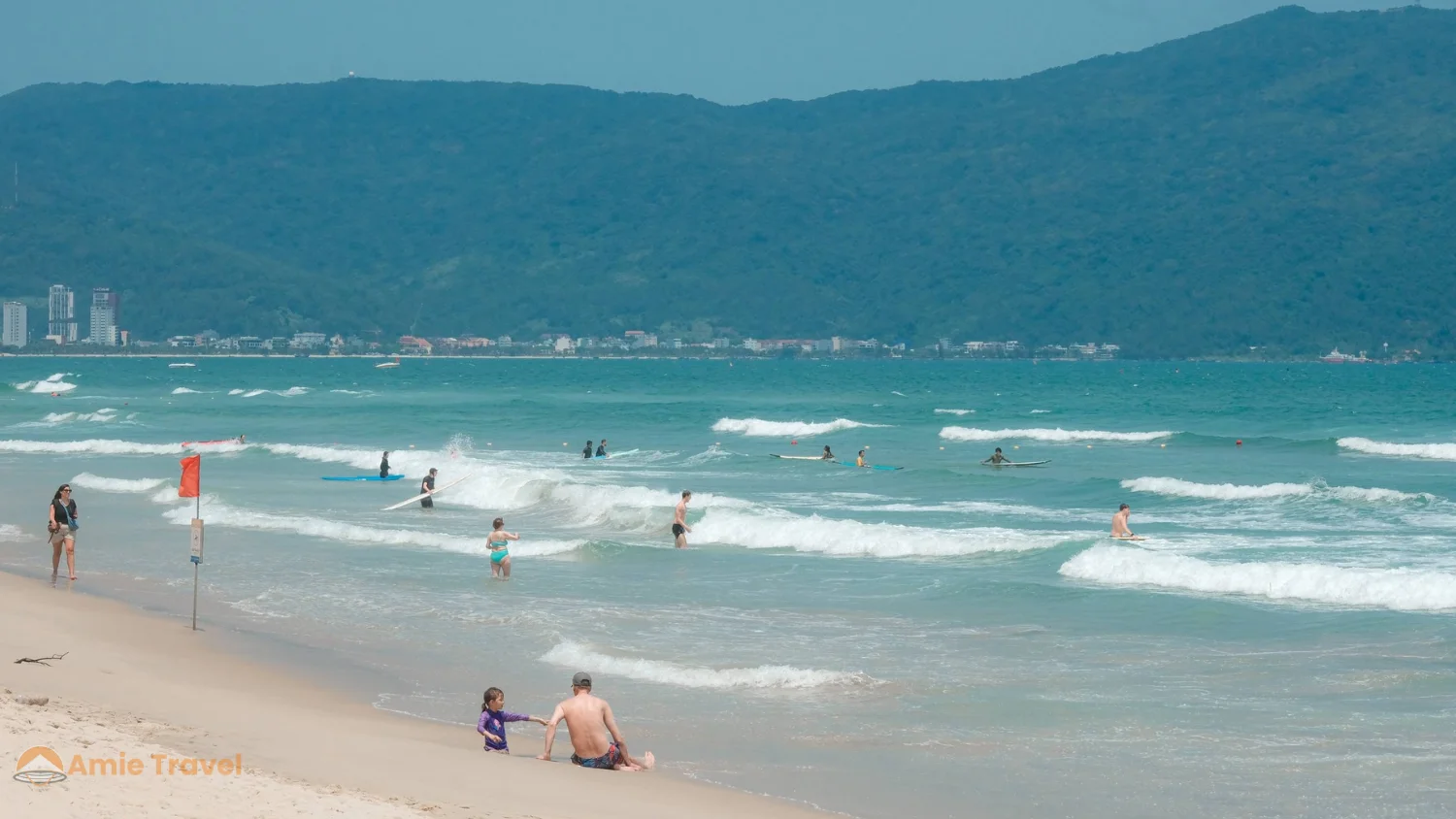
The beach closes for swimming from October as the seas become rough with the northeast monsoon. The city itself closes for nothing.
What works specifically well in rainy season Da Nang
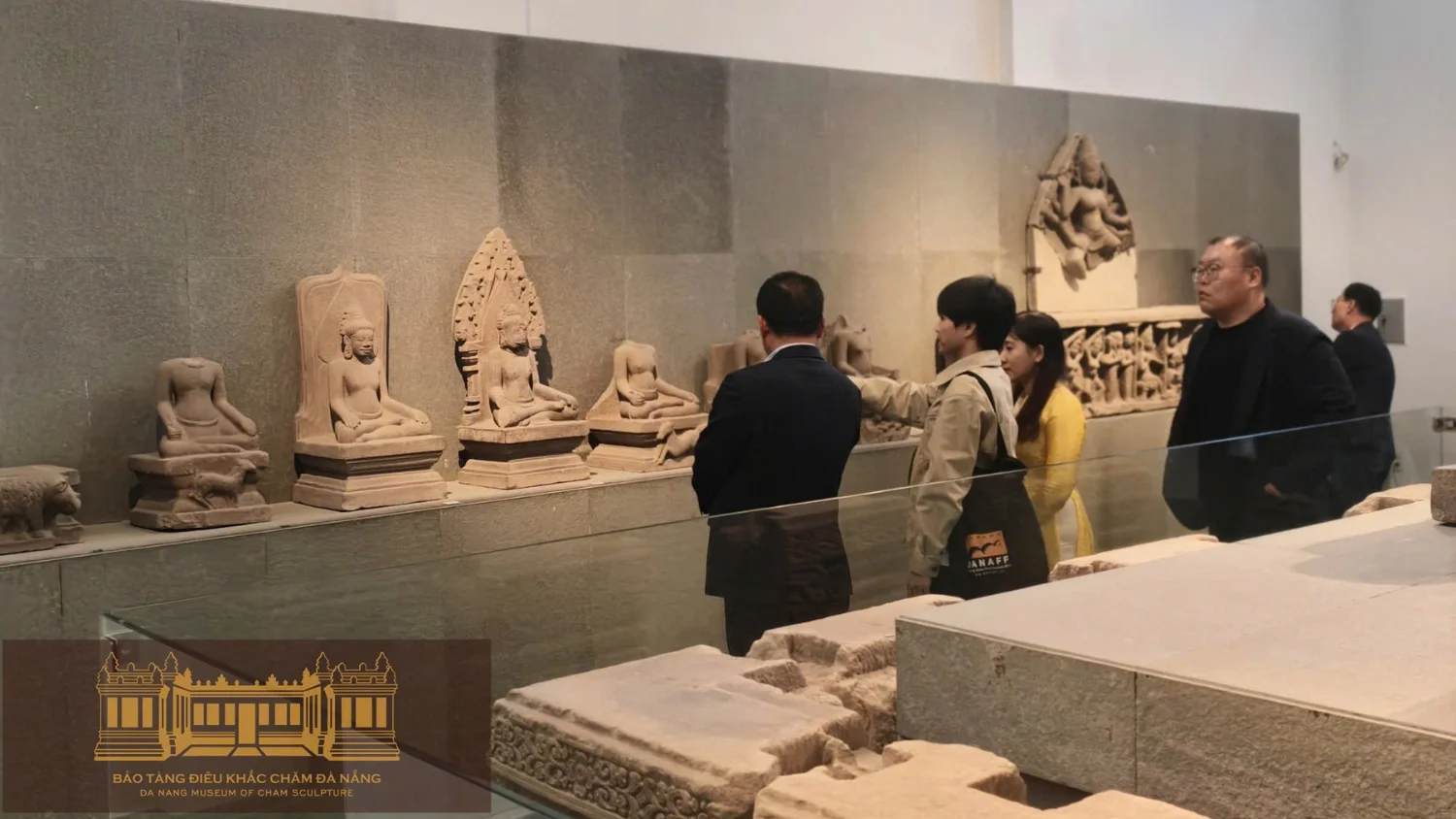
The Museum of Cham Sculpture on Tran Phu Street is the largest collection of Cham sculpture in the world, fully indoors, and on a grey October morning with no tourist crowds it deserves two hours at minimum. The pieces carved between the 7th and 15th centuries by the Cham civilization are extraordinary and the museum is consistently undervisited even in peak season. This is one of those museums that people walk past and wish they had gone in.
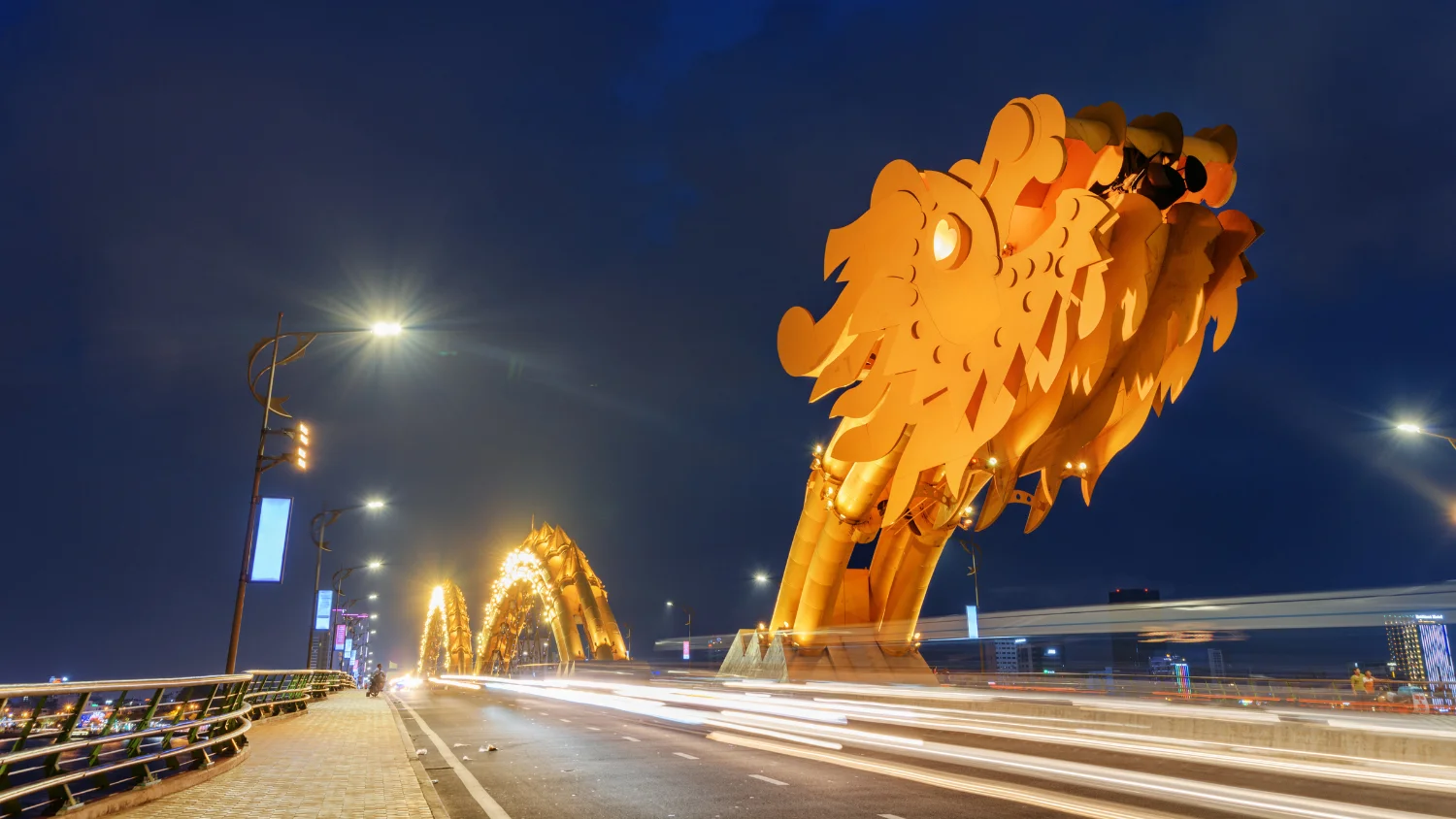
The Dragon Bridge and Han River waterfront come alive in the evening after the afternoon rain clears. The fire and water show every Saturday and Sunday at 9pm runs year-round regardless of whether it rained earlier in the day. A table at one of the riverside restaurants from 7pm on a Saturday evening in October, with the rain finished and the bridge lights reflecting on the water, is a specific and quietly excellent Da Nang experience.
The covered food markets on Tran Bang Giang Street and the food streets near Han Market work in any weather. Da Nang has a serious food culture that deserves a dedicated half-day regardless of the sky.
Ba Na Hills and the October cloud inversion
On days when the coast is grey and overcast in October, the Ba Na Hills summit at 1,487 meters is frequently above the cloud line in sunshine. The cloud inversion that develops during the northeast monsoon season sits below the summit level on many autumn days. It is not guaranteed but it happens often enough to be worth attempting on an overcast coastal morning. Take the cable car up and see what you find. The worst outcome is a grey summit with no view. The best outcome is emerging into bright sunshine with white cloud filling the valley below and the coast invisible beneath it.
The October price opportunity
Da Nang hotel rates in October fall 30 to 40 percent from the peak March to August levels. Beachfront properties that are out of budget in July are reasonable in October. The beach is not swimming weather but the resort pool is open and the room quality at these prices is hard to match in any other month. For travelers whose primary goal is not the beach, October in Da Nang is an excellent value proposition that most people overlook.
What to pack: A compact umbrella every day from October. Quick-dry fabrics. Comfortable shoes that handle wet pavements. Sunscreen still necessary because the UV index is high on clear mornings even in the wet months.
See our Best Time to Visit Da Nang guide for the full Da Nang seasonal calendar including the DIFF fireworks festival and the specific Ba Na Hills seasonal guidance.
Hoi An in the rain: The flooding reality and why people still come anyway
Hoi An floods differently from Da Nang and this is the single most important thing a traveler with October dates needs to understand before making any accommodation booking.
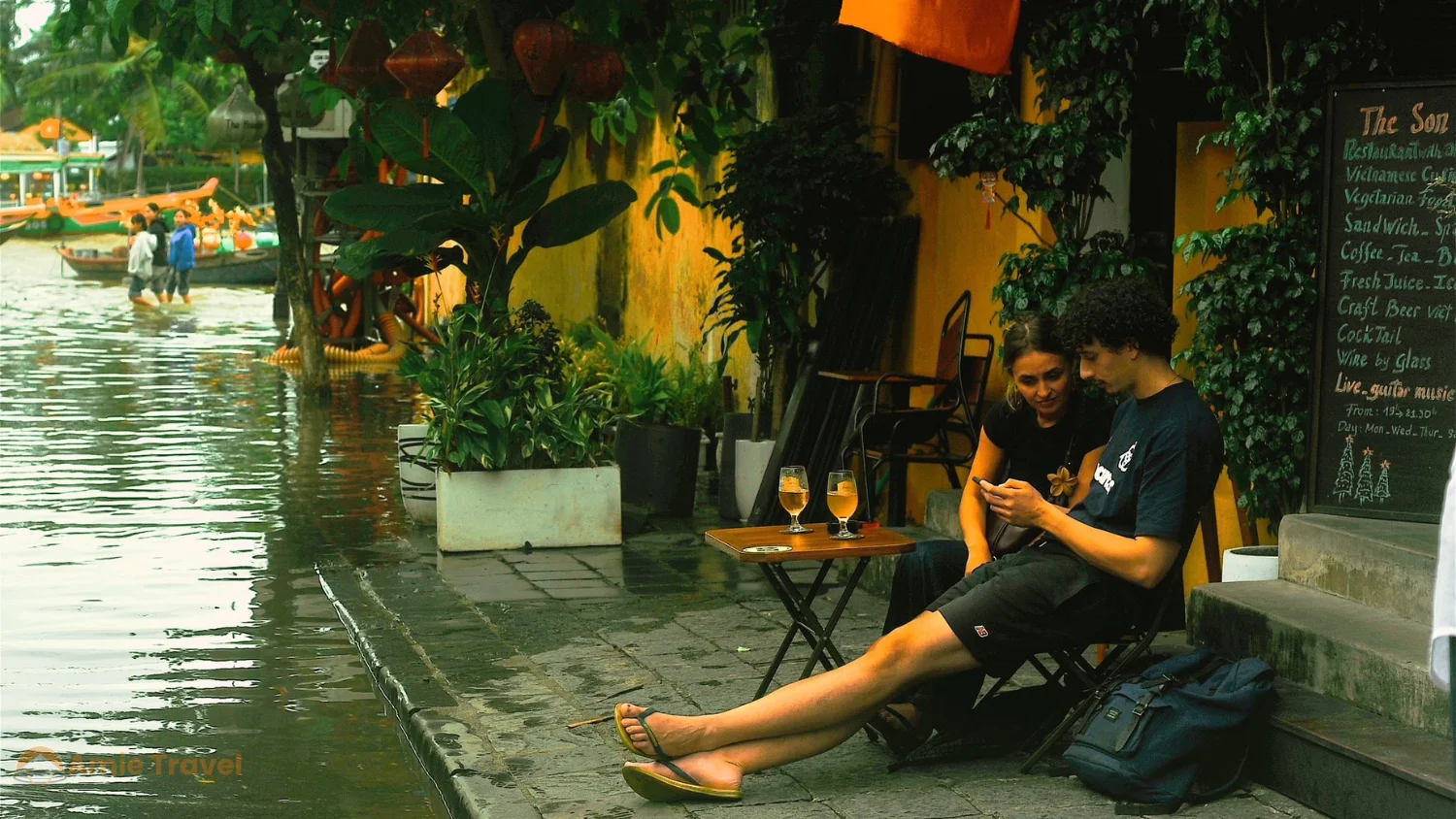
When the Thu Bon River rises after sustained heavy rain, it backs up into the Ancient Town’s drainage system and the old streets fill from below rather than from rainfall above. This is structural flooding caused by a medieval drainage system meeting a rising river, not surface water running off from heavy rain above. On the worst October and November days the low-lying streets of the Ancient Town closest to the river can have ankle to knee-deep water for two to three days while the river level stays high. Some years October in Hoi An is severe. Some years it is mild. There is no way to know in advance which kind of year you will get.
The accommodation decision that changes everything
Book in the new town area rather than inside the Ancient Town during October. The new town sits on slightly higher ground away from the Thu Bon River and does not flood when the Ancient Town does. From a new town base you can walk or take a taxi to the Ancient Town in the morning when conditions allow and return when water levels rise. Book inside the Ancient Town during October without knowing this and you may spend a day or two unable to leave your hotel without wet feet and no practical way to reach dinner.
This is the most commercially important piece of advice in this article. A traveler who makes this accommodation decision correctly has a manageable and often memorable October in Hoi An. A traveler who gets it wrong has a frustrating one.
Why people still come to Hoi An in October
The Hoi An Ancient Town with paper lanterns reflected in still floodwater on the old stone lanes is one of the most specifically atmospheric travel images in Vietnam. Some travelers know about the flooding and come precisely for this photograph. The yellow merchant house facades visible above the water line, the lantern light on wet stone, the sound of rain on old roof tiles: this version of Hoi An exists only in October and November and it is, in its way, one of the most memorable things this town produces.
The rainy season Hoi An itinerary that works
Tailoring. Hoi An is the best tailoring destination in Vietnam and the process takes two to three days regardless of weather. A rainy October is actually ideal for it: you have time to sit through fittings, you are not missing beach days, and the shops are less crowded and more attentive than in peak season. If you have been putting off getting something made in Hoi An because it felt like a tourist cliche, October when the shop is half empty and the tailor has time to talk is when it stops feeling like one.

The monthly lantern festival. On the 14th day of every lunar month the Ancient Town turns off its electric lights and lights paper lanterns. This happens every month of the year, not just at the Mid-Autumn Festival. In October and November the lantern festival falls in the middle of the rainy season and the lantern light on wet stone lanes with the street quiet is specifically beautiful. Check the October and November 2026 lunar calendar for the exact dates.
Cooking classes. Hoi An’s cooking schools are among the most regarded in Southeast Asia. A morning market visit followed by a hands-on cooking class is a complete and enjoyable activity that requires nothing from the weather.
My Son Sanctuary: go in the morning, check the sky first
My Son is entirely outdoors. The Cham temple ruins sit in an open jungle valley with no shelter over the main temple groups. In heavy October rain the paths are muddy and the stone surfaces are slippery. My Son is still worth visiting in October but go in the early morning when the sky is at its clearest, not in the afternoon when rain is most likely. If you wake up to heavy sustained rain, use that morning for the indoor itinerary and keep My Son for the next dry morning.
The food that belongs to a wet Hoi An morning
Com ga, Hoi An chicken rice, from any of the small covered restaurants on Phan Chu Trinh Street. White rice cooked in chicken broth, shredded chicken, a small bowl of soup. It costs almost nothing and is one of the most specifically Hoi An things you can eat here. Banh mi from the small stall on Tran Phu Street operates from a covered counter regardless of weather and the queue is shorter in October than it is in March. These are not rainy day compromises. They are the right food for this city in this season.
See our Best Time to Visit Hoi An guide for the full Hoi An seasonal calendar including the Lantern Festival monthly dates and the Ancient Town flooding history in context.
Hue in the rain: The imperial city that has an answer for every weather day
Of the three Central Vietnam cities, Hue receives the most rain in October and November and is, paradoxically, the most equipped to handle it as a travel experience. The city has been building its cultural life around wet autumns for centuries and the heritage circuit here works better in the rain than any comparable destination in Vietnam.
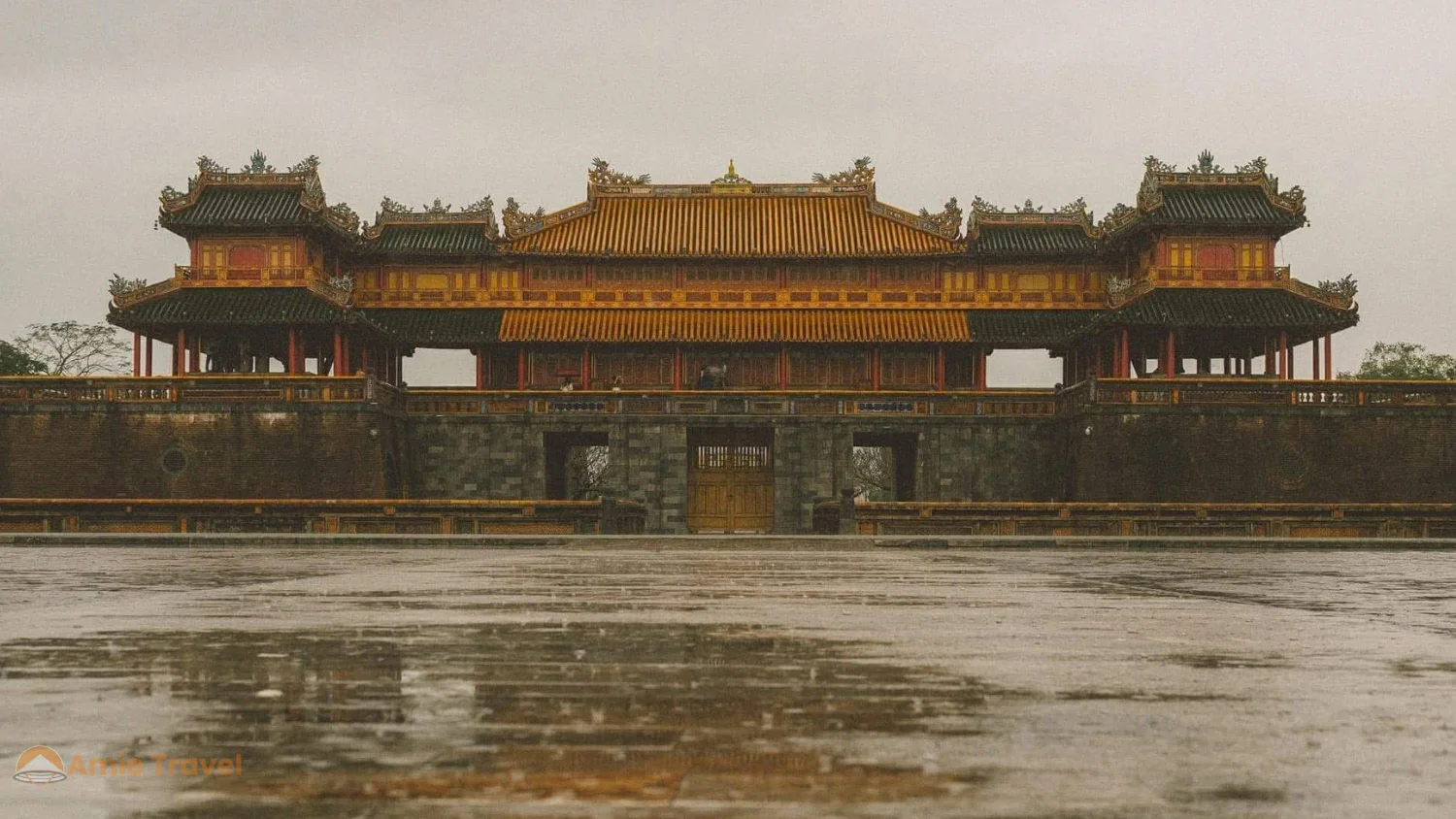
Hue receives approximately 2,800mm of annual rainfall, the highest of any major Vietnamese city, with October alone delivering around 700 to 750mm in heavy years. When rain is that consistent, a city either develops an indoor culture or becomes very difficult to live in. Hue developed the culture.
The imperial heritage circuit in the rain
The Imperial Citadel complex is large, partially covered, and fully accessible in rain. Covered walkways connect key sections. The yellow-ochre walls and red lacquer columns of the citadel in grey October light have a muted and melancholy grandeur that bright dry-season sunshine washes out. The citadel in October is a different experience from the citadel in July, and some would argue the more evocative one.
The Royal Tombs of Minh Mang, Tu Duc, and Khai Dinh sit on forested hillsides outside the city and are fully visitable in rain. Khai Dinh’s tomb in particular, with its mosaic-encrusted interior and hillside approach through pine trees, works specifically well in misty conditions. The Hue Museum of Royal Fine Arts on Le Trung Dinh Street is one of the most consistently underrated museums in Vietnam and is excellent on any weather day.
The Hue to Da Nang train across the Hai Van Pass
The train journey from Hue to Da Nang crosses the Hai Van Pass, one of the most scenic rail sections in Southeast Asia. In clear weather it is dramatic. In low cloud and mist the pass disappears into white and the train emerges from it onto the Da Nang coastal plain below. Some travelers prefer the misty version for the atmosphere rather than the panorama. It is a different kind of experience and it is available only in the rainy season.
The food that belongs to a cold rainy Hue day
Bun bo Hue, the spicy and rich beef noodle soup that is Hue’s signature dish, was made for exactly this weather. A bowl in a small covered restaurant on a wet October morning with rain on the awning outside is one of those moments where the food and the city and the season align perfectly. Salt coffee at any of the cafes near the Imperial Citadel: thick, sweet, slightly salty, consumed slowly with the rain outside. Banh khoai, the thick crispy Hue pancake with shrimp and pork, is available at the covered market stalls near Dong Ba Market regardless of weather and is specifically good as a late morning meal after the citadel.
The honest October note
Some October years in Hue are heavy and sustained for days at a time. Some are wet in bursts with clear periods between. There is no reliable way to predict which you will get. Book refundable accommodation for any October Hue stay. Keep two to three buffer days. Do not plan an October Hue itinerary that requires outdoor cycling between royal tombs on a specific day. Travel insurance that explicitly covers weather-related disruptions is worth having here more than anywhere else in this guide.
See our Best Time to Visit Hue guide for the full Hue seasonal calendar including the heritage circuit by season, which tomb to visit in which weather, and the morning fog photography window in January and February.
When the coast is too difficult: three pivot options worth knowing
Not every October works out. Some years the rain is heavier than forecast, a typhoon sits off the coast for a week, and the idea of spending your Central Vietnam days in the rain loses its appeal regardless of how philosophically prepared you were. Here are three genuine pivot options based on what you originally came for.
If you came for a highland and cultural experience and do not need a beach: Da Lat
Da Lat at 1,500 meters in the Central Highlands operates on a completely different climate system from the coast. The northeast monsoon that drenches the Central Coast loses much of its moisture before reaching the highlands and October rainfall in Da Lat averages around 150mm compared to 400 to 600mm on the coast. The temperature at 15 to 22 degrees is a genuine contrast to the hot humidity of the Central Coast even in the rain.
Da Lat is a French colonial highland town built around a lake, surrounded by pine forests, flower farms, and coffee plantations. It is not a beach destination and not a replacement for Hoi An or Hue. But as a pivot for travelers whose coast dates have become difficult, it is a complete destination in its own right. Six hours from Da Nang by road or accessible by direct flight.
If you came specifically for a beach and cannot give it up: Phu Quoc east coast
Phu Quoc in October is also in the rainy season but not the same rainy season as the Central Coast. The southwest monsoon that drives Phu Quoc’s wet season comes from a different direction and the island’s own mass breaks the swell before it reaches the eastern shores. Sao Beach and Khem Beach on the eastern side remain calm and swimmable throughout the rainy season when the west coast is rough.
This pivot requires knowing where to stay. A traveler who arrives in Phu Quoc in October and books on the west coast near Long Beach will find rough seas. A traveler who books east coast accommodation near Sao Beach finds calm water, significantly lower prices than the dry season, and a working beach in a month when the Central Coast is not viable. See our Best Time to Visit Phu Quoc guide for the full east coast strategy and the specific accommodation areas.
If you have not yet done the North: Hanoi and Ha Long Bay in October
October is the single best month of the year for both Hanoi and Ha Long Bay. Clear skies, golden light, low humidity, and calm water for Ha Long Bay cruises. The autumn clarity that makes October in Hanoi the most walkable and most photogenic version of the city, and the golden afternoon light on the limestone karsts in Ha Long Bay, are available right now while the Central Coast is at its wettest.
If your Vietnam itinerary has any flexibility to resequence, spending October days in the North and visiting the Central Coast in November or December instead gives you the best version of every region rather than the difficult version of one. See our Best Time to Visit Hanoi guide and Best Time to Visit Ha Long Bay guide for what October in those destinations actually looks and feels like.
September Through December on the Central Coast
September
Early September in Da Nang, Hoi An, and Hue is largely manageable. The coast is transitioning from the dry season and the rain arrives gradually rather than all at once. From around September 10 the rain becomes more consistent and by September 20 the full autumn pattern is establishing. September is still a good month for all three cities with an umbrella and afternoon flexibility. Da Nang beach closes for swimming by late September as the seas build. Hoi An is atmospheric and the Ancient Town is largely dry. Hue is getting wetter but still accessible for the full outdoor heritage circuit. Verdict: early September with confidence, late September with an umbrella and flexible afternoons.
October, first two weeks
The most difficult two weeks on the Central Coast calendar. Da Nang is wet but functioning: Ba Na Hills is worth attempting for the cloud inversion on overcast days, the Cham Museum and covered food streets are the right indoor plan, the Han River restaurants are excellent in evenings after rain clears. Hoi An needs the new town accommodation strategy from this point: book away from the Ancient Town and the Thu Bon River, build the tailoring or cooking class itinerary, treat the flooded Ancient Town lantern image as a bonus not a plan. Hue is heavy rain territory: the Imperial Citadel and Royal Tombs are accessible, the food and cafe culture is excellent, but keep buffer days and avoid committing to outdoor cycling tours on specific dates. Check NCHMF and Windy.com before any outdoor activity day from September 15 through mid-November. Verdict: manageable with preparation. Not for travelers who need guaranteed outdoor days.
October, second two weeks
Conditions continue with more variability than the first half of the month. Some second halves are noticeably clearer. Some are worse. There is no reliable forecast beyond 72 hours for this window. Refundable bookings matter here specifically: if a typhoon alert is issued for your province and your travel dates, the ability to reschedule by 48 hours can make the difference between a difficult trip and a fine one. Travel insurance covering typhoon-related disruptions is not optional for this window. Verdict: plan for rain and be grateful for every dry morning.
November, first two weeks
The typhoon risk is easing but early November still carries meaningful storm risk on the Central Coast. Da Nang is improving fastest and by early November is largely back to functional city conditions on most days. Hoi An’s flooding risk is decreasing but the new town accommodation strategy is still correct until around November 15. Hue is still receiving significant rain but the multi-day sustained heavy episodes are less frequent than in October. Prices across all three cities remain near October lows while conditions are noticeably better. This is one of the most undervalued windows in Central Vietnam for budget travelers who can handle occasional wet days. Verdict: early November specifically suits budget travelers with some flexibility.
November, second two weeks
The transition back to the dry season is clearly underway from around November 15. Da Nang beach is reopening for careful swimming on clearer days. Hoi An Ancient Town walking is restored to normal and accommodation inside the Ancient Town is fine again. Hue is warming and clearing toward its excellent late-year conditions. The combination of near-October low prices and rapidly improving conditions makes late November one of the most strategically undervalued windows across all three cities. Verdict: one of the best value decisions on the entire Central Vietnam calendar. If your dates have any flexibility, target late November.
December
The dry season has properly established. Da Nang beach is reopening fully. Hoi An Ancient Town is walkable, photogenic, and back to the warm-weather lantern town its reputation is built on. Hue is warming into the long dry run that will carry it through to August. Prices are rising from the October-November low as December visitors arrive for the Christmas and New Year period. Verdict: the reward for having stayed flexible. If you can extend any Central Vietnam trip into early December the improvement in conditions from even two weeks earlier is dramatic and immediately visible.