The dry season (November to April): The pearl island at its annual best
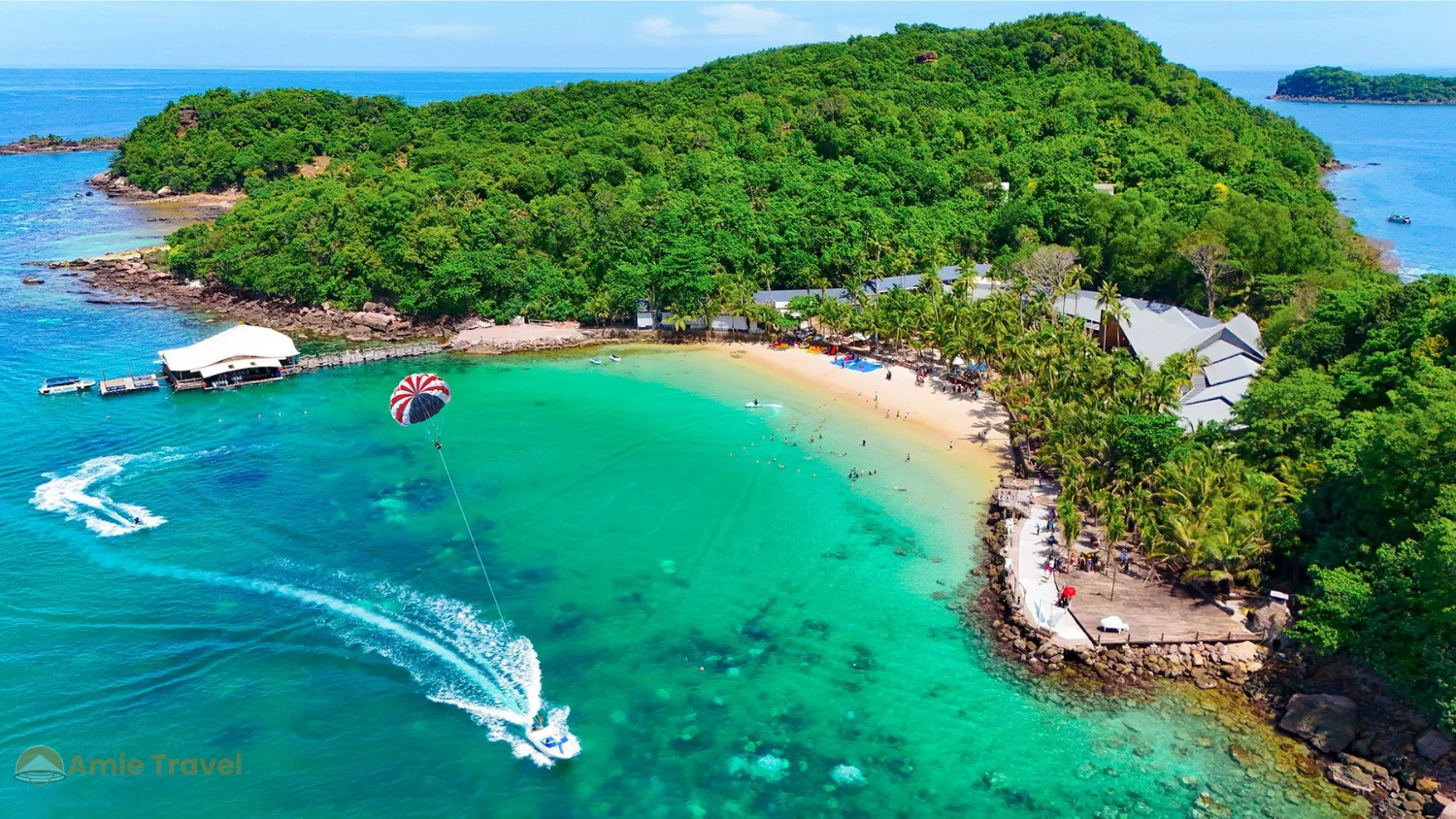
November through April is when Phu Quoc delivers the postcard version of itself. The northeast monsoon that drives the island’s rainy season has retreated. The southwest monsoon has not yet built. The Gulf of Thailand west of the island is calm in a specific way that the rest of the year cannot match: flat, clear, and warm with visibility that reaches 12 to 15 meters around the An Thoi Archipelago at peak dry season from December to March.

November: the transition month
November is the beginning of the dry season window but the transition from the rains is gradual. Early November still carries the occasional afternoon shower and the seas are calming rather than already calm. By mid-November, Phu Quoc has largely shed the rainy season. The landscape is still brilliantly green from the previous months of rain, the resorts are not yet at full peak occupancy, and prices are still near low-season rates. November is the closest the island comes to having everything: reasonable weather, green scenery, and prices that have not yet spiked.
Travellers specifically targeting value alongside good weather should consider November arrival. The window from November 15 to December 1 is the best price-to-conditions ratio the dry season offers.
December to February: the peak of the peak
These three months are Phu Quoc at its most reliable and its most expensive. Daily temperatures run at 25 to 30 degrees. The sea temperature is 27 to 29 degrees. Rainfall averages just 25 to 40mm for the entire month. West coast beaches including Long Beach and Bai Dai have calm, clear water with minimal wave action. The An Thoi Archipelago diving and snorkelling conditions are at their annual best: visibility of 12 to 15 meters around the coral reefs of the 15 southern islands.

Bai Sao Beach on the east coast in the dry season has 7 kilometres of powdery white sand with almost no seaweed deposits and shallow turquoise water that photographs exactly as it appears on every Phu Quoc travel guide cover. This is not an exaggeration. Bai Sao in January at 7am before the tour groups arrive is one of the genuinely beautiful beach experiences in Southeast Asia.
Tet 2027 falls on February 6. In the two weeks before Tet, domestic Vietnamese tourism to Phu Quoc surges significantly. Hotels fill. Sunset Town fills. The Dinh Cau Night Market expands. The island has a festive energy that international travellers find either exciting or overwhelming depending on their preference. During Tet week itself (approximately February 3 to 11, 2027), some smaller local restaurants and shops close. International travellers in Phu Quoc during Tet week will find all resort facilities fully operational, the beaches open, and the island carrying a specific Vietnamese New Year atmosphere that is unlike any other time of year.
Booking note for December and January: Book accommodation at least 4 months ahead for December and January 2026. Beachfront resorts in peak season sell out entirely by September. Hotel prices in peak season run 60 to 100 percent above low-season rates. Luxury properties that charge 150 to 200 USD per night in October charge 280 to 350 USD per night in December.
March and April: late dry season with warming temperatures
March and April remain dry with minimal rainfall but temperatures climb toward their annual peak. April regularly reaches 33 to 35 degrees at midday. The sea temperature in April is the warmest of the year at approximately 30 degrees, which makes it the most comfortable month for extended swimming even as the air temperature requires afternoon shade.
Prices in March and April are below December and January but above the shoulder months of May and November. The crowds are thinner than January. For travellers whose dates fall in March or April, this is still a strong Phu Quoc window with the added advantage of the warmest swimming water of the year.
What to pack for dry season Phu Quoc: Reef-safe SPF 50 sunscreen as a non-negotiable. UV index above 11 from 10am to 3pm throughout the dry season. Wide-brim hat. Lightweight linen or moisture-wicking fabrics. Comfortable sandals and reef shoes for snorkelling excursions. A light layer for air-conditioned resort dining rooms which can be cold. Minimal rain gear needed from December through March.
Who the dry season is for: First-time visitors who want guaranteed beach days. Families with children who need calm, shallow water. Honeymooners booking luxury resorts. Divers and snorkellers targeting the An Thoi Archipelago at peak visibility. Travellers for whom predictable weather is more important than price.
See our Vietnam Family Tours for southern Vietnam circuits that include Phu Quoc in the dry season window.
The rainy season (May to October): The emerald version of Phu Quoc
The standard advice on Phu Quoc in the rainy season is to avoid it. The standard advice is wrong for approximately half the people who follow it.
The rainy season on Phu Quoc is not sustained, all-day rain. It is tropical moisture: a morning that is typically clear and fully usable, an afternoon downpour that arrives between 3 and 5pm and lasts one to two hours, and an evening that clears for outdoor dining. This pattern is predictable enough to build an itinerary around. It requires knowing which part of the island to use and accepting that the west coast beaches are not the right answer in this season.

The rainy season also does something to Phu Quoc that the dry season cannot: it makes the island vivid. The 37,000 hectares of Phu Quoc National Park covering the northern interior of the island turn a depth of green in June and July that the dry season, with its brown undergrowth and dusty forest trails, simply does not produce. Suoi Tranh Waterfall, a four-tier cascade inside the national park, flows at full volume only from June onward. Suoi Da Ban Stream in the southern interior has accessible natural rock pools and cascades that require the rainy season water level to be worth visiting. The pepper farms on the island produce their most vivid growth in the wet months.
May and June: the gentle opening of the rainy season
May is the transition month. Early May still carries dry season conditions on most days. By late May, afternoon showers begin arriving. June sees increasing rainfall but continues the morning sunshine pattern. For travellers comfortable with an afternoon pool or indoor break, May and June on Phu Quoc represent a specific window: dry-season light with rainy-season prices.
July to September: peak wet season
July through September brings the heaviest rainfall, strongest southwest winds, and roughest west coast seas of the year. August is typically the wettest month with 350 to 400mm of rainfall. The west coast beaches including Long Beach, Bai Dai, and Ong Lang Beach are genuinely rough and not suitable for swimming. This is not a safety warning for every traveller. It is accurate information for planning.
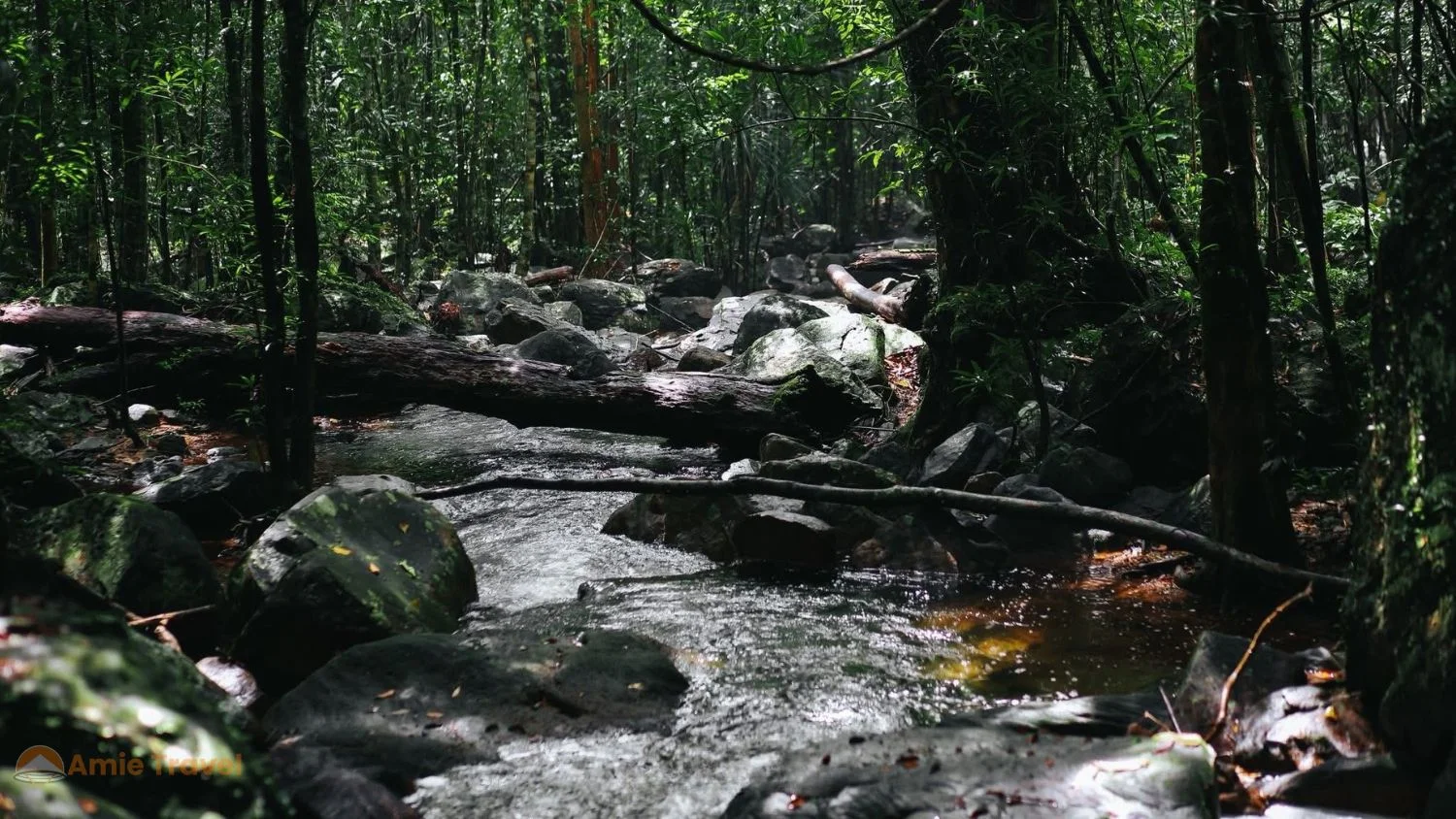
What these months offer instead: Phu Quoc National Park at its most extraordinary. The southern rock pools at Suoi Da Ban at full flow. The lowest prices of the year. A level of quiet on the island that December and January cannot approach. Resorts that charge 200 USD per night in January are available at 70 to 90 USD per night in August. A luxury resort with a private beach pool becomes a genuinely affordable proposition in the rainy season.
October: the pivot month
October sees the rains beginning to ease. The first half of October is still firmly in the wet season pattern. By mid to late October, sunny days become more frequent, sea conditions improve, and the transition toward the dry season becomes visible. Late October is when the island is simultaneously at its most affordable and beginning to be reliably usable for beach activities.
What to pack for rainy season Phu Quoc: A compact waterproof poncho or rain jacket for the afternoon window. Quick-dry clothing throughout. Insect repellent, particularly for evenings in national park areas. Waterproof sandals. A dry bag for electronics on any boat excursions. A reusable umbrella for town walking.
Who the rainy season is for: Budget-focused travellers who want the maximum value for money. Slow travellers spending 7 or more nights who want a genuine resort experience at a fraction of the peak price. Nature and photography enthusiasts targeting the national park and waterfalls. Travellers who understand the east coast strategy below and plan accordingly.
The island strategy: west coast vs east coast and where to stay
This section contains the single most useful piece of planning information for a Phu Quoc trip and the one that most travel guides either omit entirely or bury in a footnote.

Why the coast matters: the southwest monsoon physics
Phu Quoc’s rainy season rain comes from the southwest. The west coast of the island (Long Beach, Bai Dai, Ong Lang, Sunset Town) faces directly into the prevailing southwest monsoon wind and swell. From May to October, the west coast takes the full force of the season: rough seas, wave action unsuitable for casual swimming, and beach conditions that require a specific tolerance for choppy water.
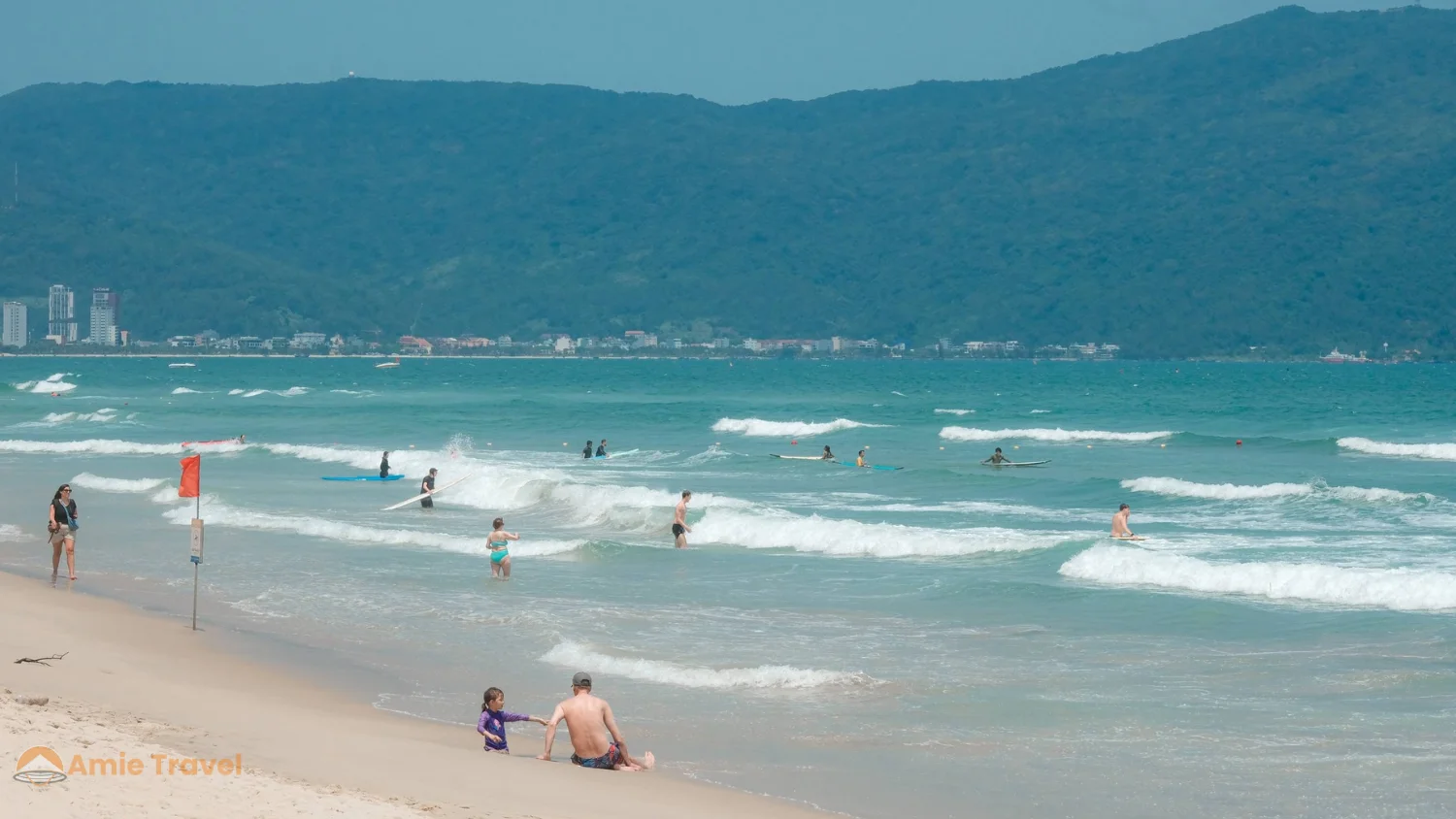
The east coast (Sao Beach, Khem Beach, Ham Ninh, Bai Thom) faces away from the dominant southwest wind direction. The island’s own mass breaks the swell before it reaches the eastern shores. The result is that east coast beaches in the rainy season are calmer, more swimmable, and more usable for families and casual beach visitors than the west coast in the same month. This is not a minor difference. Sao Beach in July with its gently lapping water is a fundamentally different experience from Long Beach in July with its consistent wave action.
The practical beach strategy by season:
West coast (Long Beach, Bai Dai, Ong Lang, Sunset Town area): Best from November to April. The mirror-flat dry season seas make the west coast the most beautiful version of itself. Sunset Town and the Long Beach strip are most functional in these months. In May to October, the west coast is for resort pools, not ocean swimming.
East coast (Sao Beach, Khem Beach, Ham Ninh fishing village): Good year-round. Best for value from June to October when it is the only viable beach option on the island and prices are low. Best for beauty from November to February when clear dry-season water meets the naturally shallow and calm east coast bay conditions. Khem Beach specifically hosts some of the island’s most luxurious resorts and is sheltered enough to be excellent in almost any month.
Southern islands and An Thoi Archipelago: Best for diving and snorkelling from November to March when visibility reaches 12 to 15 meters. Boat trips to the southern islands (Hon Thom, Hon May Rut, Hon Mong Tay, Hon Buom) are best in the dry season. In the rainy season, rough seas limit boat tours from An Thoi Port and some days see cancellations.
The north vs south island planning problem nobody talks about
Phu Quoc is 48 kilometres long from north to south and takes over one hour to drive end to end. This is a significant logistical reality that most travellers discover too late, after they have already booked a resort in the north and planned full days at the southern beaches.
The island divides into two distinct experience zones with genuinely different characters:
The north: VinWonders theme park, Grand World entertainment complex, Vinpearl Safari, Phu Quoc National Park, Bai Dai Beach, the national park trail system, and the quieter fishing villages of Ganh Dau at the northern tip. The north is where the big entertainment infrastructure is and where the nature experiences are.
The south: An Thoi Port, the Hon Thom Cable Car, Sao Beach, Khem Beach, the An Thoi Archipelago island-hopping and diving departures, Bai Sao Beach. The south is where the most photogenic beaches are and where all boat-based island excursions depart from.
If you stay in a north island resort for your entire trip and want to do the southern island-hopping day trip, you are looking at a 40 to 55 minute drive each way just to reach An Thoi Port, before the boat even departs. That is close to two hours of driving for a day activity. If you stay in a south island resort and want to do VinWonders or Vinpearl Safari, the same problem applies in reverse.
The itinerary solution: split your stay
For trips of 4 nights or more, the most efficient Phu Quoc itinerary is not staying in one place for the whole trip. It is splitting your accommodation between the north and south zones so that each base covers the activities closest to it.
A 5-night structure that works cleanly:
Nights 1 and 2: South island base (An Thoi or Khem Beach area). Cover Sao Beach, Khem Beach, the An Thoi Archipelago island-hopping day trip, the Hon Thom Cable Car, sunset on the south coast. Do the boat-based activities while you are already on the southern doorstep.
Nights 3, 4, and 5: North or central island base (Long Beach or Ong Lang area). Cover Long Beach, Ong Lang, the Duong Dong night market, the pepper farm and fish sauce factory visits, Phu Quoc National Park, Suoi Tranh Waterfall if your dates include the rainy season, Vinpearl Safari or VinWonders if this is your preference.
This split-base approach eliminates the hour-each-way driving penalty for the major activities and gives each day a usable radius without burning travel time. It also gives you two beach characters within one trip: the south’s calm, clear, shallow bays and the west coast’s longer, more exposed beach strip.
For trips of 3 nights or fewer, choose one zone and go deep within it rather than trying to cover both ends of the island. South is the better 3-night choice if your priority is beaches and island-hopping. North is better if your priority is entertainment infrastructure or the national park.
The golden shoulder (Late October to November): The best value window
Late October to November is the window that experienced Phu Quoc travellers return to when they cannot justify peak season prices but do not want the full unpredictability of the wet season.
By late October, the southwest monsoon is genuinely retreating. The afternoon rain pattern becomes less reliable in the best sense: some days are clear all day. Sea conditions on the west coast begin calming toward the flat mirror of the dry season. The landscape is still vivid green from the rainy season. Resort occupancy is low. Hotel prices are still at or near low-season rates because the official peak season has not yet begun.
By mid-November, Phu Quoc is largely in dry season mode with occasional brief showers. By late November, the transition is complete and prices begin rising toward the December peak.
The refundable booking hedge
The specific risk of the shoulder season is not constant rain. It is the occasional late storm in October that can make a beach day difficult or cancel a boat tour to the southern islands. The practical response is not to avoid October and November but to book accommodation and major activities on refundable terms.
Most Phu Quoc resorts offer a 10 to 15 percent premium for fully refundable room rates over non-refundable. In the shoulder season, this premium is worth paying. It allows you to book a boat trip to the An Thoi Archipelago with the flexibility to reschedule if a storm arrives, rather than losing the tour cost.
Specific booking approach for the shoulder: book accommodation on refundable terms up until 48 hours before arrival. Book boat tours on a cancellation-friendly operator with a rescheduling policy rather than a full refund. Check the 72-hour forecast from NCHMF before any sea-based activity.
The specific appeal of November
November deserves more attention than it typically receives in Phu Quoc planning content. By mid-November, conditions are good and improving. The resort vegetation is at its lushest from the rainy season and the dry-season beach conditions are establishing. International tourist numbers are low. Domestic Vietnamese tourism has not yet built toward the Tet surge.
For travellers who specifically want the combination of green landscape, calm water, and moderate prices, the window from November 15 to December 1 is the single best value proposition Phu Quoc offers in any given year.
How Phu Quoc fits into a Vietnam itinerary
Most international travellers do not visit Phu Quoc as a standalone destination. They add it to the end of a Vietnam circuit that has already covered Hanoi, Ha Long Bay, Hoi An, and Ho Chi Minh City. Understanding how Phu Quoc functions as a final stop, and when it does not work as one, is as important as understanding the seasonal weather.
Phu Quoc as the final stop: the decompression logic
After 10 to 12 days of active touring through Vietnamese cities, temples, street markets, and scenic routes, most travellers arrive at Phu Quoc wanting exactly one thing: to do nothing on a beach without a schedule. Phu Quoc at the end of a busy Vietnam circuit is well-suited to this. Three to five nights of resort time, beach days, and optional snorkelling or island-hopping provides the decompression that a busy tour builds toward.
The practical implication for seasonal planning: if your Vietnam circuit ends in Phu Quoc, the beach season compatibility matters more than any other consideration. A traveller who has toured Vietnam for 12 days and arrives at Phu Quoc in August to find the west coast beaches rough and the weather unpredictable has a much harder time recovering the end of their trip than a traveller who arrived in March with guaranteed beach days ahead.
When NOT to end at Phu Quoc
If your overall Vietnam itinerary dates fall in June through September and you want a beach finale, Phu Quoc requires specific management: east coast accommodation, acceptance of the afternoon rain rhythm, and low beach expectations for the west coast. If you want a guaranteed beach finale without weather management, the correct pivot is to end your trip in Da Nang and Hoi An during their dry season (the Central Coast is in dry season from March through August) rather than Phu Quoc in its wet season.
Minimum nights: 3 is the floor, 4 to 5 is the right number
Three nights in Phu Quoc is the minimum that makes the flight from Ho Chi Minh City worth it. With three nights you can do: one full beach day, one island-hopping day trip to the southern archipelago, and one half-day activity such as the national park or the night market. Four to five nights allows the split-base itinerary described in the island strategy section and gives the trip room to absorb one day of weather without feeling like the trip has been ruined.
Combining with the Mekong Delta
Phu Quoc pairs naturally with a Mekong Delta stop because they share a geographic region. A 1 to 2 night stop in Can Tho before the Phu Quoc flight from Can Tho Airport (direct flights available) adds the floating market and Delta boat culture to the itinerary without significant additional travel time.
See our Vietnam Family Tours and Vietnam Adventure Tours for southern Vietnam circuits that include Phu Quoc in the right seasonal window.
Phu Quoc weather month by month
January: 25 to 30 degrees, average 25 to 40mm rainfall, west coast seas mirror-flat, snorkelling visibility at its annual best at 12 to 15 meters. Peak season pricing. Bai Sao Beach at its most photogenic. Book 4 months ahead. Verdict: the best month for beach perfection, the worst month for value.
February: 25 to 30 degrees, minimal rain, sea calm, Tet 2027 on February 6 brings domestic tourism surge. Excellent beach conditions. Book well ahead for Tet week accommodation. Verdict: excellent beach month, festive island character around Tet, prices high.
March: 25 to 33 degrees, low rainfall, sea still calm, temperatures rising from February. Late dry season with slightly lower prices than January. Sea temperature warmest of the year approaching. Good snorkelling visibility. Verdict: strong beach month with slightly more heat and slightly lower prices than peak.
April: 26 to 34 degrees, minimal rain, sea still calm, warmest sea temperature of the year at approximately 30 degrees. Prices below January to February peak. Midday heat requires morning beach sessions. Reunification Day April 30 brings a domestic day-trip surge. Verdict: hot but good, warmest swimming water of the year.
May: 27 to 34 degrees, rain beginning by late month, transition season. Early May still largely dry. West coast seas beginning to build. East coast strategy starting to apply from late May. Prices dropping 20 to 30 percent from peak. Verdict: good value window with weather caveats from mid-month onward.
June: 26 to 33 degrees, afternoon showers established, southwest wind building, west coast rough. East coast calm and swimmable. National park trails at early lush. Prices 30 to 40 percent below peak. Suoi Tranh Waterfall flow increasing. Verdict: rainy season properly arrived, east coast strategy essential, good value.
July: 25 to 32 degrees, consistent afternoon rain, west coast waves rough, east coast Sao Beach and Khem Beach calm and viable. Phu Quoc National Park at its greenest. Lowest prices alongside August. Verdict: best month for budget and nature, wrong month for west coast beach, right month for east coast.
August: 25 to 31 degrees, wettest month with 350 to 400mm average rainfall, roughest seas of the year on the west coast, east coast still functional. Absolute lowest prices of the year. Resort pools fully available. Verdict: budget maximum, nature maximum, patience required.
September: 25 to 31 degrees, heavy rain continuing but beginning to ease from late month, seas rough. Still low prices. By late September the afternoon pattern begins becoming less consistent and the transition toward October improvement is visible. Verdict: budget travel, accept the conditions, plan for indoor options in afternoons.
October: 25 to 31 degrees, rainfall decreasing through the month, late October transition to dry season beginning. Second half of October has noticeably more usable days than first half. Prices at or near low-season rates while conditions are improving. Refundable bookings essential. Verdict: the most interesting month in the Phu Quoc calendar, high reward for flexible travelers.
November: 24 to 30 degrees, transitioning strongly to dry season, mid-November largely clear, prices below December peak, landscape still green from rainy season. West coast sea calming toward mirror-flat. Verdict: the best value month in the dry season, underrated and underbooked.
December: 24 to 29 degrees, dry season fully established, west coast seas calm, snorkelling visibility returning to peak, most comfortable temperatures of the year. Peak pricing beginning. Book ahead for Christmas and New Year week. Verdict: perfect beach conditions, peak prices, festive resort atmosphere.