Sapa at a glance
Golden harvest: September 10 to 25 at the main Muong Hoa Valley viewpoints. Book Lao Chai and Ta Van homestays 6 to 8 weeks ahead. After September 30 most fields are harvested.
Mirror terraces: Late April to mid-May. Flooded fields reflecting the sky and mountains. The most surreal visual Sapa produces. Sunrise at the Y Linh Ho viewpoint.
Best trekking: April-May or October-November. Dry trails, comfortable temperatures of 12 to 22 degrees, clear Fansipan views. October and November are the best months for Fansipan summit panoramas.
Cloud hunting and frost season: November to February. Rare snow on Fansipan. Cherry blossom on O Quy Ho Pass in January. The most atmospheric version of the town.
Tips: Do not go to Sapa in October specifically for golden rice terraces. Most fields are harvested by September 30. If your dates are fixed in October, the Fansipan trekking window is excellent and Pu Luong is the harvest alternative. See both sections below.

The golden window (September): correcting the October myth
Most travel websites say the best time to visit Sapa for golden rice terraces is September to October. This is where most Sapa trips go wrong. The harvest at the main viewpoints in Muong Hoa Valley peaks between September 10 and September 25. By early October the harvest is largely over and the lower valley terraces are already bare brown earth. By mid-October the upper fields are cut. What most travelers see when they arrive in late October expecting golden rice is post-harvest mud.

The reason the October myth persists is that the harvest moves by elevation. Lower terraces at 900 to 1,100 meters, the Ta Van and Lao Chai area, harvest first. Upper terraces above Lao Chai at 1,200 to 1,400 meters hold their color one to two weeks longer. This elevation gradient means that at any point in the harvest window some fields are gold and some are already cut. A traveler arriving on October 5 might still see color on the highest fields above the main viewpoints. A traveler arriving on October 15 will find the valley largely bare at every elevation.
The specific peak dates by location:
Muong Hoa Valley floor (Lao Chai and Ta Van, 900 to 1,100m): September 10 to 20. This is where the main trekking route runs and where the most photographed terrace views are. Peak gold arrives here first and leaves first.
Upper fields above Lao Chai (1,200 to 1,400m): September 15 to 28. Higher elevation, slightly later harvest. These fields are visible from the upper valley viewpoints and hold their color into the last week of September.
Cat Cat village and the western slopes (900m): September 8 to 18. Lower elevation than the main valley, harvests earliest of all main viewpoints.
Y Linh Ho and the eastern slopes: September 12 to 25. Slightly later due to different aspect and water management timing.
What the harvest actually looks like
September harvest week in Sapa is not just a visual event. It is an agricultural and cultural moment. H’mong and Dao farmers in indigo and red embroidered dress move through the fields cutting rice by hand. The cut rice is bundled and hung on wooden frames along the terrace walls to dry. The smell of drying rice in the early morning air is specific to this window and disappears completely when the harvest ends. At dawn the Muong Hoa Valley in late September catches the first light across gold and the morning mist burns off the lower valley floor, revealing the terrace layers one by one as the sun rises above the eastern ridge.
Booking reality for the harvest window
Lao Chai and Ta Van village homestays sell out 6 to 8 weeks ahead for the September 15 to 25 window. By August 1, most of the best-positioned homestays with terrace views are fully booked. Sapa town hotels have more availability but require a 30 to 45 minute drive or long walk to reach the valley viewpoints. If the harvest is the specific reason for the trip, book by late July at the latest for late September stays.
Where to stay for the harvest
Lao Chai or Ta Van village homestays give you direct terrace access at dawn before the day-trip groups arrive from town. This is the specific advantage of valley homestays over town hotels: the golden hour light on the terraces at 6am when the valley is quiet is an experience the town accommodation cannot provide. Book homestays directly through local operators rather than through international platforms to ensure the money supports local families.
What to pack for the golden harvest window: Layered clothing for mornings at 16 to 20 degrees that warm to 24 to 26 degrees by midday. Waterproof boots or trail shoes with real ankle support for the terrace paths between Lao Chai and Ta Van. A packable rain jacket for afternoon showers that are less frequent in September than August but still possible. A dry bag for camera equipment on early morning walks when dew on the terrace grass is significant.
See our 7-Day North Vietnam Tour: Hanoi, Ha Long Bay, Sapa and Fansipan for a northern circuit that includes Sapa in the harvest window.
Sapa or Pu Luong: Same gold, different experience
This section is specifically for travelers whose dates fall after September 25 and who came to this article because they want golden harvest terraces.
If your dates are fixed in late September or October, Pu Luong in Thanh Hoa province is the harvest alternative that most travel guides never mention. Pu Luong’s rice terraces at 800 to 1,000 meters elevation harvest slightly later than Sapa’s Muong Hoa Valley. The Ban Don viewpoint above the Pu Luong valley catches harvest gold from late September through mid-October. No booking pressure. No price premium. Accommodation at standard rates with immediate availability for the entire October window.
The honest difference between the two destinations is not about which has better terraces. It is about what surrounds the terraces.
Sapa has Fansipan at 3,143 meters, the highest peak in Indochina with both a cable car and a trekking route to the summit. Sapa has a developed town with restaurants, shops, and services. The ethnic minority culture around Sapa is predominantly H’mong and Red Dao, two communities with some of the most visually distinctive traditional dress and craft traditions in Vietnam. Sapa has international recognition and the tourism infrastructure that goes with it.
Pu Luong has none of this. What it has instead is a valley of White Thai and Muong stilt-house homestays operating on their own agricultural rhythm, indifferent to the tourism season. Hieu Waterfall running at full volume in October at the northern end of the valley. The Cham waterwheel turning in the valley channel below Ban Don. The walk between Kho Muong and Ban Don through harvest fields at ground level without tour group traffic. Four hours from Hanoi by private car without the northwest highway distances that Sapa requires.
Who should go to Sapa: Travelers whose dates fall between September 10 and September 25. First-time visitors who want both the harvest terraces and Fansipan in one trip. Travelers who want established tourist infrastructure and a range of accommodation options.
Who should consider Pu Luong instead: Travelers with October dates who specifically want harvest terraces. Return Sapa visitors who want something genuinely different. Travelers who want authentic village culture without tourist infrastructure or crowd pressure.
If you have 10 or more days in the North: Do both. Sapa for the September harvest peak, then travel south to Pu Luong for the October extension. The same ten-day northern circuit that covers Hanoi, Sapa harvest, and then Pu Luong in October covers both harvest windows across two genuinely different landscapes and cultures.
See our Pu Luong Tours and Travel Guide for October harvest booking, homestay details, and the Ban Don viewpoint route.
The trekking strategy: Spring vs autumn and the weekday rule
Not all Sapa trekking is the same experience. The season changes what the trails look like, how difficult they are, and what you see while walking them. The choice between spring and autumn trekking is not about which is better but about which matches what you are coming for.
Spring trekking (March to May)
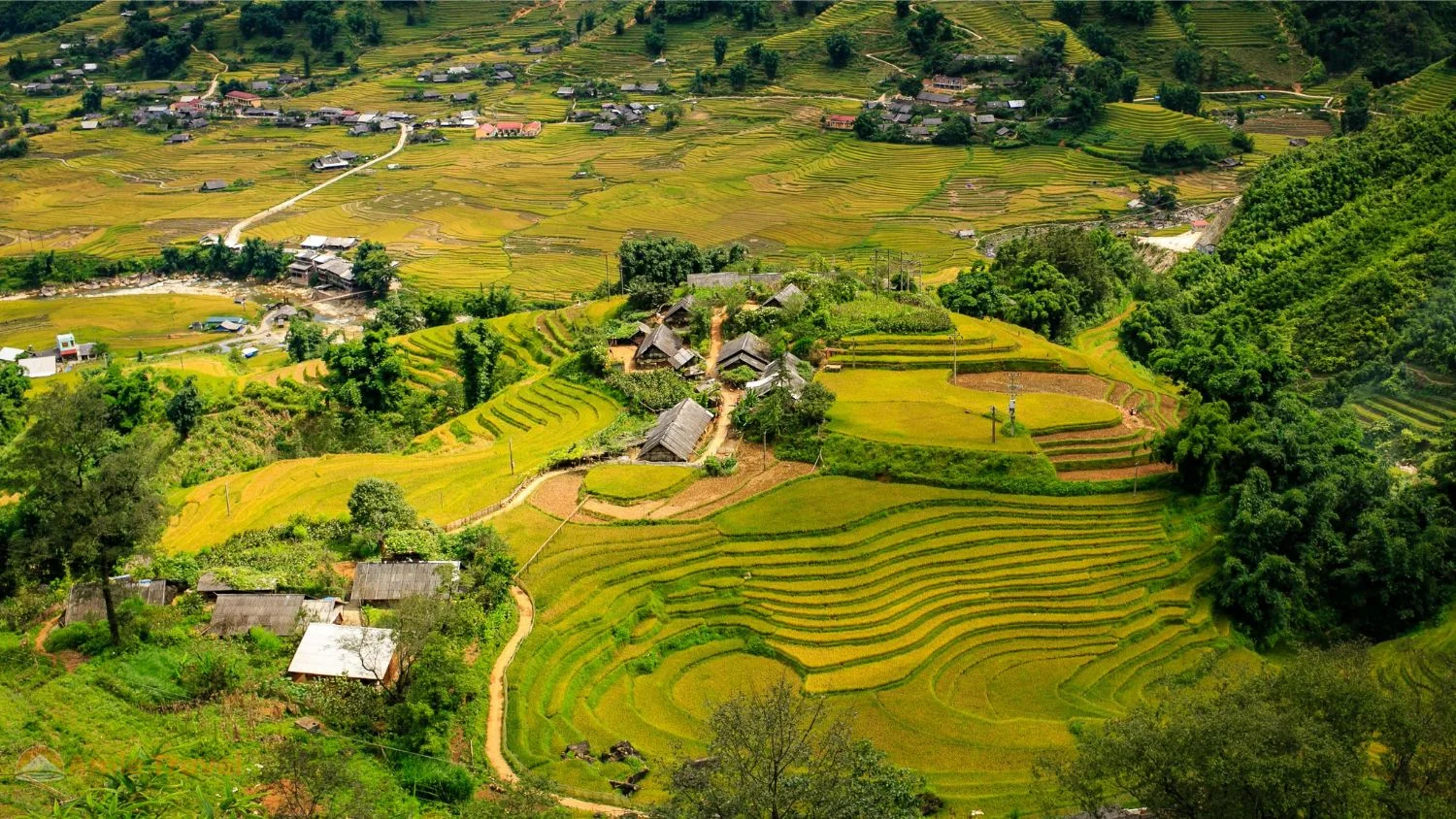
The trails are drying from winter. By March the worst of the cold fog has lifted and the valley begins to show the first green of the new growing season. Rhododendron flowers bloom on the Fansipan slopes from March through April, one of the highland floral events that most international travelers have never seen and that no other season in Vietnam produces at this elevation. The Muong Hoa Valley walk from Lao Chai to Ta Van in April passes through terraces being flooded for the new planting season. The water fills the lower fields first, creating the early mirror terrace conditions that reach their peak in late April and May.
Temperatures in spring run at 15 to 22 degrees with mornings at 12 to 15 degrees. Trails are not entirely dry in March and early April but are significantly better than the summer mud. The spring window before the summer rains is the most comfortable for extended walking without heat or mud.
Spring trekking is best for: travelers who want blooming flowers and the mirror terrace approach, those on easier routes who want comfortable walking conditions, and first-time trekkers who want Sapa without the peak harvest crowds.
Autumn trekking (October to November)
October and November deliver the most technically comfortable trekking conditions of the year. The summer rains have stopped. The trails are drying. Temperatures of 12 to 20 degrees in October and 8 to 15 degrees in November make sustained walking comfortable without the heat exhaustion risk of summer. Fansipan summit views reach 80 percent clarity in October. By November the summit is visible on most clear mornings, which is the best visibility of the year.

Multi-day treks to remote villages including Nam Cang, Ban Ho, and the more challenging routes in the Hoang Lien Son National Park are most accessible in October and November when trail conditions are their best and river crossings are at lower water levels than the summer rains produce. For serious trekkers targeting the full Fansipan summit trail rather than the cable car, October and November are the correct months.
Autumn trekking is best for: experienced trekkers targeting multi-day routes or the Fansipan summit trail, travelers whose primary goal is mountain views rather than rice terrace color, and photographers targeting the clear panoramic shots of the Hoang Lien Son range.
The weekday rule that almost no travel guide mentions
On weekends, regardless of season, Sapa and its main trekking routes fill with domestic Vietnamese tour groups. The Lao Chai to Ta Van walk on a Sunday in October carries multiple groups simultaneously on the same narrow path. The main viewpoints on Saturday mornings in harvest season are shared with dozens of other photographers. The village homestays in Ta Van on Friday and Saturday nights are booked by tour groups.
On weekdays the same routes are often empty by 9am. The homestays have immediate availability. The viewpoints at dawn are quiet. The only people on the Muong Hoa Valley trail are local farmers and the occasional independent traveler.
If your itinerary has any flexibility at all, position your Sapa village treks on Tuesday, Wednesday, or Thursday. Arrive in Sapa on Sunday evening when the weekend tour groups are leaving rather than arriving. This single scheduling decision changes the experience more than any seasonal choice.
What to pack for Sapa trekking in any season: Waterproof boots with real ankle support as the single most important item regardless of month. The terrace paths between villages are narrow, often muddy after rain, and involve river crossings on stepping stones that require grip. A packable down jacket or warm fleece for mornings below 15 degrees. A waterproof outer layer for afternoon showers from May through September and for winter fog from December through February. Trekking poles for the descents on steeper valley routes. Insect repellent for village homestays in the summer months.
See our Vietnam Adventure Tours for Sapa trekking circuits in both spring and autumn windows.
The cloud hunting and cold season (November to February): Sapa’s most atmospheric version
Sapa in winter is not a compromise for travelers who missed the harvest. It is a specific and deliberately chosen experience that rewards travelers who understand what they are arriving for and do not expect the same Sapa that September delivers.

November: the transition into atmospheric Sapa
November is the month that Sapa transitions from the harvest energy to its winter character. Temperatures drop to 8 to 15 degrees during the day and 4 to 8 degrees at night. The harvest is over. The valley is quieter than September but not empty. The trail conditions are the best they will be for the next six months. The mist that defines Sapa’s winter character begins appearing regularly in the morning valleys, burning off by mid-morning on most days but settling permanently by December.
November is specifically underrated. Fewer crowds than September. Better trekking conditions than December or January. Lower prices than peak season. For travelers whose dates allow no flexibility between October and December, late November gives you dry trails, cool air, and the beginning of the atmospheric mist season without the genuine cold of January.
December to February: cloud hunting and frost season
Temperatures in Sapa town drop to 5 to 12 degrees in December and 3 to 8 degrees in January. On the Fansipan summit at 3,143 meters, December and January temperatures drop below zero and frost is common on most mornings. Occasional snow falls on the summit and sometimes on the slopes above 2,000 meters, a phenomenon found nowhere else in Vietnam at this level of accessibility. The cable car operates year-round.
The winter fog pattern in Sapa town is specific and honest: the town is frequently shrouded in thick fog from December through February. Not every day. But fog is the default condition and clear days are the reward rather than the expectation. Every three to four days the fog clears and the mountain views that emerge are more extraordinary than in any other season because the contrast between the dense grey fog of the previous days and the sudden clarity of a winter clear day is its own dramatic experience.
Cloud hunting in Sapa is specifically the practice of timing your departure from town for the ridgeline viewpoints at O Quy Ho Pass and the slopes above Y Linh Ho when the valley fog is sitting below 1,800 meters. On these mornings, the higher viewpoints are above the cloud and the valley below is a sea of white with the mountain peaks emerging from it. This specific photograph, sometimes called the “cloud sea,” is available only in the fog months and specifically on mornings when the temperature inversion layer creates the correct conditions.
The cherry blossom window: January and February
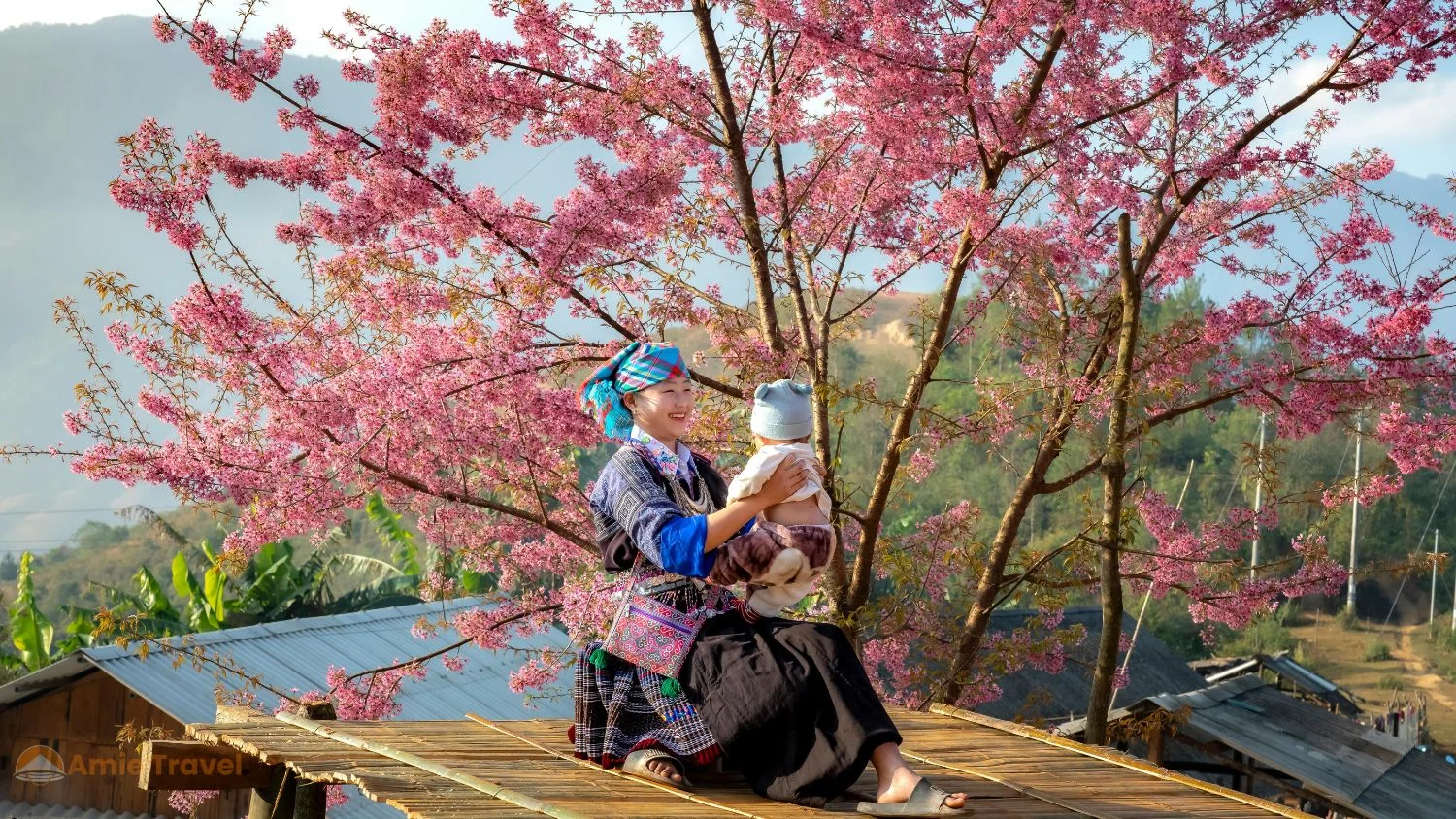
Mai anh dao (Vietnamese wild cherry blossom) blooms along the O Quy Ho Pass road from January through February. The combination of pink blossom against the mountain backdrop is a specific visual that the harvest season, however beautiful, cannot produce. The tea hills and forested slopes along the pass road from Sapa toward Lai Chau in February bloom with the specific pink of Vietnamese wild cherry that photographers specifically schedule Sapa trips around in these months.
Tet 2026: February 17
The highland ethnic minority communities around Sapa celebrate Tet with specific traditions. Plum and peach blossom markets appear in Sapa town from late January. H’mong Tet celebrations in the villages around Lao Chai and Ta Van involve traditional games, dress, and ceremony in the two weeks before and after February 17. For international travelers interested in highland cultural experience alongside the winter landscape, the period from February 5 to 20 is specific and culturally rich. Note that some services and transport connections have reduced availability in the days immediately around the Tet holiday itself.
The honest note on winter fog
Sapa in December and January requires a specific expectation management conversation that most travel guides avoid. If you arrive expecting guaranteed mountain views every morning, you will be disappointed in winter. If you arrive understanding that fog is the character of winter Sapa and that clear days are the extraordinary exception, you will find the experience genuinely memorable. A winter traveler who spends four nights in Sapa and gets one perfect clear morning above the cloud sea with Fansipan emerging from the white below has seen a version of the mountain that September tourists never experience.
What to pack for winter Sapa: A proper winter jacket, not a light layer. Temperatures of 3 to 8 degrees at night in January require real warmth. Thermal base layers. Waterproof outer layer for the fog and light rain. A thick fleece or down mid-layer. Waterproof boots. Gloves and a beanie for any ridge or summit activity. The Fansipan summit in January requires winter hiking gear. The cable car gondola is heated but the summit platform is exposed and cold.
Why Sapa weather is vertical: The elevation guide
The single most misunderstood aspect of Sapa for first-time visitors is the relationship between elevation and temperature. Sapa town at 1,500 meters and Fansipan at 3,143 meters are not in the same climate. The temperature difference between town and summit can be 10 to 15 degrees Celsius on the same day. The weather visible from the town square is not the weather you will experience at the higher viewpoints or on the summit.
The practical elevation breakdown:
Cat Cat village at 900 meters is warmer than town. On a January morning when town is at 6 degrees, Cat Cat is at 10 degrees. The lower elevation produces noticeably less fog.
Muong Hoa Valley floor at 900 to 1,100 meters is similar to Cat Cat. Warmer than town with less wind.
Lao Chai and Ta Van villages at 1,000 to 1,200 meters are still warmer than town but within the main fog belt in winter.
O Quy Ho Pass viewpoints at 1,800 to 2,000 meters are significantly colder and windier than town. In any month the pass is 4 to 6 degrees colder than Sapa town. In winter it is frequently in cloud even when town is clear.
Fansipan summit at 3,143 meters is a different world from the town. In July when town is at 22 degrees, the summit may be at 10 degrees with rain. In January when town is at 6 degrees, the summit is below zero with frost. Always bring a proper warm layer for the summit regardless of what month you are visiting and regardless of how warm it feels in town.
The layering rule that applies in every season:
Always carry one more warm layer than the town temperature suggests you need. A September morning in town at 20 degrees feels comfortable for a T-shirt. The viewpoints above Lao Chai at 1,400 meters at 6am on a September morning are at 14 degrees with a breeze. The top of the cable car in September is at approximately 10 degrees. The Sapa layering rule: bring a fleece or down jacket regardless of month, keep it accessible in your daypack, and put it on whenever you gain more than 300 meters of elevation above town.
The specific Fansipan cable car note: the cable car ride takes 20 minutes each way and gains 1,600 meters of elevation. Travelers who board the cable car in shorts and a T-shirt at the base station in summer regularly arrive at the summit cold and underprepared. The base station gift shops sell overpriced jackets to travelers who did not pack one. Bring your own.
Sapa weather month by month
January: 3 to 12 degrees, frequent fog, occasional frost on Fansipan, rare snow above 2,000 meters. The quietest month of the year. Cherry blossom beginning on the O Quy Ho Pass road from mid-January. Cloud hunting conditions at their best when the inversion layer sits correctly. Tet preparation energy building in town from late January. Verdict: for atmospheric winter Sapa, cloud hunters, and Tet cultural experience. Not for views or trekking comfort.
February: 5 to 15 degrees, fog decreasing toward month end, cherry blossom peak on O Quy Ho Pass, Tet falls February 17. The transition month from winter to early spring. Peach and plum blossom markets in town before Tet. H’mong and Dao Tet celebrations in the villages. Temperatures beginning to improve. Verdict: cultural and floral. Tet atmosphere in the highlands is specific and worth planning around.
March: 10 to 18 degrees, trails drying from winter, first green growth in the terraces, rhododendron beginning on the Fansipan slopes. Spring arriving visibly. The town shaking off winter. Good for easy trekking and comfortable walking days. Not yet the mirror terrace season. Verdict: comfortable, improving, early spring energy. Good for first-time trekkers.
April: 14 to 22 degrees, low rainfall, terraces beginning to flood for planting, the mirror season approaching. Rhododendron peak on the Fansipan slopes. Clear mornings. The most photogenic spring month. Early in April the flooding begins at lower elevations and the mirror effect appears first in the Y Linh Ho and Cat Cat areas. By late April the full mirror terrace season is established. Verdict: excellent for photography and comfortable trekking. One of the two best months for independent travelers.
May: 16 to 24 degrees, light rain beginning by month end, mirror terraces at full season through mid-May, young green rice shoots appearing by late May. The flooded terraces reflect everything above them: sky, clouds, the surrounding ridgelines, the occasional rainbow after afternoon showers. Sunrise at the Muong Hoa viewpoints in late April and May is the most photographed image Sapa produces after the September harvest. Verdict: mirror terrace peak, excellent photography, increasingly comfortable temperatures. The other best month for independent travelers.
June: 17 to 24 degrees, rain arriving consistently, terraces turning vivid green with young rice. Waterfalls including Silver Waterfall and Love Waterfall rising toward their summer volume. The valley is green and dramatic. Trail conditions wetting. Domestic summer school holiday tourists beginning to arrive. Verdict: lush green photography, waterfall volume building, trails getting muddy. Manage crowds on weekends.
July: 17 to 25 degrees, wettest month alongside August, neon green terraces, Silver Waterfall and Love Waterfall at full summer volume, domestic family tourism peak. The Muong Hoa Valley in July is a depth of green that no other season produces. Afternoon rain is consistent. Trails are muddy. The town is at its most crowded with Vietnamese families escaping the lowland heat. Verdict: emerald green photography, waterfall drama, crowds at peak, muddy trekking. Rewarding for travelers who embrace the conditions.
August: 17 to 25 degrees, heavy rain, most dramatic waterfalls, the first hints of gold beginning to appear in the lowest elevation fields in the last week of August as the harvest approaches. The transition from summer green to pre-harvest gold is visible from around August 25 at the lowest terrace levels. Crowds beginning to build for the September harvest preview. Verdict: last week of August specifically is the gold-and-green transition, worth targeting for photographers who want both colors together.
September: 15 to 24 degrees, rain decreasing sharply, golden harvest peak September 10 to 25 at Muong Hoa Valley, most booked and most expensive month of the year. The harvest moves by elevation: lower fields peak first around September 10 to 20, upper fields peak September 15 to 28. H’mong and Dao farmers harvesting by hand. The smell of drying rice. Early morning mist burning off to reveal gold. Book 6 to 8 weeks ahead. Verdict: the best single month to visit Sapa. No other window delivers this specific experience.
October: 12 to 20 degrees, dry and clear, harvest largely finished at main viewpoints by early October, Fansipan views at 80 percent clarity, best month for multi-day trekking and summit attempts. October is the best trekking month in Sapa. The trails are dry. The temperatures are ideal. The mountain views are clearing. If you arrive in October expecting golden terraces you will be disappointed. If you arrive in October for trekking and summit views, this is the correct month. Verdict: best trekking month, wrong month for harvest photography, excellent month for Fansipan.
November: 8 to 15 degrees, cool and dry, mountain views clearest of the year, light crowds, underrated trekking window. Fansipan views at their annual best in November. The Muong Hoa Valley quiet between the harvest crowds and the winter tourist season. Prices below September peak. Trails dry and excellent. Verdict: the most underrated month in Sapa. Excellent trekking, best Fansipan views, light crowds, reasonable prices.
December: 5 to 12 degrees, winter arriving, fog beginning its seasonal dominance, cloud hunting season opening. The Silver Waterfall at lower volume than summer. The town is quiet. Prices at annual low. Ba Nha hill fog in the mornings creating the inversion layer conditions for cloud hunting above the valley. Verdict: winter atmospheric Sapa beginning. For travelers who want the town quiet and the landscape dramatic, December is the entry to the winter window.