The 2026 Summer Split at a Glance
- Central Coast in July: Peak domestic season. The DIFF 2026 Grand Finale is July 11 on the Han River in Da Nang. Expect crowds, heat, and the highest energy the city produces all year. Book accommodation at least 6 weeks ahead.
- Northern Highlands in July and August: Lush and genuinely quiet. Ha Giang mornings are often crystal clear before noon. Pu Luong waterfalls are running full with no harvest crowds. Sapa terraces are vivid green. Fewer international tourists than at any point in the year.
- The South in July and August: Tropical rain arrives at 3pm and leaves by 5pm. The flooded Mekong is a specific experience that dry-season visitors never see. Mornings are fully usable for outdoor sightseeing.
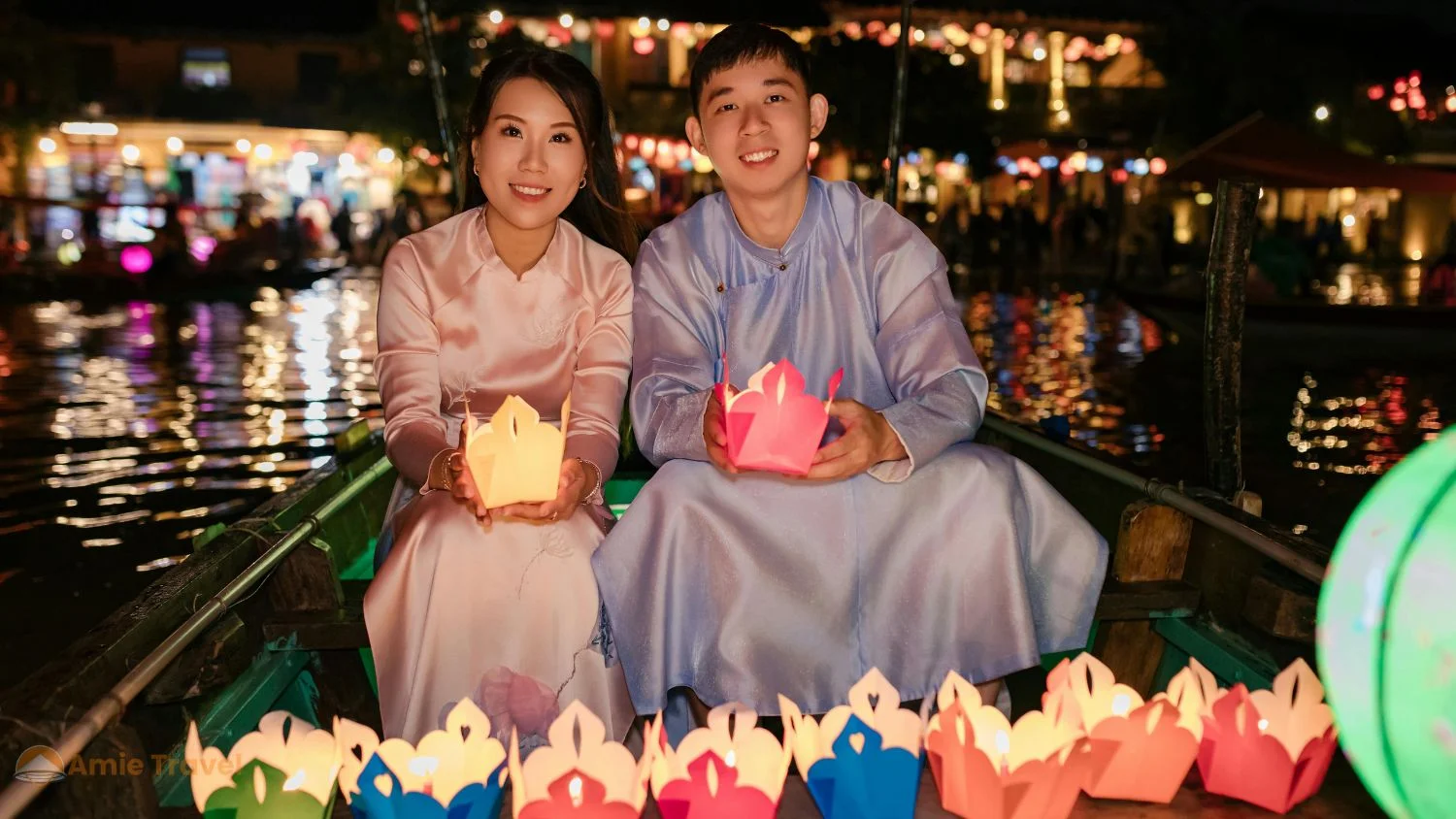
- August 27: Vu Lan Festival nationwide. Paper lanterns on the Thu Bon River in Hoi An. The rose ceremony at pagodas across the country. One of the most quietly moving cultural events of the Vietnamese year.

Da Nang and Hoi An in July: Peak Season, DIFF 2026, and How to Use the Crowds

The Central Coast is the best answer to the question of where to go in Vietnam in July. While most international travel content steers travelers away from this region in summer, the honest position is different. July is when the Central Coast is most fully itself. Vietnamese families are at the beach in full force. The restaurants are running at capacity. The city is alive. And above the Han River on the evening of July 11, the sky is on fire.
The DIFF 2026 Grand Finale
The Da Nang International Fireworks Festival 2026 runs from May 30 to July 11, 2026, under the theme “Da Nang — United Horizons.” The festival reflects the city’s new chapter following the administrative merger of Da Nang City and Quang Nam Province, and it is the largest DIFF edition yet, featuring 10 teams from 9 countries competing across six nights.
The full competition schedule: May 30 (Vietnam Da Nang vs China), June 6 (France vs Vietnam Z21 Vina Pyrotech), June 13 (Japan vs Italy), June 20 (Germany vs Macau), June 27 (Australia vs Portugal), and the Grand Finale on July 11. Each performance runs 20 to 22 minutes and combines fireworks with Sky AR and laser LED projections on the Han River and surrounding buildings.
The Grand Finale takes place at Han River Port from 8pm. The grandstand along Tran Hung Dao Street is the main ticketed viewing area. Arrive by 6:30pm to secure position before the crowds build. Free riverside viewing is available along Bach Dang Street for those without grandstand tickets. Purchase tickets only through official channels: the DIFF website at diff.vn or authorised Sun World booths.
If your July trip includes Hoi An, note that the Hoi An Lantern Festival falls on July 10, the night before the DIFF finale. Two nights based in the Da Nang and Hoi An area across July 10 and 11 covers both events without any additional travel.
How locals use Da Nang in July
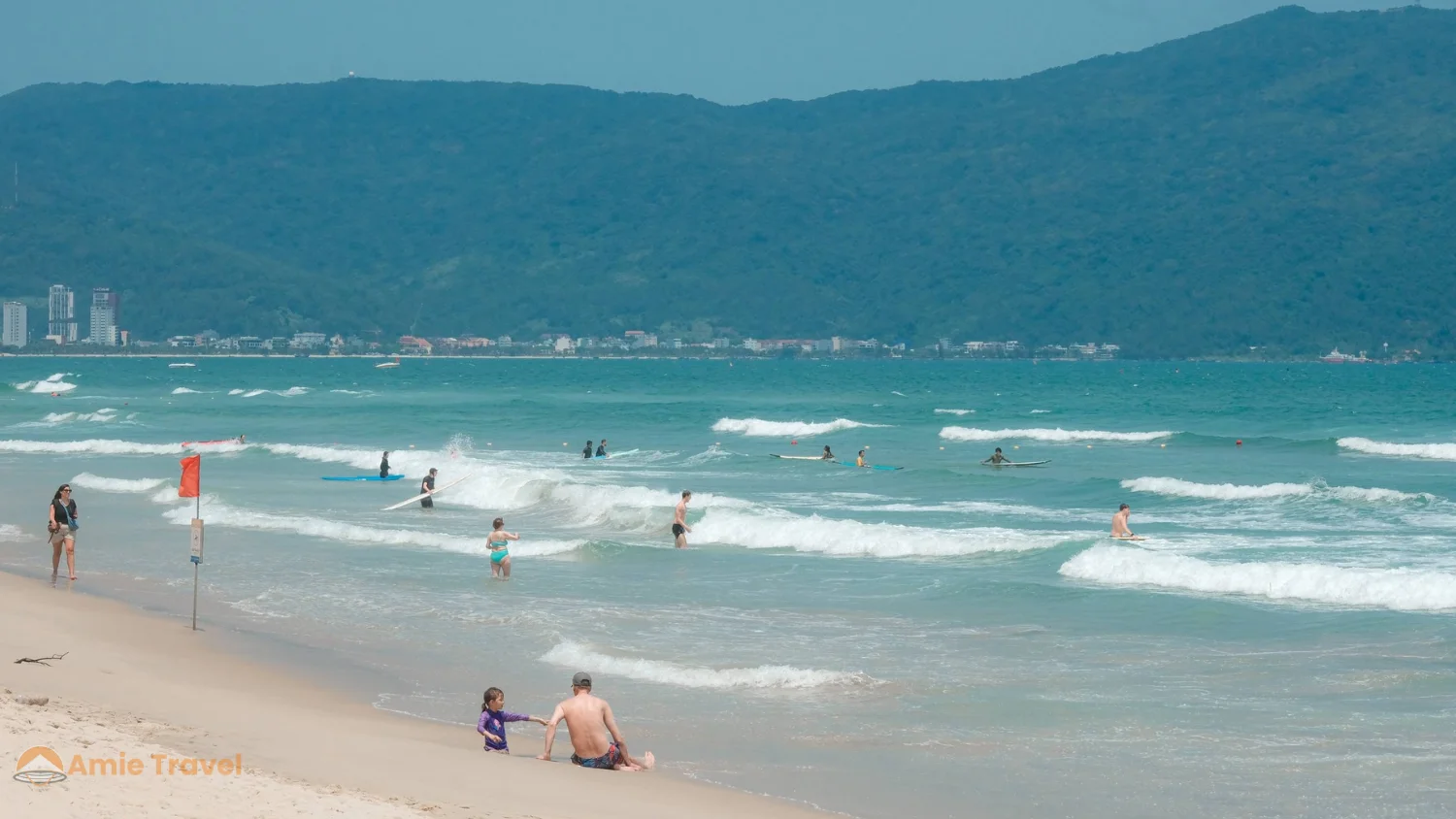
Da Nang in July runs at 32 to 34 degrees between 10am and 4pm. The heat on My Khe Beach at midday is real and requires honest planning. Vietnamese people use the beach at 5am and again from 6pm onward. A walk on My Khe at 5am in July is one of the quietest experiences the city produces: fishing boats returning, vendors setting up, the air still cool from the night.
From 10am to 4pm the beach is difficult without heat tolerance. This window is better used for the Marble Mountains (cave interiors stay cool), the Da Nang Museum of Cham Sculpture, lunch, and air-conditioned cafes.
Hoi An: An Bang over the Ancient Town from 11am
For Hoi An accommodation in July, book near An Bang Beach rather than inside the Ancient Town. The beach area catches the sea breeze. The Ancient Town at midday in July is significantly hotter. Enter the Ancient Town before 8am, when the light is best and the lanes are quiet, then shift to An Bang beach for the morning heat, and return to the Ancient Town from 6pm for the lantern hours and evening market.
What to pack for the Central Coast in July: Light linen or moisture-wicking fabrics. Nothing synthetic at 34 degrees. Wide-brim hat and SPF 50. A compact rain layer for the occasional afternoon shower. Comfortable sandals for temple sites. A reusable water bottle to refill constantly.
Booking note: Central Coast hotel prices in July are 40 to 50 percent above standard rates. The July 10 to 12 window around the DIFF finale and Lantern Festival sells out weeks ahead. Book a minimum of 6 weeks in advance for any Central Coast stay in July.
A July Central Coast trip looks like this: Da Nang for 3 nights including the DIFF finale on July 11, Hoi An with An Bang Beach for 2 nights including the Lantern Festival on July 10, then Nha Trang for 2 nights for diving at Hon Mun Marine Protected Area.
See our Vietnam Adventure Tours and Vietnam Family Tours for Central Coast summer circuits.
Ha Giang, Sapa, and Pu Luong in July and August: What the Highlands Look Like When Nobody Is Watching
While most international travel content warns travelers away from northern Vietnam in July and August, something specific is happening in the highlands during these months that the same content never addresses: the landscape is at its most extraordinary, and the international tourists are almost entirely absent.
This combination is not a consolation prize. It is a specific and legitimate reason to be here.
Ha Giang in July

Ha Giang in July has a weather pattern that surprises most travelers. Mountain mornings are often completely clear before noon. The light that comes through the Ma Pi Leng Pass viewpoint in early morning, with the Nho Que River running deep jade-green in the canyon 700 meters below, is available in July in a way that the harvest-season crowds of October cannot replicate. The canyon walls are full and green. The river carries its most vivid color of the year.
Afternoon rain arrives between 1pm and 3pm and passes within two hours. The Ha Giang Loop road remains open throughout July and August. Road conditions require attention on some sections after heavy rain, and a private driver with knowledge of the local routes is the right call in this season. A motorbike is manageable for riders with experience on wet mountain roads. For everyone else, a private car gives you the same views without the road-condition concern.
The Tu San Gorge boat ride is fully operational in July. The ethnic minority markets in Dong Van and Meo Vac run normally. The Lung Cu flagpole at the northern tip of Vietnam is accessible. Allow an extra buffer of two to three hours per day in your Ha Giang schedule for weather pauses.
Budget travelers specifically should note that Ha Giang in July is meaningfully cheaper than October for accommodation, and many of the guesthouses and homestays that are booked out months ahead in harvest season have immediate availability in July.
What to pack for Ha Giang in July: Quick-dry trekking trousers and light layers for mountain mornings at 22 to 25 degrees. A proper waterproof outer layer for afternoon rain, not a light jacket. Waterproof boots or trail shoes with real grip for any walking off the vehicle. A dry bag for camera and electronics.
Sapa in July
The Sapa terraces in July carry a shade of green that does not exist in any other month. Young rice has filled the fields. Waterfalls run at full volume on the slopes above Muong Hoa Valley. Mountain mist fills the valley every morning and burns off by mid-morning on most days.

The honest note on Sapa in July: the trekking trails are muddy after rain. The route from Lao Chai to Ta Van is doable with waterproof boots and careful footing, but it requires more attention than the same trail in October. For travelers who specifically want the green landscape and can accept muddy conditions, July is worth it. For travelers whose primary goal is trekking comfort, October is the correct season.
See our 7-Day North Vietnam Tour: Hanoi, Ha Long Bay, Sapa and Fansipan for a northern circuit that works in either month.
Pu Luong in July
Pu Luong in July is almost entirely absent from international travel content. This is precisely why it belongs in this guide.
Four hours southwest of Hanoi in Thanh Hoa province, Pu Luong sits in a valley between two limestone karst ridges. In July the valley runs at full lush: rice terraces vivid green from the water channels feeding them, waterfalls visible on the karst ridges above the villages, the Cham waterwheel turning with the flow, and White Thai stilt-house homestays quiet except for the sound of the valley.

There are no harvest tourists in July. No booking pressure. No crowds at the Ban Don viewpoint above the cloud line. The valley operates on its own agricultural rhythm, indifferent to the tourism season, and this is exactly what makes it worth visiting in summer. The karst ridges catch the morning light before the cloud cover builds. The White Thai villages of Kho Muong and Ban Don are accessible without the October weekend rush.
Two nights in Pu Luong looks like this: arrive from Hanoi in the afternoon, spend two mornings above the cloud line at the ridge viewpoints, walk one valley route between villages through the green terraces, eat White Thai food at the homestay in the evenings. Four hours from Hanoi and a fraction of the cost of an equivalent highland experience anywhere else in the country.
What to pack for Pu Luong in July: Quick-dry clothing for walking in humidity. Waterproof shoes with grip for terrace paths that are slick after rain. A long-sleeve layer for evenings in the valley. Insect repellent. No specialist gear required.
See our Pu Luong Tours and Travel Guide for homestay booking, valley routes, and how to add Pu Luong to a Hanoi itinerary.
A northern highlands trip in July looks like this: Hanoi for 2 nights, then Pu Luong for 2 nights in a stilt-house homestay with valley walks, then the Ha Giang Loop for 3 nights with morning rides, the Nho Que River, and the Tu San Gorge. This routing uses the clear mountain mornings and accepts the afternoon rain as part of the schedule rather than fighting it.
See our Vietnam Adventure Tours for highland circuits built for July and August conditions.
The South in July and August: How to Use the Rain Rather Than Fight It
The south in July and August is not the version of Vietnam most international travelers come for. The dry season of December through April is easier and more comfortable. But July and August in the south has something specific that dry-season visitors never see, and understanding what that is makes the difference between a trip that feels like a compromise and one that feels deliberate.
Ho Chi Minh City: the morning window
Ho Chi Minh City in July and August runs at 28 to 32 degrees with a daily afternoon downpour that arrives between 3 and 5pm and clears within two hours. This is not all-day rain. It is scheduled rain, and once you understand the schedule, the city is fully usable.
Mornings from 7am to noon are clear. This is the window for the Cu Chi Tunnels, the War Remnants Museum, the Ben Thanh market area, and any outdoor walking through the Dong Khoi district. When the rain arrives in the afternoon, find a cafe with a ca phe sua da and sit it out. By 5 or 6pm the city re-emerges and the evening hours are often completely clear. The city’s night rhythm in Ho Chi Minh City in July and August is excellent.
The flooded Mekong

The Mekong Delta flooding season, which runs through July and August as the river rises from upstream rainfall in southern China and Cambodia, is one of the most underwritten travel experiences in Vietnam.
When the Mekong floods, the rivers overflow into the surrounding rice paddies and create a landscape of water stretching to the horizon. The fish arrive with the floods. The floating markets at Can Tho operate at their most active. The boat routes that are impossible in the dry season open up across the flooded paddies. The rice farming communities along the Delta are working with the flood rather than against it, which is the rhythm that has shaped southern Vietnamese culture for thousands of years.
For travelers who take a boat through the flooded Delta in July or August and understand what they are looking at, this is a more meaningful experience than the tidy, navigable Delta of December. It requires a willingness to accept mud, heat, and a landscape that is specific rather than conventionally picturesque.
Vu Lan Festival: August 27, 2026
Vu Lan Festival falls on August 27, 2026, the 15th day of the 7th lunar month according to the Vietnamese lunar calendar. It is observed nationwide and is one of the most quietly moving cultural events in the Vietnamese year.

Pagodas across the country fill with offerings of food, incense, and joss paper for wandering souls. Families visit temples. The rose ceremony: participants receive a red rose if their mother is living, a white rose if she has passed. Pinning the rose to your chest and walking through a pagoda in the early evening of Vu Lan is a simple, human experience that requires no cultural background to feel.
In Hoi An, paper lanterns are released on the Thu Bon River after dark. In Ho Chi Minh City, Vinh Nghiem Pagoda in District 3 is one of the most significant observance sites in the south. In Hanoi, Quan Su Pagoda in the Old Quarter. The vegan food tradition means that in August, Vietnamese vegetarian cooking is available everywhere in a quality and variety that does not exist in other months: street stalls, restaurants, pagoda canteens, neighborhood food markets.
What to pack for the south in July and August: A compact umbrella or waterproof poncho for the afternoon window. Quick-dry fabrics throughout. SPF 50 for morning sightseeing. Light sandals for Mekong boat sections. Insect repellent for the Delta.
See our Vietnam Family Tours for southern itineraries that work around the rain rhythm in these two months.
The One Thing to Know About August That July Does Not Have
July and August are not the same month in Vietnam. Three specific differences change how you should plan.
Typhoon risk begins building in August
July carries low typhoon risk for Vietnam. The Central Coast in July is in its dry-season window. Ha Long Bay in July carries some risk of cruise disruption but typhoon activity is below average for the year.
August changes this. By mid to late August, the first typhoon signals begin building for the North and the early warning window for the Central Coast opens. The most severe typhoon activity in Vietnam historically occurs in September and October, but late August marks the beginning of that risk period.
The practical guidance: book Ha Long Bay cruises in July rather than August if your dates are flexible. For late August Central Coast stays, ensure your accommodation has a flexible cancellation policy and your travel insurance explicitly covers weather disruptions. The Windy.com app gives 72-hour typhoon track forecasts that are more useful than general news for real-time travel decisions in Vietnam.
The domestic beach crowd thins from August 20
Vietnamese school summer holidays run from mid-June through late August. The peak domestic beach surge hits Da Nang, Nha Trang, and the Central Coast resorts from mid-July through mid-August. From approximately August 20 onward, the school term restart pulls the domestic family crowd back. If your dates are flexible and you are targeting the Central Coast, the window from August 20 to September 5 gives you summer beach conditions with noticeably fewer crowds and prices beginning to ease toward standard rates.
The rice terraces begin their shift in late August
The rice terraces in Sapa and Pu Luong are at peak vivid green in July. By late August, the first signs of the approaching harvest appear: the green deepens and the earliest yellow tips emerge at the field edges. For travelers specifically targeting the green terrace season, July is the correct month. For travelers who want the first hint of the gold-and-green transition before the October harvest crowds arrive, late August is the window. The full golden harvest in Sapa and Mu Cang Chai peaks in September and October and is covered in our Vietnam in September and October guide.