
The golden light version (February to April): Peak season for photographers and First-Timers
February to April is the version of Hoi An that fills travel photography portfolios and earns the word-of-mouth recommendations that drive most bookings. The honest question is not whether this window is good. It is why specifically it is the most photogenic and comfortable period of the year, and what 2026 adds to it that previous years did not have.
The spring light and what makes it specific
The northeast monsoon that soaks the Central Coast from October through January has retreated by February. The southwest monsoon has not yet built. Hoi An sits in the gap between the two weather systems with average rainfall of less than 50mm for the entire month of March and clear spring light that has a specific quality impossible to replicate in summer or in the grey wet season.
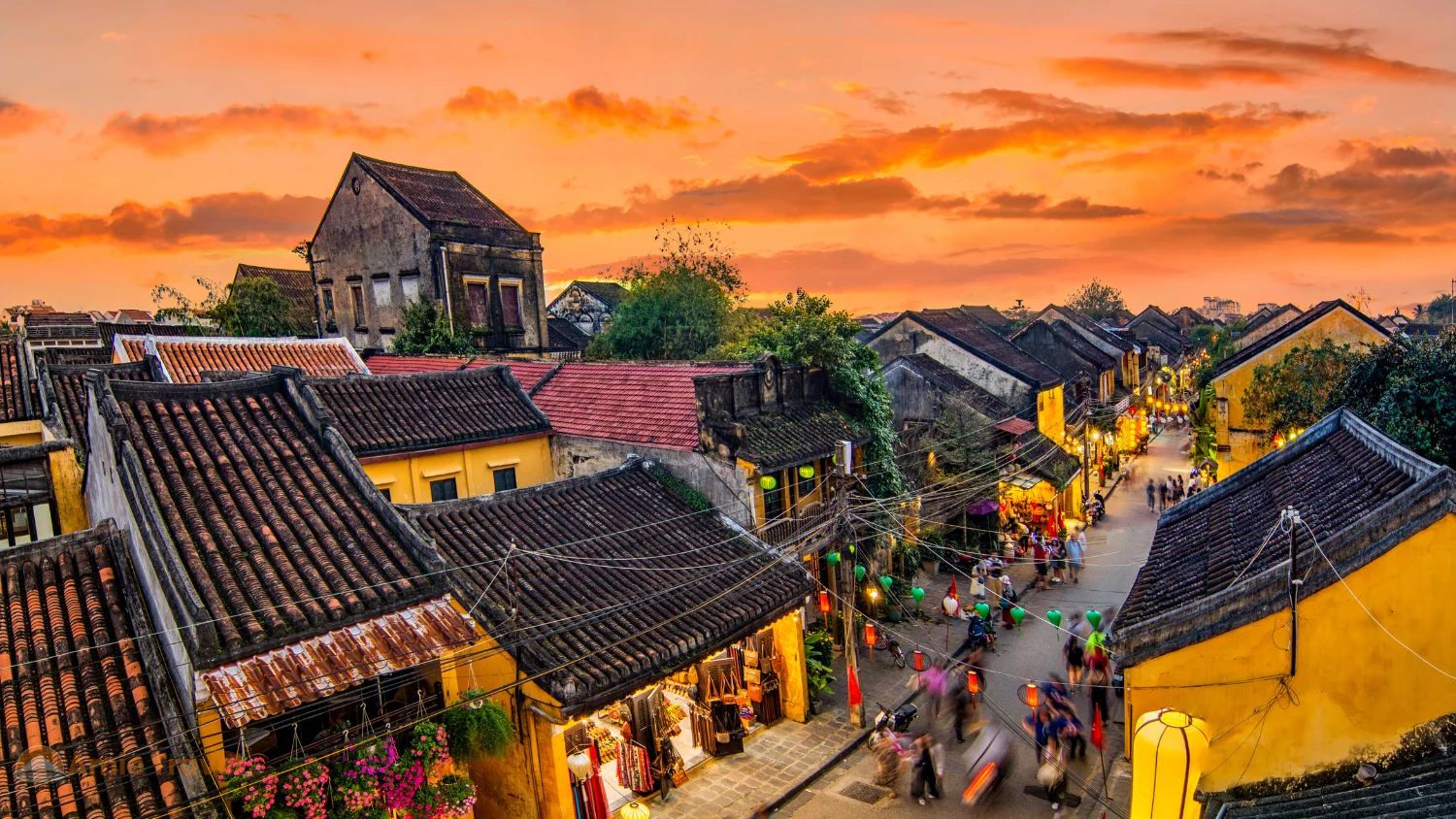
The yellow-plastered facades of the Ancient Town catch this light differently from any other month. At 6am in March, the eastern facades on Tran Phu Street and Nguyen Thai Hoc Street are lit from the side by the low morning sun while the laneways between them are still in shadow. At 5pm the western facades catch the last warm light over the Thu Bon River. These windows, each about 90 minutes long, are when the Ancient Town looks the way it does in every photograph that made you want to visit in the first place.
Temperatures in February run at 23 to 27 degrees with low humidity. March climbs to 25 to 30 degrees, still dry and comfortable for full-day walking. April adds heat: 28 to 33 degrees by midday, still dry, but the shift toward summer temperatures is noticeable. The optimal walking weather is February and March. April remains excellent but rewards early morning starts.
The Festival of Light and Heritage 2026

Running from February 17 to April 30, 2026, the Festival of Light and Heritage at Hoi An Memories Land is a new event that no previous version of this article could have included because it did not exist before this year.
The festival opened on March 4 with a Dragon and Phoenix lantern drone show above the Memories Land complex, the first event of its kind in Vietnam. Giant lantern installations along the Hoai River recreate the image of the Red Seal Ship (Shuinsen), the trading vessels that made Faifo one of the most significant port cities in 17th-century Southeast Asia. The installations are not temporary decorations. They are large-scale heritage art across the entire Memories Land grounds, illuminated from sunset and designed to be walked through rather than viewed from a distance.
The festival program continues through April with thematic weeks covering silk weaving, Thanh Ha pottery, and the craft village heritage of Quang Nam province. The closing ceremony on April 30 involves a sky lantern and floating lantern ritual on the Hoai River, marking the end of the spring season with one of the most visually dramatic evenings Hoi An produces.
For travelers visiting between March and April 30, the Festival of Light and Heritage is the single most specific reason to add an evening at Hoi An Memories Land to the itinerary. Combine it with the Hoi An Memories outdoor performance show on the same evening for a complete night on the river.
The March 2 Lantern Festival: the biggest of the year
The Hoi An Lantern Festival runs monthly on the 14th day of the lunar calendar. In 2026, March 2 is the Nguyen Tieu festival, the first full moon of the lunar new year after Tet on February 17. This is consistently the most vibrant Lantern Festival of the year: the largest cultural performances, the most ceremony, the most complete atmosphere of any monthly lantern night.
On the evening of March 2, the Ancient Town switches off all electric lights from approximately 8pm. The streets are lit entirely by silk and paper lanterns. Lion dances move between the temples. The Thu Bon River fills with floating paper lanterns carrying wishes for the new year. The Bai Choi performance near An Hoi Bridge, UNESCO-recognized intangible cultural heritage, runs alongside card games and folk music.
Arrive by 6:30pm to find a dinner table in the Ancient Town before the lantern ceremony begins. The area around the Japanese Covered Bridge and An Hoi Bridge is the best central position for both the street experience and the river lanterns.
My Son Sanctuary and day trips in this window
March and April are the most comfortable months for the My Son Sanctuary day trip from Hoi An. The Cham temple complex at My Son requires walking across an open archaeological site in direct sun. At March temperatures, this is fully manageable for a three-hour visit. By June, the same walk becomes a heat endurance exercise. If My Son is on the itinerary, the February-to-April window is when to do it.
What to pack for the Golden Light version: A light layer for February evenings when temperatures drop to 20 to 21 degrees after dark. Light breathable clothes for March and April daytime. SPF 50 becomes important from April when the UV index increases. Comfortable walking shoes for the cobbled lanes of the Ancient Town. A compact rain layer as a secondary precaution in February that is rarely needed from March onward.
Who the Golden Light version is for: First-time visitors who want the best possible introduction to Hoi An. Photographers with a specific interest in the Ancient Town light. Couples. Cultural travelers who want My Son, Cham Islands by day, and the Lantern Festival by night. Travelers who want a polished, comfortable experience without weather anxiety.
See our Vietnam in March and April guide for the full Central Coast itinerary built around this window.
The high energy version (May to August): Beach days, the DIFF Festival, and the Local summer peak
The standard narrative about Hoi An in July and August is that it is “hot and crowded.” This is accurate and it misses the editorial point entirely. July is the most Vietnamese version of Hoi An that the year produces. The beach is full of Vietnamese families. The restaurants are running at capacity. The Ancient Town at 6am in July is cooler than the midday heat suggests and carries a quiet that the April crowds do not allow. This is peak domestic summer tourism and it is a specific and high-energy experience that some travelers prefer to the quieter spring.
The beach experience in summer
An Bang Beach in May to August runs at 29 to 34 degrees with calm seas and clear water. The beach is at full summer capacity from mid-June onward. Vietnamese families and groups of friends occupy the sand from early morning through late afternoon. The beach clubs and seafood restaurants along An Bang are at their fullest and most energetic.

The practical local schedule for the summer beach: arrive before 9am when the water is calmer and the temperature is still below 30 degrees. The window from 11am to 4pm is the heat peak. During this time the beach umbrellas fill, the water is still swimmable but the sun is significant. By 6pm the beach cools and the evening light on An Bang is some of the most pleasant beach time of the day.
An Bang Beach has a specific advantage over Cua Dai Beach in summer: the sea breeze from the east in the mornings comes off the open South China Sea and keeps the beach cooler than the more sheltered Cua Dai. If you are staying in Hoi An in July and August, An Bang is the correct beach for the morning session.
Cham Islands diving at peak visibility
June to August is the peak diving and snorkelling season at the Cham Islands (Cu Lao Cham), a UNESCO World Biosphere Reserve 15 to 20 kilometres off the Hoi An coast. Water visibility in this window reaches 25 meters, the clearest of the year. The coral reefs at Hon Tai, Hon Nhan, and Hon Mo are at their most vivid and the marine life is at peak activity. Boat services from Cua Dai Port run daily from May through August and are suspended or significantly reduced from October through February.

The Cham Islands are accessible for both beginners and experienced divers. PADI 5-star certified centers in Hoi An including Cham Island Diving Center (88 Nguyen Thai Hoc Street) and Blue Coral Diving operate full-day tours with hotel pickup, speedboat transfer in 20 to 30 minutes, and lunch on the island. Book at least three days ahead in July and August when tours fill.
The DIFF 2026 qualifying rounds in June
The Da Nang International Fireworks Festival 2026 runs qualifying rounds every Saturday in June: June 6, 13, 20, and 27. The Grand Finale is July 11 on the Han River in Da Nang. For travelers based in Hoi An, Da Nang is 30 minutes by taxi or 45 minutes by bus. Any Saturday in June is worth a day trip to Da Nang specifically to position on the Han River at 6:30pm for the 8pm competition fireworks. The full DIFF 2026 guide is in our Vietnam in May and June guide and the Grand Finale logistics are in our Vietnam in July and August guide.
The Bay Mau Coconut Forest in summer
The basket boat tours through the Bay Mau Coconut Forest (Rung Dua Bay Mau) at Cam Thanh, 3 kilometres east of the Ancient Town, are available year-round but the water channels are at their fullest and most navigable in the summer months. The tours involve local guides paddling traditional basket boats through narrow water coconut channels with the boat spinning manoeuvre as the signature demonstration. Book through your accommodation or directly at the Cam Thanh boat landing. Allow 60 to 90 minutes including transport from the Ancient Town.

What to pack for the High Energy version: Light linen or moisture-wicking fabrics only. Nothing synthetic at 34 degrees. Wide-brim hat and SPF 50 as essentials, not precautions. Reusable water bottle to refill constantly. Swimwear for both beach and Cham Islands. A compact rain layer for the occasional afternoon shower in August as the season begins to shift.
Who the High Energy version is for: Beach-focused travelers. Families with children who want structured beach days. Travelers with June dates who want the DIFF festival qualifying rounds. Divers and snorkellers targeting the Cham Islands at peak visibility. Travelers who want to experience the local Vietnamese summer holiday atmosphere rather than an internationally-curated destination.
See our Vietnam Family Tours for Central Coast summer circuits that work around the heat schedule.
The venice version (September to November): Navigating the flood season
This section exists because most content on Hoi An in October either dismisses the flood risk with a line about how “it can still be beautiful” or presents it as something approaching a natural disaster. Neither serves the traveler who has fixed October dates or who is specifically drawn to the atmospheric version of Hoi An that high water produces. Here is what the flood season actually looks like, stated plainly.
September: the building risk
Early September in Hoi An can still carry reasonable weather. The tail end of the summer dry period sometimes extends into the first two weeks of September with manageable rainfall and good beach days at An Bang. From mid-September, the northeast monsoon begins pushing rainfall onto the Central Coast and the risk of typhoon-related weather increases.
The Mid-Autumn Festival falls on September 24, 2026 (the 14th day of the 8th lunar month). In Hoi An, the festival evening involves children carrying lit paper lanterns through the Ancient Town lanes, lion dances at the temples, mooncake stalls at every corner, and floating lanterns released on the Thu Bon River. The Ancient Town in the early evening of September 24 is one of the most visually distinctive experiences of the Hoi An year. The weather in early-to-mid September is usually still manageable enough for this evening to be fully enjoyable.

For bookings from mid-September onward, use refundable accommodation rates. The weather shift after September 15 is not guaranteed but the risk is real enough that non-refundable bookings become a financial exposure.
October: the highest-risk month and what it actually looks like
October is statistically the highest-risk month of the year for Hoi An flooding. Average October rainfall is 300 to 400mm. In October 2025, the Thu Bon River reached 5.62 meters, breaking a record set in 1964. The Bach Ma meteorological station recorded 1,739.6mm of rainfall in a single 24-hour period.

These are extreme figures from an extreme year. But they define the upper end of what October in Hoi An can produce, and any traveler booking non-refundable October accommodation should understand that range before confirming.
The practical flooding threshold for Hoi An Ancient Town: the streets of the old quarter flood when the Thu Bon River exceeds approximately 3 meters. This happens in multiple October weeks in most years at varying depth. When it floods, the Ancient Town does not shut down. Local businesses put sandbags at the door. Restaurants and cafes stay open and serve from slightly elevated ground or from platforms put over the water. Residents and visitors wade through the lanes. Boat taxis replace foot traffic on the main streets.
This is the Venice of Southeast Asia that some photographers specifically come for. The lanterns hang above the waterline. The yellow facades reflect in the flood water. The Ancient Town in high water is quiet in a way that the dry-season version, busy with tourist traffic, cannot replicate. Vietnamese photographers and travel writers describe the flooded Hoi An in specific seasonal terms: the smell of the river rising into the streets, the particular silence that replaces the usual motorbike noise, the visual of the Japanese Covered Bridge accessible only by the elevated walkway above the flood.
For travelers whose October dates are fixed and who want to lean into this experience rather than fight it: book accommodation in the Cam Nam area on higher ground rather than directly in the Ancient Town. Stay minimum four nights so a flood day is an event rather than a ruined trip. Bring waterproof sandals, a dry bag for your camera, and the expectation that October Hoi An is a different and specific experience rather than a failed version of March.
November: beginning to improve
By November, rainfall begins decreasing from the October peak but the flood risk is still present through mid-November. From late November onward, the coast begins drying out and the December character of Hoi An starts emerging.
What to pack for the Venice version: Waterproof sandals that can wade through ankle to knee-deep flood water without damage. A dry bag or waterproof case for camera and phone. A compact umbrella for the frequent rain outside flood events. Quick-dry clothing. One set of clothes specifically for flood-wading that you do not mind getting wet. Refundable accommodation bookings from September 15. Travel insurance that explicitly covers weather disruptions.
Who the Venice version is for: Budget travelers (October prices are the lowest of the year at 30 to 50 percent below peak). Atmospheric photographers and travel writers. Travelers with fixed October dates who want honest guidance. Return visitors who have done the dry-season version and want something genuinely different.
Who should avoid October: First-time visitors who have limited time in Vietnam and specifically want the beautiful dry Ancient Town. Families with young children who need predictable outdoor conditions. Beach-focused travelers, as An Bang in October is not swimmable.
The secret version (December and January): The quiet recovery
December and January in Hoi An are almost entirely absent from international travel content. What exists is usually framed as “the rainy season is ending, it can still be grey.” This framing describes the weather without describing the experience, which is a specific and genuinely underrated version of Hoi An that has nothing to do with the dry-season benchmark.
December: the Ancient Town drying out
December in Hoi An is the transition month. The October flood waters have receded. The northeast monsoon that drove rainfall through November is weakening. Temperatures drop to the most comfortable range of the year: 19 to 24 degrees during the day, cooler in the evenings. The humidity that made August feel heavy has gone.

The Ancient Town in December carries a quality that the peak months cannot replicate: it is genuinely quiet. The streets in the early morning and late afternoon have a calm that makes the architecture visible in a way that July’s crowds and March’s tourist traffic both obscure. The tailors, the lantern shops, the ceramic galleries, the family-run pho restaurants are available and attentive in a way that peak-season Hoi An, when every business is serving multiple customers simultaneously, cannot match.
Christmas in Hoi An is specific to this city in Vietnam. Vietnamese business owners have adopted the Christmas aesthetic fully: the Ancient Town lanterns are joined by Christmas decorations in December, creating a visual combination that is unique to Hoi An and does not exist anywhere else in Vietnam in quite the same way. The Thu Bon River on Christmas Eve in the lantern-lit old quarter is one of the year’s more unexpectedly memorable evenings.
January: the slowest month and the best prices
January is the coolest month at 19 to 22 degrees. Some rain remains in early January but the character is shifting toward the spring that February will bring. Vietnamese families are preparing for Tet, which falls on February 17, 2026 (Year of the Horse). The city has an internal rhythm in January that has nothing to do with international tourism.
January prices are the lowest of the year. Beachfront accommodation that charges 2,000,000 to 3,000,000 VND per night in July is available at 800,000 to 1,200,000 VND in January. The Ancient Town entrance ticket (120,000 VND per adult, including five heritage site visits) is the same price but the sites inside are considerably less crowded.
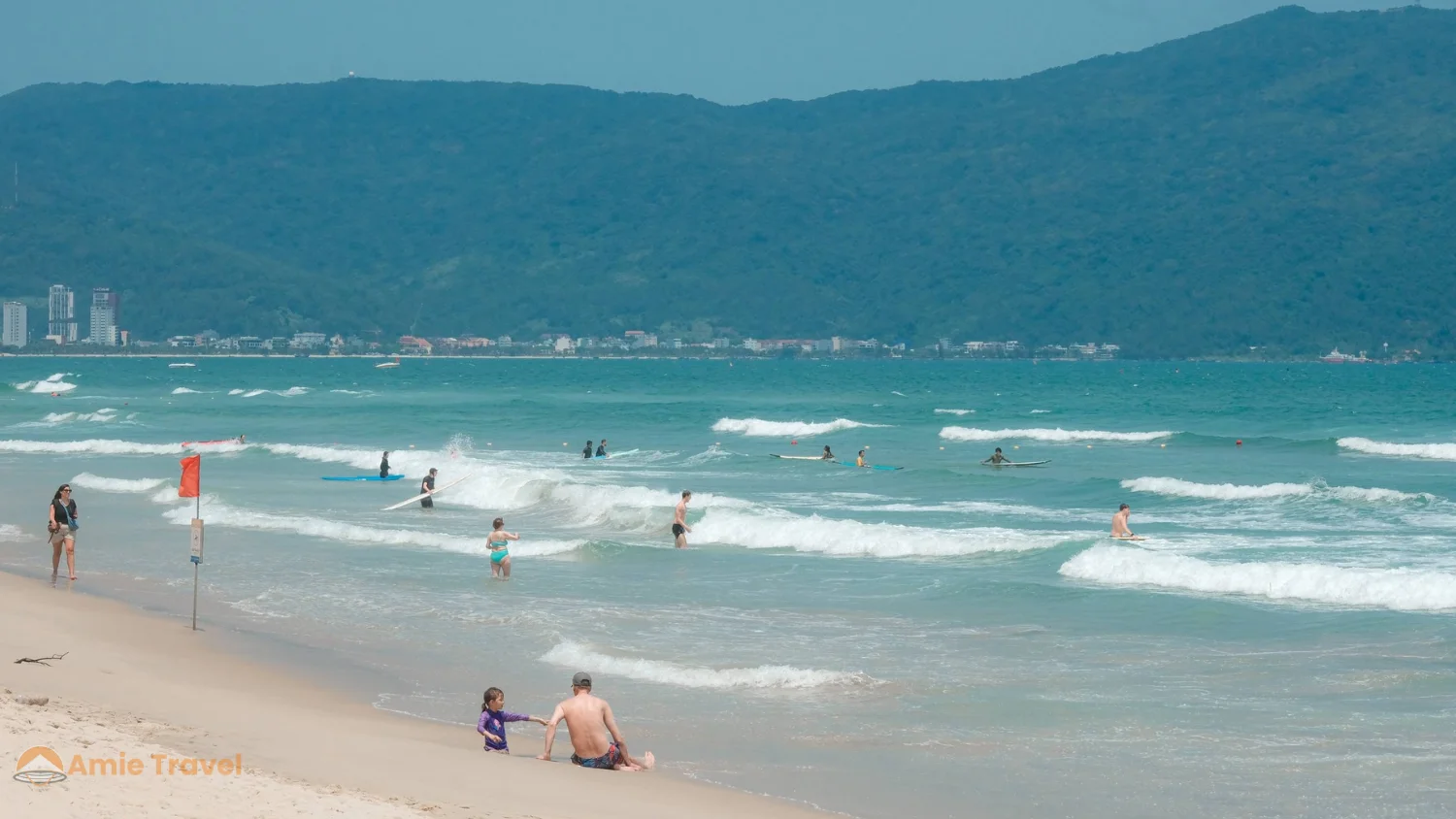
One specific note for January: Da Nang and the central coast in January and February have the biggest surf conditions of the year. The northeast monsoon swell creates rideable waves at My Khe Beach in Da Nang that attract a surf crowd not present at any other time of year. For travelers who want to combine Hoi An with a surfing experience, January into February is the window.
What to pack for the Secret version: A light jacket or warm layer for evenings at 18 to 19 degrees in December and January. One warmer sweater for January mornings that can feel cold after the summer temperatures. A compact umbrella as a genuine daily precaution in December. Light breathable clothes for daytime which remains mild rather than cold. Comfortable walking shoes for the uncrowded Ancient Town lanes.
Who the Secret version is for: Slow travelers who want to spend two weeks in Hoi An and actually know the town by the end of it. Return visitors who want the opposite experience from their first trip. Budget-focused travelers who want the same Ancient Town at a fraction of the July price. Writers, artists, photographers who want the aesthetic of Hoi An without competing with other photographers for the same shot.
Who should avoid December and January: Travelers who need guaranteed beach days. First-time visitors with limited time who want peak-season Hoi An. Anyone whose trip depends on the Cham Islands, which are closed to boat services in most of this window.
The 2026 Hoi An Lantern Festival Calendar: Every Date and Which Nights Are Best
The Hoi An Lantern Festival takes place on the 14th day of every lunar month. On this evening, the Ancient Town switches off its electric lights from approximately 8pm and the streets are lit entirely by silk and paper lanterns. Vehicles are prohibited. The Thu Bon River fills with floating paper lanterns. The Bai Choi folk performance runs near An Hoi Bridge. The festival runs from approximately 6pm to 10pm.
The 2026 full dates:
In 2026 the Vietnamese lunar calendar includes a leap month (thang nhuan), which produces 13 Lantern Festival dates rather than the standard 12:
January 2 / February 1 / March 2 / April 1 / May 30 / June 28 / July 27 / August 26 / September 24 / October 23 / November 22 / December 22 / (additional date from the leap month: confirm against official Hoi An municipal calendar before publishing)
The biggest night of the year: March 2, 2026
March 2 is the Nguyen Tieu festival, the first full moon of the lunar new year after Tet on February 17, 2026. This is consistently the most vibrant Lantern Festival night of the year. The cultural performances are at their largest scale. The ceremony at the temples is at its most complete. The floating lanterns on the Thu Bon River are released in the highest numbers. Book accommodation in or within walking distance of the Ancient Town at least six to eight weeks ahead for the March 2 night.
Which months give the best lantern festival by weather:
March, April, May: clear evenings, warm, minimal rain risk. These are the most reliable months for a perfect Lantern Festival evening.
June, July, August: warm and dry, occasional afternoon shower earlier in the day but evenings are typically clear. Good for the festival.
September, October, November: rain risk is real on any given evening. The September 24 Mid-Autumn Festival is worth attending despite the risk. October 23 carries the highest chance of rain disruption of any lantern night in the year.
December, January, February: cooler evenings at 19 to 22 degrees, some overcast nights. The January 2 and February 1 lantern nights are quieter with smaller crowds. The March 2 Nguyen Tieu festival is the bridge between the quiet winter lantern nights and the full spring season.
Practical guide for any lantern festival night:
Arrive in the Ancient Town by 6:30pm. Find a table for dinner before the ceremony begins. Walk toward An Hoi Bridge and the Thu Bon River bank by 7:30pm. At approximately 8pm, electric lights in the old quarter begin switching off. Position on the river bank near An Hoi Bridge for the best view of the floating lanterns. Buy a lotus-shaped paper lantern with a tealight candle from riverside vendors for approximately 5,000 VND. Light the candle, make a wish, and release it from the bank. The Bai Choi performance runs on the square near An Hoi Bridge from approximately 8pm and is free to watch. Stay until at least 9pm when the river is at its most full of floating lights.
Entry to the Ancient Town requires a ticket: 120,000 VND per adult, which includes visits to five heritage sites (museums, old houses, temples, the Japanese Covered Bridge, or the Assembly Hall). Buy tickets at the booths on the main entry roads or online through the official Hoi An portal.
Hoi An weather month by month: The quick reference
January: 19 to 22 degrees, occasional light rain, January 2 Lantern Festival. The quietest and cheapest month of the year. The Ancient Town is genuinely uncrowded. Good for slow travelers and budget visitors. Not for beach. Cham Islands boat services limited.
February: 21 to 25 degrees, dry season beginning, February 1 Lantern Festival. The expat community in Da Nang consistently rates February as the most liveable month on the Central Coast. Humidity is low. The spring light begins arriving on the Ancient Town facades. Good for walking, cycling, and cultural visits. Tet falls February 17, 2026. The Ancient Town is at its most festive in the days surrounding Tet.
March: 24 to 29 degrees, average 40mm rainfall for the month, March 2 Lantern Festival (biggest of the year). The best single month to visit Hoi An. Spring light at its finest. My Son Sanctuary fully comfortable. Cham Islands beginning to open. Festival of Light and Heritage running at Hoi An Memories Land. Book accommodation six to eight weeks ahead for the March 2 Lantern Festival night.
April: 27 to 32 degrees, dry, April 1 Lantern Festival, Festival of Light and Heritage runs through April 30. Still excellent conditions. The heat at midday is more significant than March. Early morning starts rewarded. The closing ceremony of the Festival of Light and Heritage on April 30 is worth positioning in Hoi An for. Book ahead for the April 30 Reunification Day holiday weekend.
May: 29 to 33 degrees, rare showers, May 30 Lantern Festival (same date as DIFF opening in Da Nang). Blue skies, warm sea at An Bang Beach, Cham Islands at good diving conditions. Prices begin rising toward summer rates. The domestic summer tourism is not yet at its peak. May is the last comfortable month before the full summer heat.
June: 30 to 34 degrees, minimal rain, June 28 Lantern Festival. DIFF qualifying rounds every Saturday in June on the Han River in Da Nang, 30 minutes by taxi. Cham Islands diving and snorkelling approaching peak conditions. An Bang Beach at full summer character. Book Central Coast accommodation four to six weeks ahead.
July: 30 to 34 degrees, minimal rain, July 27 Lantern Festival. The actual peak tourist month by domestic visitor volume. An Bang Beach at capacity. Cham Islands at peak 25-meter visibility. DIFF Grand Finale in Da Nang on July 11. Energetic, lively, the most Vietnamese-summer version of Hoi An. Book accommodation six to eight weeks ahead.
August: 30 to 33 degrees, first rain signals of the approaching season, August 26 Lantern Festival. Still excellent for beach and Cham Islands through August. The domestic summer crowd begins thinning from approximately August 20 as the school term restarts. August is the value window of the summer: summer conditions with slightly lower demand than July. Late August: the first typhoon risk signals begin building.
September: 27 to 31 degrees, rain increasing from mid-month, September 24 Lantern Festival and Mid-Autumn Festival. Early September is workable for beach and the Ancient Town. Mid-Autumn Festival on September 24 is worth being in Hoi An for: children carrying lanterns through the Ancient Town lanes is one of the year’s most atmospheric evenings. From September 15, book refundable accommodation.
October: 23 to 29 degrees, 300 to 400mm rainfall, October 23 Lantern Festival. The highest-risk month for flooding. The Thu Bon River regularly exceeds 3 meters, flooding the Ancient Town streets. Lowest hotel prices of the year. The flooded Ancient Town is atmospheric in a way that dry-season Hoi An cannot replicate. Book refundable accommodation, bring waterproof sandals, and approach October with specific expectations rather than hoping for dry-season conditions.
November: 21 to 26 degrees, rain decreasing from mid-month, November 22 Lantern Festival. Early November still carries flood risk. From mid to late November, the coast begins drying and the transition toward the December character begins. Prices are low. The Ancient Town is quieter than any time since January. A good month for travelers who want the September-October atmospheric quality with lower flood risk.
December: 19 to 24 degrees, occasional rain but drying, December 22 Lantern Festival. The Secret Version begins in earnest. Cool, quiet, cheapest accommodation of the half-year. Christmas decorations join the lanterns in the Ancient Town, creating a specific visual that exists nowhere else in Vietnam. Good for slow travelers. Not for beach or Cham Islands.