Autumn window (October and November): When Ha Long Bay is at its best
October and November are when the bay delivers everything it promises. Temperatures drop to a comfortable 20 to 25 degrees. Humidity falls significantly from the summer peak. The water is calm. The visibility across the karst archipelago is long enough that you can see the full layers of the bay from the cruise deck: the nearest islands sharp and dark, the middle islands fading slightly, the furthest peaks still clearly defined against the blue sky. This is the light and the clarity that every Ha Long Bay photograph is taken in.
Why October beats March for photography
Both spring and autumn are recommended by every competitor article with equal enthusiasm. They are not equally good. October has a specific golden afternoon light that March and April, which are softer and more frequently overcast, cannot match. The air in October is dry and the visibility across the water on a clear afternoon is at its annual best. For anyone specifically coming for the iconic Ha Long Bay photographs, October is the month.
The boat traffic reality and how to avoid it
October and November also bring the highest international tourist volume of the year to Ha Long Bay. The main cruise routes around the central bay, including the areas near Dau Go Cave, Titop Island, and Sung Sot Cave, carry multiple boats simultaneously during peak hours. The solution is not to avoid the season. It is to book a cruise that routes into Bai Tu Long Bay or Lan Ha Bay rather than the central Ha Long Bay circuit. Both adjacent bays have the same limestone karst scenery with a fraction of the boat traffic.
Lan Ha Bay: the quieter alternative that now has UNESCO recognition

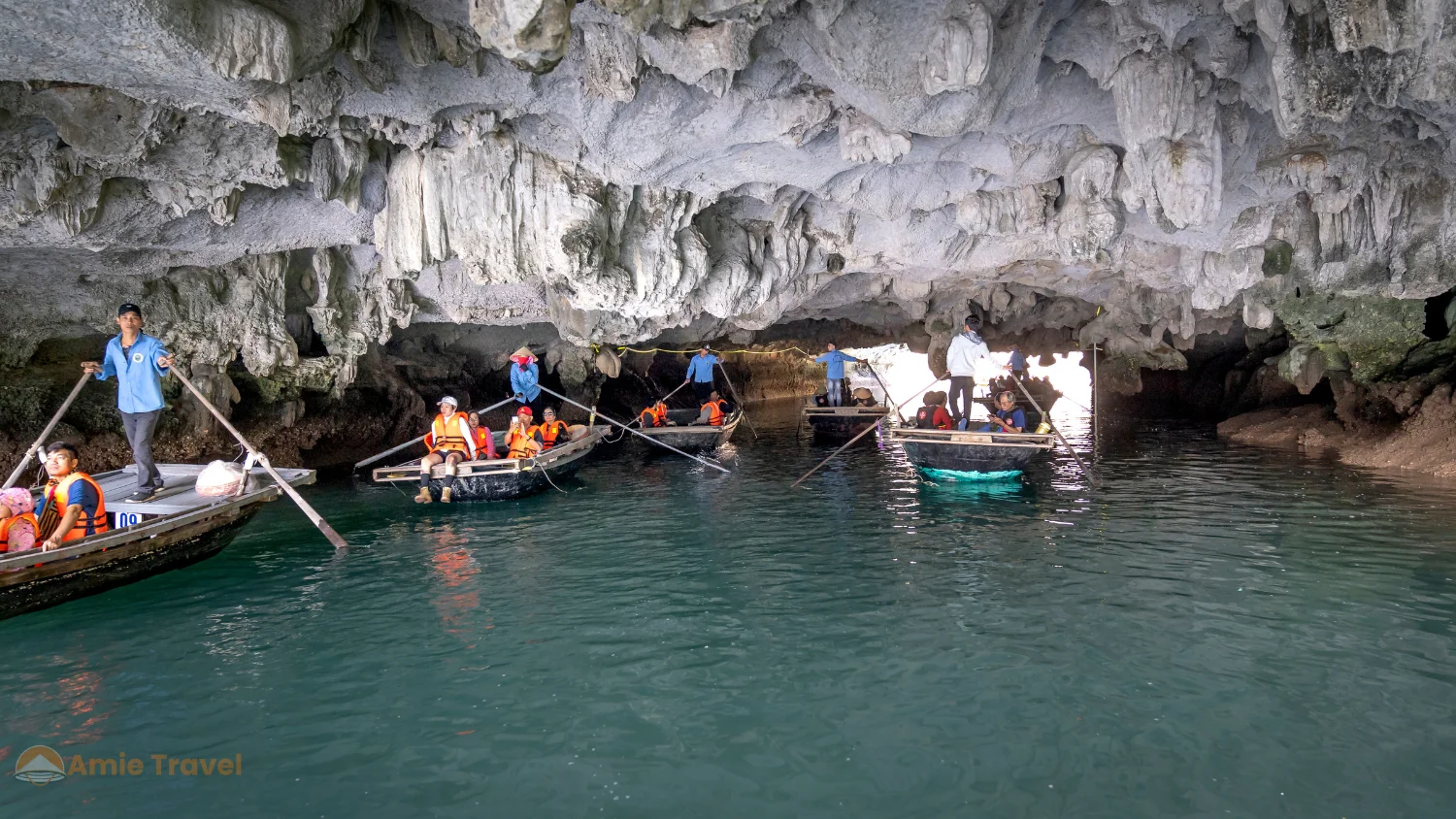
Lan Ha Bay sits to the south of Ha Long Bay and was formally recognized as part of the Ha Long Bay and Cat Ba Archipelago UNESCO World Natural Heritage designation. It has over 300 islands, significantly fewer cruise boats than the main Ha Long Bay circuit, and the same dramatic limestone formation character. In October and November, a cruise routing through Lan Ha Bay rather than the central Ha Long Bay area gives you the peak-season conditions without the peak-season boat density. The Dark and Bright Cave system in Lan Ha Bay, accessed by kayak through a water-level passage, is one of the most specific and memorable experiences in the whole bay complex and is far less crowded than the main Ha Long Bay caves.
Dragon Pearl Cave as the perfect final evening

Dragon Pearl Cave (Hang Ngoc Rong) sits about 35 kilometers from central Ha Long Bay, accessible by a 40-minute coastal drive after the cruise disembarks at Tuan Chau port. The dinner session runs from 5:15pm to 8:30pm. For travelers ending a 2-night cruise on the third morning and heading back to Hanoi, an afternoon at Dragon Pearl Cave before the evening transfer turns a logistics day into a complete final day. The cave is a 150-million-year-old limestone chamber that has been reimagined as a fine dining and live performance venue. The show uses 3D mapping and traditional performance to fill the cave walls with light and movement. Dinner from $56 per person. Awarded Asia’s Finest New Cultural Destination 2026. Book ahead during October and November when the experience operates at its highest demand.
What to pack for autumn: Light breathable clothing for 20 to 25 degree days. A light jacket or fleece for cruise deck evenings, particularly in November when the temperature drops noticeably after dark. A waterproof layer for the occasional brief shower. Reef shoes for kayaking and cave excursions.
Who this window is for: First-time visitors who want the complete Ha Long Bay experience. Couples. Photography travelers. Anyone combining Ha Long Bay with Hanoi in the optimal northern Vietnam circuit.
See our Ha Long Bay tours and cruises for overnight cruise options in the autumn window.
Spring window (March and April): Good conditions at better value
March and April are the second-best window for Ha Long Bay and a specific recommendation for travelers who want solid cruise conditions without the October-November boat traffic and pricing.
Early March still carries the tail of winter. Morning mist on the karsts before 9am in March gives the bay a soft atmospheric quality that is different from the autumn clarity but specifically worth having if you are the kind of traveler who finds beauty in the subtle rather than the dramatic. The mist burns off by mid-morning and the rest of the day is generally clear and pleasant. By mid-March the sky is opening up properly and the spring character is established. April is warm and largely clear, temperatures reaching 25 degrees with low rainfall.
The crowd advantage
March and April carry noticeably fewer international tourists than October and November. The main Ha Long Bay caves and viewpoints are accessible without the queuing that the peak autumn season produces. Cruise prices are typically 10 to 20 percent lower than the October-November peak. For travelers whose primary concern is having the bay without the crowds rather than having the bay in its best weather, spring is the correct choice.
The specific spring visual
The limestone karst islands in spring are covered in fresh green vegetation from the winter rains. The bay in April with the islands at their most vivid green and the water at its clearest spring condition has a color palette that October, which is further into the dry cycle, does not quite match. For photographers specifically targeting the contrast between the grey-green limestone and the vivid island vegetation, April is worth considering.
What to pack for spring: Light clothing for 18 to 25 degree temperatures. A light waterproof layer for early March when brief rain is possible. Sunscreen from mid-March onward as the UV index climbs toward summer levels. Comfortable footwear for cave excursions.
Who this window is for: Travelers whose dates do not align with October-November. Budget-conscious travelers who want good conditions at lower prices. Return visitors who want a less crowded version of the bay than their first trip.
See our Ha Long Bay tours and cruises for spring cruise availability.
Storm window (July and August): What the weather actually means for your cruise
July and August are the months that every Ha Long Bay best-time article handles awkwardly. Some dismiss them entirely. Some say “it can still be beautiful” without giving travelers the specific information they need to decide. Here is the honest picture, framed around weather logistics rather than anything else.
The temperature and rain
July and August are the hottest months at 30 to 38 degrees. Rainfall reaches its peak at around 265mm in August with approximately 16 to 19 rain days in the month. The rain typically arrives in heavy bursts rather than sustained all-day rain, and the bay in the brief window after a summer shower, when the mist rises from the warm water and the air clears, has a specific dramatic quality.
How cruise disruption actually works
When weather conditions develop that the Quang Ninh Port Authority considers unsafe for cruise navigation, a mandatory suspension order is issued. The final decision on whether cruises depart is typically announced at 3pm on the departure day. This timing matters: travelers may have already traveled 2.5 hours from Hanoi to reach the port by the time the decision is made.
When a suspension is issued, cruise operators typically handle it in one of three ways. A full cancellation with a partial refund, where travelers who have arrived at the port and waited are typically charged around $25 per person for lunch served during the wait. A shortened day cruise at reduced cost of around $95 per person, covering limited cruising permitted by the Port Authority. A full departure if conditions allow by 3pm.
Around 65 percent of annual cruise cancellations in Ha Long Bay occur in July and August. In the 2023-2024 data period, approximately 15 to 20 percent of all scheduled cruises in June through September faced some form of disruption. Most disruptions lasted one to two days before operations resumed.
The practical response for fixed July-August dates
Book a cruise with a clear weather cancellation policy written into the booking terms. Read the refund conditions before paying. Check the NCHMF website for the 72-hour forecast before departing Hanoi. Consider Bai Tu Long Bay, which is slightly more sheltered than the main Ha Long Bay circuit in some wind directions. Keep a Hanoi itinerary available as a backup for disrupted days.
What summer still offers
On days when the weather is clear and the Port Authority allows departures, the bay in summer has warm water for swimming, fewer international tourists at the main sites than October, and prices 10 to 20 percent below peak. The domestic Vietnamese school holiday brings Vietnamese family tourism from June through August but the international crowd is at its lowest of the year.
Dragon Pearl Cave as the weather-proof backup
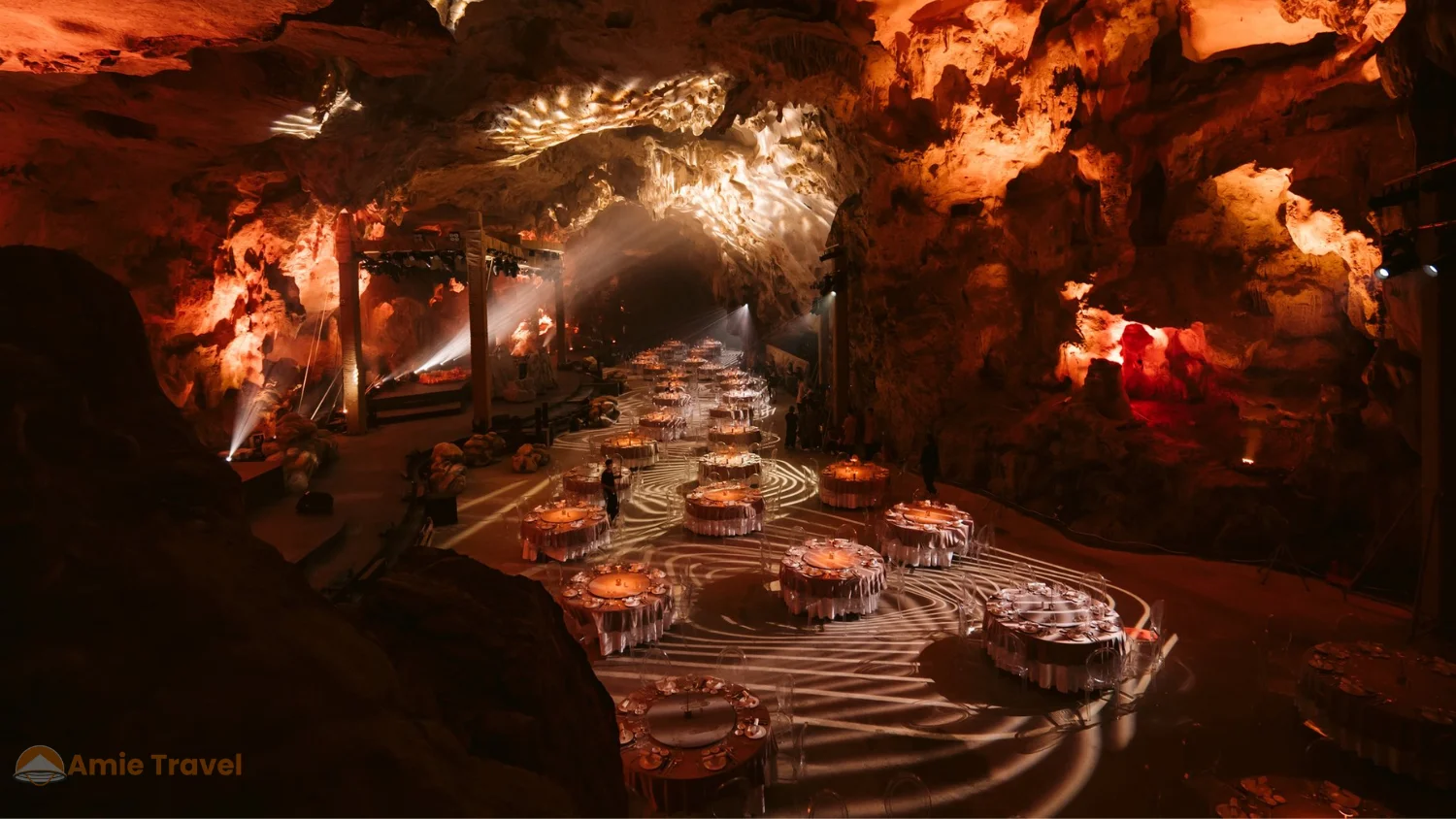
Dragon Pearl Cave is land-based and completely unaffected by sea conditions. The interior stays at a stable 23 to 25 degrees year-round. On days when the Port Authority restricts cruise activity, Dragon Pearl Cave provides a complete and premium experience that is worth having regardless of whether it is serving as the main plan or the backup. Dinner from $56 per person. Two sessions daily. Book the dinner session at 5:15pm to 8:30pm the evening before your scheduled cruise departure to give the day a guaranteed anchor regardless of the weather decision at 3pm.
What to pack for summer: Lightweight moisture-wicking fabrics. A waterproof layer for sudden heavy rain. Reef shoes and a dry bag for any boat-based activities. Sunscreen SPF 50.
Who should still consider July-August: Budget travelers with flexible cancellation bookings. Travelers who want the domestic Vietnamese summer bay energy. Anyone who can specifically hold a Hanoi backup plan.
Who should avoid July-August: First-time visitors with a single fixed date for the cruise that cannot be changed. Travelers on tight itineraries with flights or connections immediately after the Ha Long Bay segment.
Winter window (December to February): What nobody tells you
Every travel guide to Ha Long Bay describes winter as cold, foggy, and limited. This description is accurate about the weather and completely wrong about what winter is worth choosing for.
The mist that nobody explains correctly
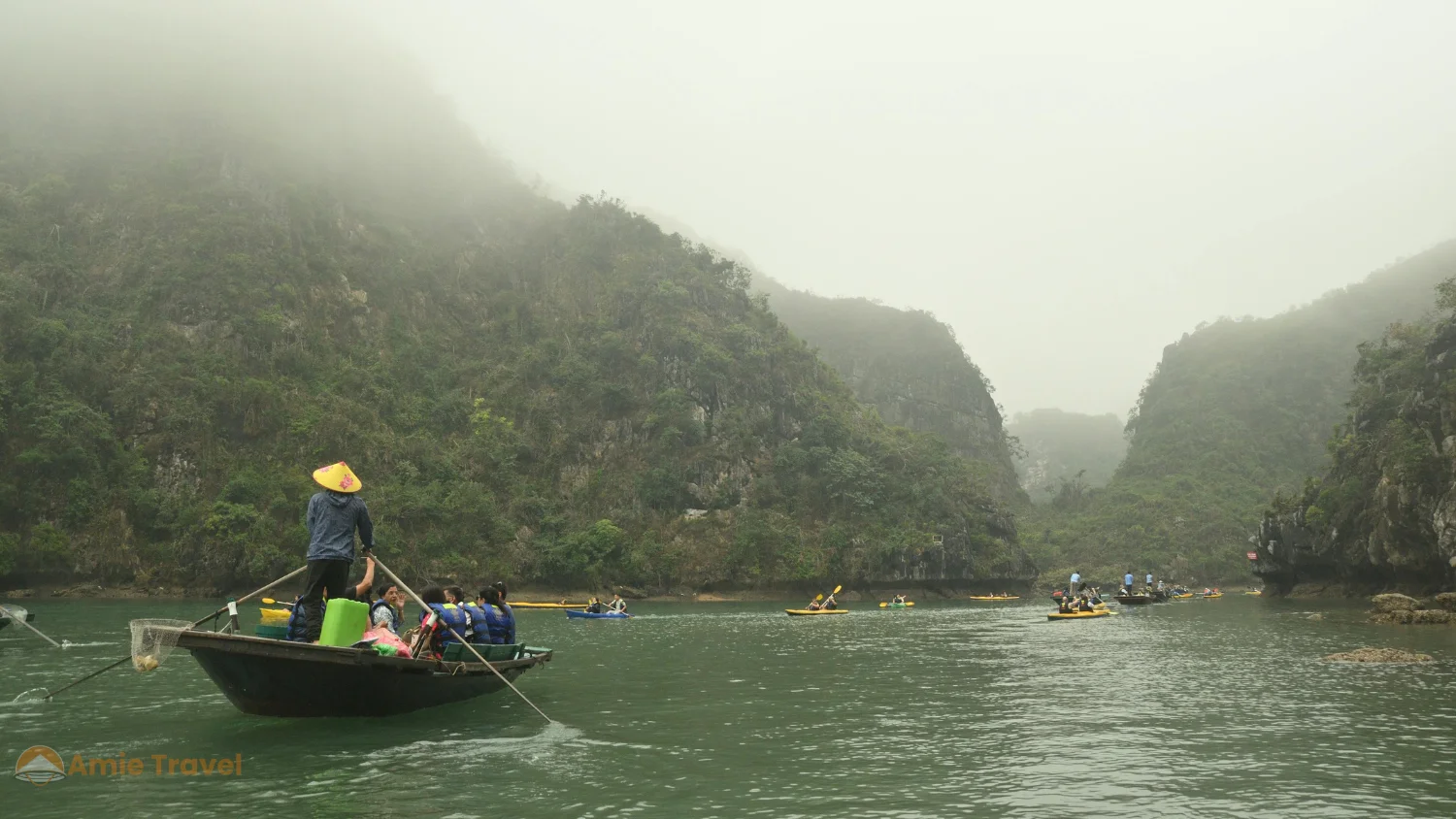
December and January in Ha Long Bay produce a specific morning mist that sits between the limestone karsts and rises off the water before the sun burns it off, usually by mid-morning. The bay in this condition, viewed from the cruise deck at 7am before breakfast, looks like a classical Chinese ink painting come to life. The karst peaks emerge from the white in layers: the nearest islands sharp and dark, the middle islands fading to grey, the furthest peaks barely visible as outlines above the cloud. This visual does not exist in October clarity or summer haze. It is specific to winter and it is specifically extraordinary.

Photographers who specifically target Ha Long Bay in winter know this. The fog is not a weather failure. It is the thing they came for. The light between the karsts in winter at 7am, with the mist moving and the dawn just arriving, is the most painterly version of the bay and the one that looks least like a postcard and most like a place.
The honest cold
Temperatures in December and January run at 15 to 20 degrees during the day and drop noticeably on the water in the evenings, sometimes below 15 degrees in January. Swimming is off the table in December and January. Kayaking is cold enough to be uncomfortable for most people. The cruise deck in the evening requires a proper jacket, not a light layer.
January can have strong northeast winds that create a chop on the water without being unsafe for navigation. The bay is rougher in winter than in autumn and some excursions may be adjusted depending on sea conditions on the day.
Why winter is surprisingly busy
This surprises many first-time planners: December and January are actually peak tourist months in Ha Long Bay. International travelers from Europe, Australia, and North America arrive on Christmas and New Year holiday breaks and specifically choose Ha Long Bay as a warm-weather escape from their cold winters. The irony is that they arrive to find Ha Long Bay at its coldest and most atmospheric, and many of them love it.
The bay in January carries steady cruise traffic. The main caves and viewpoints are busy. Book ahead for December and January just as you would for October.
Tet 2027: February 6
The two weeks before Tet see a surge in domestic Vietnamese tourism to Ha Long Bay as families travel together before the holiday. Cruises in late January 2027 and the days immediately surrounding February 6 book up quickly with Vietnamese domestic travelers. If your dates fall in this window, book at least 4 to 6 weeks ahead.
Dragon Pearl Cave in winter: the most relevant seasonal fit
This is where Dragon Pearl Cave makes the most sense in the Ha Long Bay seasonal calendar. When the bay is cold and outdoor activities are limited to the cruise itself, the cave provides a warm, dramatic, and specifically premium indoor experience that turns a winter visit from a compromised version of autumn into something with its own complete character.
The interior of Dragon Pearl Cave stays at 23 to 25 degrees year-round, which is noticeably warmer than the cruise deck on a January evening at 14 degrees. The dinner session from 5:15pm to 8:30pm works perfectly with the short winter daylight hours: a full day on the water followed by a warm cave dinner before the evening transfer to Hanoi. The show “Searching for the Pearl Mark” uses 3D mapping and live traditional performance to fill the ancient limestone chamber with light and movement. The menu is sourced from Quang Ninh province’s coastal ingredients. Dinner from $56 per person. Book ahead for December and January when the experience has its highest winter demand.
Awarded Asia’s Finest New Cultural Destination 2026. Located about 35 kilometers from central Ha Long Bay, accessible by a 40-minute coastal drive from Tuan Chau port.
What to pack for winter: A proper warm jacket, not a light fleece. Thermal base layers for January evenings on the water. Waterproof outer layer for the wind and occasional light rain. Warm socks. Comfortable shoes for the cruise deck.
Who winter is for: Photographers targeting the morning mist visual. Slow travelers who want the bay without summer or autumn crowds. Travelers whose dates fall in December or January and who approach the specific winter character as a feature rather than a compromise.
See our Ha Long Bay tours and cruises for winter cruise options and Dragon Pearl Cave booking.
Ha Long Bay or Lan Ha Bay: How to choose
Since Lan Ha Bay’s formal inclusion in the Ha Long Bay and Cat Ba Archipelago UNESCO World Natural Heritage designation, the choice between the two bays has become a genuine planning decision rather than a default to Ha Long Bay.
Ha Long Bay
The world-famous bay. The highest concentration of named caves, iconic viewpoints, and established cruise infrastructure of any bay in the region. The bay that most travelers visualize when they think of Ha Long. The cruise routes through the central Ha Long Bay area pass the most recognizable landmarks: Dau Go Cave, Titop Island, Sung Sot Cave, the floating fishing villages at Cua Van. The infrastructure for day trips, overnight cruises, and multi-day itineraries is the most developed and the most varied. The trade-off in peak season is boat density: in October and November, the main routes carry many vessels simultaneously.
Lan Ha Bay
Adjacent to Ha Long Bay to the south, accessed from Cat Ba Island or from Ha Long City. Significantly fewer cruise boats than the main Ha Long Bay circuit. The same limestone karst scenery with a quieter character. The Cat Ba National Park on the island adds a land-based nature dimension: forest trails, langur spotting, and highland viewpoints that a pure bay cruise cannot offer. The Dark and Bright Cave system, accessed by kayak through a water-level cave passage, is one of the most specific and memorable experiences in the whole bay complex.
The seasonal matching
October and November: both bays are at their best. For travelers who specifically want the iconic Ha Long Bay viewpoints and the most famous caves, Ha Long Bay is the answer. For travelers who want peak-season conditions with significantly fewer boats and a more intimate experience, Lan Ha Bay is the correct choice.
July and August: Lan Ha Bay routes are slightly more sheltered in some weather conditions than the more exposed sections of the main Ha Long Bay circuit. Not a guaranteed advantage in serious storm conditions, but worth knowing.
December to February: both bays have the same winter mist character. Lan Ha Bay is quieter. Ha Long Bay has more winter cruise options and greater scheduling flexibility.
March and April: both bays are good. Ha Long Bay has more route variety. Lan Ha Bay has fewer boats and the spring vegetation on the Cat Ba Island peaks.
See our Ha Long Bay tours and cruises for both Ha Long Bay and Lan Ha Bay cruise options.
Ha Long Bay month by month
January: 14 to 20 degrees, frequent morning mist, northeast winds creating some chop, cold on the cruise deck in evenings. No swimming. Peak tourist month despite the cold as international holiday travelers arrive. Dragon Pearl Cave is the standout evening experience. Verdict: winter mist photography window. Book ahead.
February: 15 to 21 degrees, Tet 2027 falls February 6 bringing domestic tourism surge in late January and early February. Morning mist continuing. Slightly warmer than January from mid-month as spring begins approaching. Book well ahead for the Tet window. Verdict: the tail of winter turning toward spring, festive energy from domestic travelers around Tet.
March: 17 to 24 degrees, early March still carries morning mist, skies clearing from mid-month. Cruise conditions improving week by week through the month. Prices below October-November peak. Fewer boats than autumn. The bay in spring green beginning. Verdict: good and improving, early March has the last of the winter mist, late March has spring clarity.
April: 20 to 28 degrees, clear and warm, low rainfall, good cruise conditions. The limestone islands at their most vivid green. Temperatures comfortable for full-day outdoor activity. Prices still below peak. Cruise traffic lower than October. Verdict: one of the best months for combining good weather with value and lower boat density.
May: 24 to 32 degrees, transition month, mostly clear mornings with rain possible from late May. Prices dropping from spring levels. Good value if bookings are flexible. The bay warming toward summer swimming temperature. Verdict: good shoulder value, watch the late-month rain pattern.
June: 27 to 33 degrees, rainy season beginning, afternoon rain arriving more consistently. Prices 10 to 20 percent below peak. Morning hours on the bay still largely clear and usable. Summer swimming conditions. Verdict: value window with manageable rain pattern, mornings are the key.
July: 29 to 37 degrees, hottest month, highest cruise disruption risk of the year. Around 65 percent of annual cancellations fall in July and August. Warm water for swimming on clear days. Domestic Vietnamese school holiday brings Vietnamese family tourism. Fewer international visitors. Verdict: book a fully refundable cruise, have a Hanoi backup, use Dragon Pearl Cave as your insurance plan.
August: 29 to 36 degrees, wettest month at around 265mm average rainfall, highest storm risk alongside July. Hot water for swimming on clear days. The bay most atmospheric in the post-rain mist windows. Prices at annual low alongside July. Verdict: maximum budget value, maximum weather flexibility required.
September: 27 to 32 degrees, rain beginning to ease from mid-month. The transition toward autumn is visible from around September 20. Fewer boats than October. Prices still near summer levels. The bay beginning to clear. Verdict: the turn-of-season month, late September is when the bay starts to feel like autumn again.
October: 22 to 28 degrees, clear skies, calm water, golden afternoon light. Peak cruise season. The best month for visibility, photography, and the complete Ha Long Bay experience. Book 6 to 8 weeks ahead. Lan Ha Bay the correct choice for travelers wanting peak conditions with fewer boats. Verdict: book this month.
November: 18 to 24 degrees, still largely clear, temperatures cooling toward winter. Slightly fewer boats than October, slightly lower prices. Ha Long Bay Heritage Marathon typically held in November, bringing some additional domestic tourism to Ha Long City. The last comfortable month before winter cold arrives. Verdict: October with fewer tourists and lower prices.
December: 15 to 21 degrees, winter arriving, morning mist beginning its seasonal character. Peak international holiday tourist month despite cold. Prices rising toward Christmas and New Year. New Year’s Eve in Ha Long City carries a festive energy. Dragon Pearl Cave at its most relevant. Verdict: winter mist opening, book ahead for Christmas and New Year period.