Hanoi at a glance: 2026 and 2027
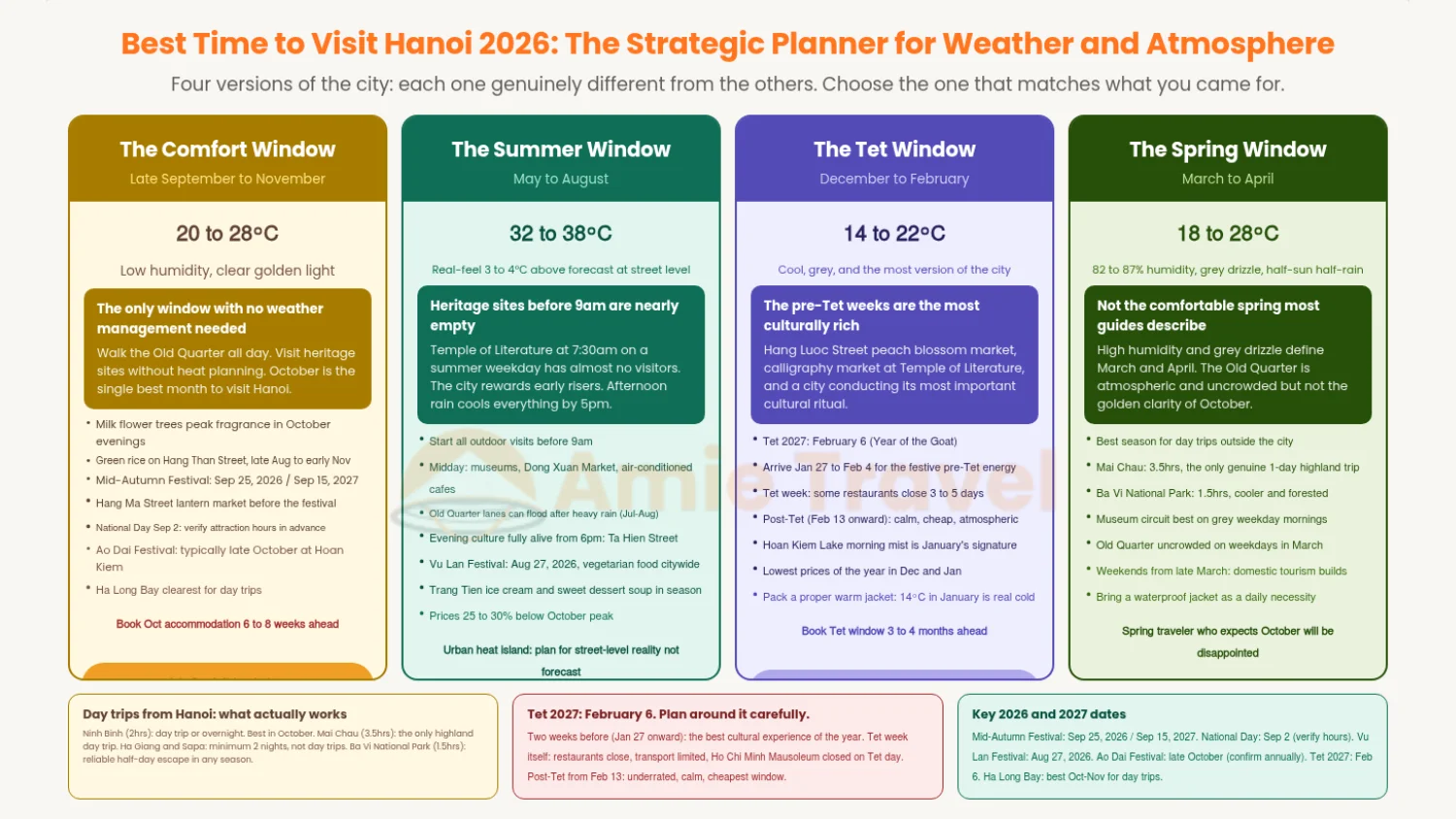
- The comfort window (late September to November): This is when Hanoi is at its best. Temperatures around 20 to 28 degrees, clear skies, low humidity. You can walk all day without planning around the heat. October is the pick of the year.
- The summer window (May to August): Hot, humid, and alive. Real-feel temperatures run 3 to 4 degrees above the forecast because the Old Quarter traps heat. The trade-off: prices 25 to 30 percent lower than October and the heritage sites are far less crowded in the early mornings.
- The Tet window (December to February): Cool, grey, and the most culturally Vietnamese time to visit. The pre-Tet weeks in late January and early February are extraordinary if you know what to look for.
- Spring (March to April): Warm but grey and very humid. Best used for countryside day trips to Mai Chau or Ba Vi National Park rather than full urban walking days.
- Key dates 2026: National Day September 2. Mid-Autumn Festival September 25. Tet February 17. Key dates 2027: Tet February 6 (Year of the Goat). Mid-Autumn Festival September 15.
The comfort window (Late September to November): When Hanoi finally opens up
If you ask a Hanoian when you should visit their city, almost all of them will say October. Not because they are following a script but because they have lived through every version of the city and October is the one that feels right. The heat from summer has gone. The grey drizzle of winter has not yet arrived. The air is clear in a way that makes the French colonial streets in the Old Quarter look different from every other month of the year.
From late September the temperature drops to somewhere between 20 and 28 degrees during the day. The humidity falls. The sky turns properly blue. Walking from the Old Quarter to Hoan Kiem Lake to the Temple of Literature in a single morning becomes something you look forward to rather than something you pace yourself through. This is the window when Hanoi rewards walkers.
What October specifically looks like
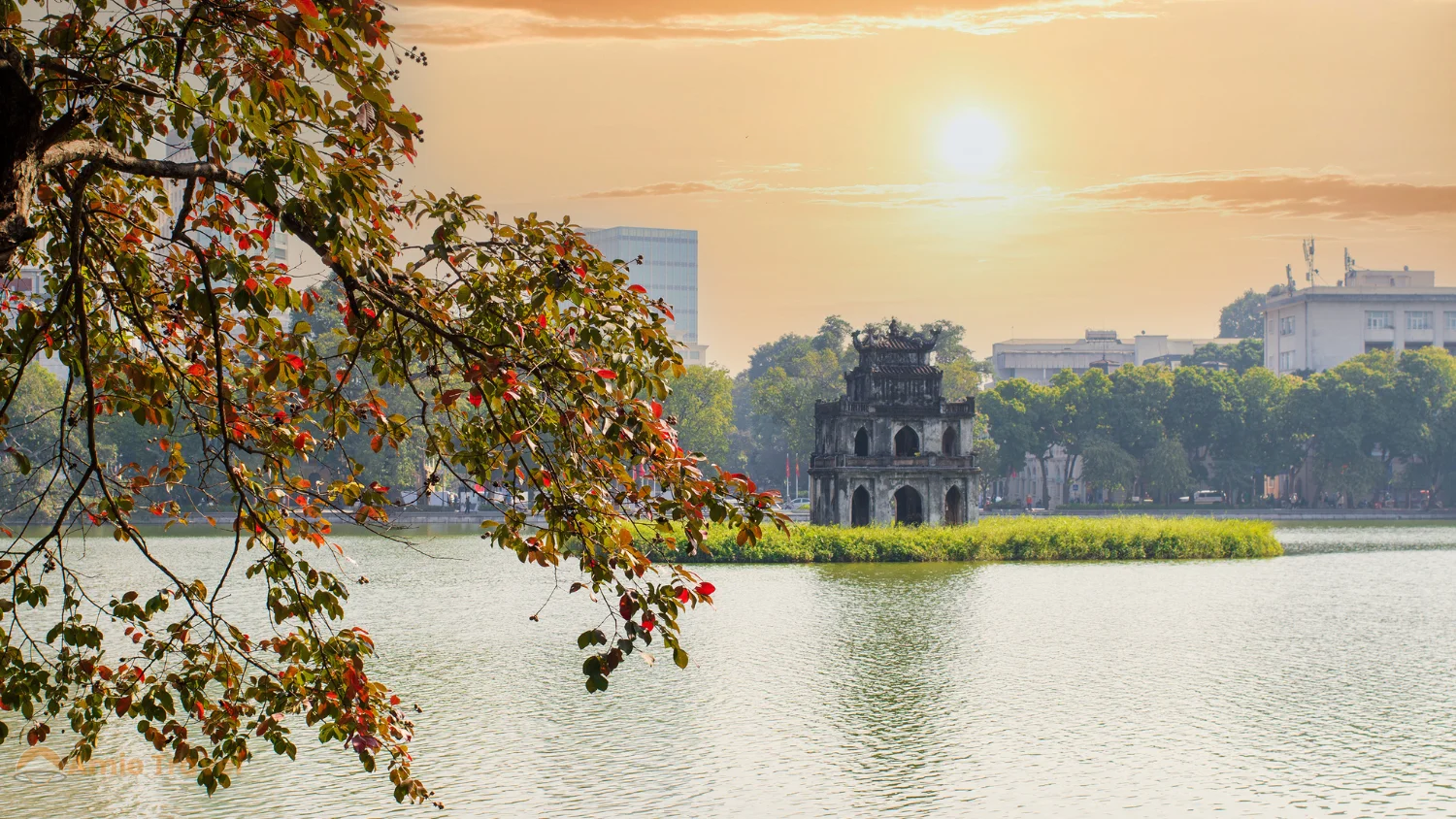
The Hoan Kiem lakeside before 8am in October is one of the most specific Hanoi experiences worth making the effort for. Elderly residents doing tai chi on the lakeside path. The Turtle Tower reflection in still water. The light coming in low from the east. The milk flower trees along Phan Dinh Phung Street and Hoang Hoa Tham Street bloom through October and the fragrance on quiet evenings is something that locals who have moved abroad say they miss more than almost anything else about the city. You cannot see the flowers because they are high in the canopy. You just smell them as you walk.
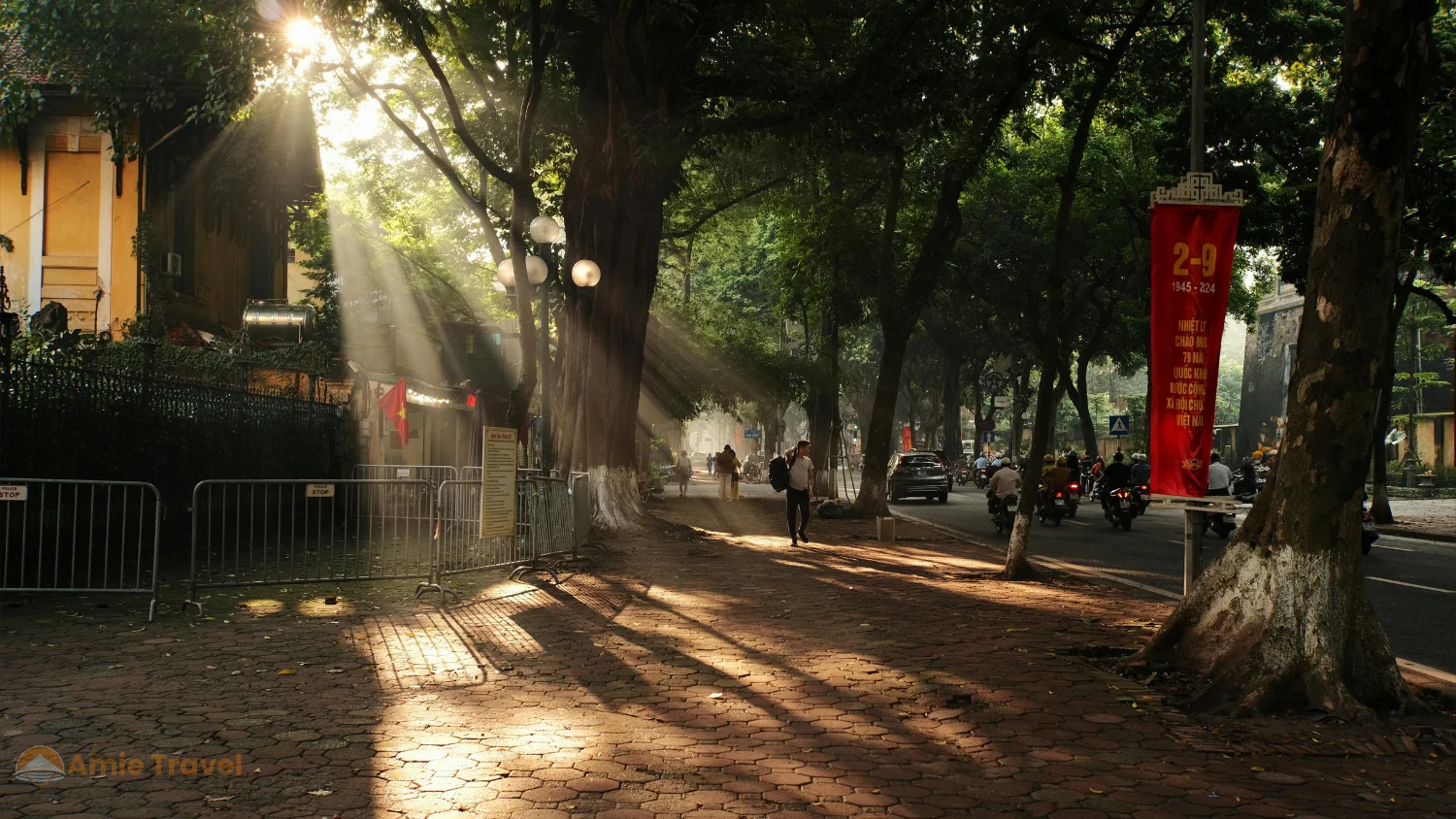
Green rice is available only from late August through early November. You will find vendors selling it wrapped in lotus leaves on Hang Than Street in the Old Quarter. It has a subtle, grassy taste that is unlike anything else sold in the city and it only exists for about six weeks before it disappears until the following year. Egg coffee at the small upstairs cafe on Nguyen Huu Huan Street is the correct afternoon activity in October when the air has cooled enough to appreciate a warm drink.
If you are in the area around Hoan Kiem Lake, look for the outdoor history photo exhibitions that appear along the lakeside pedestrian area around national anniversaries. They cover Hanoi from the French colonial era through to reunification and are free to walk through at any time. Worth an hour if you have it.
National Day: September 2, 2026
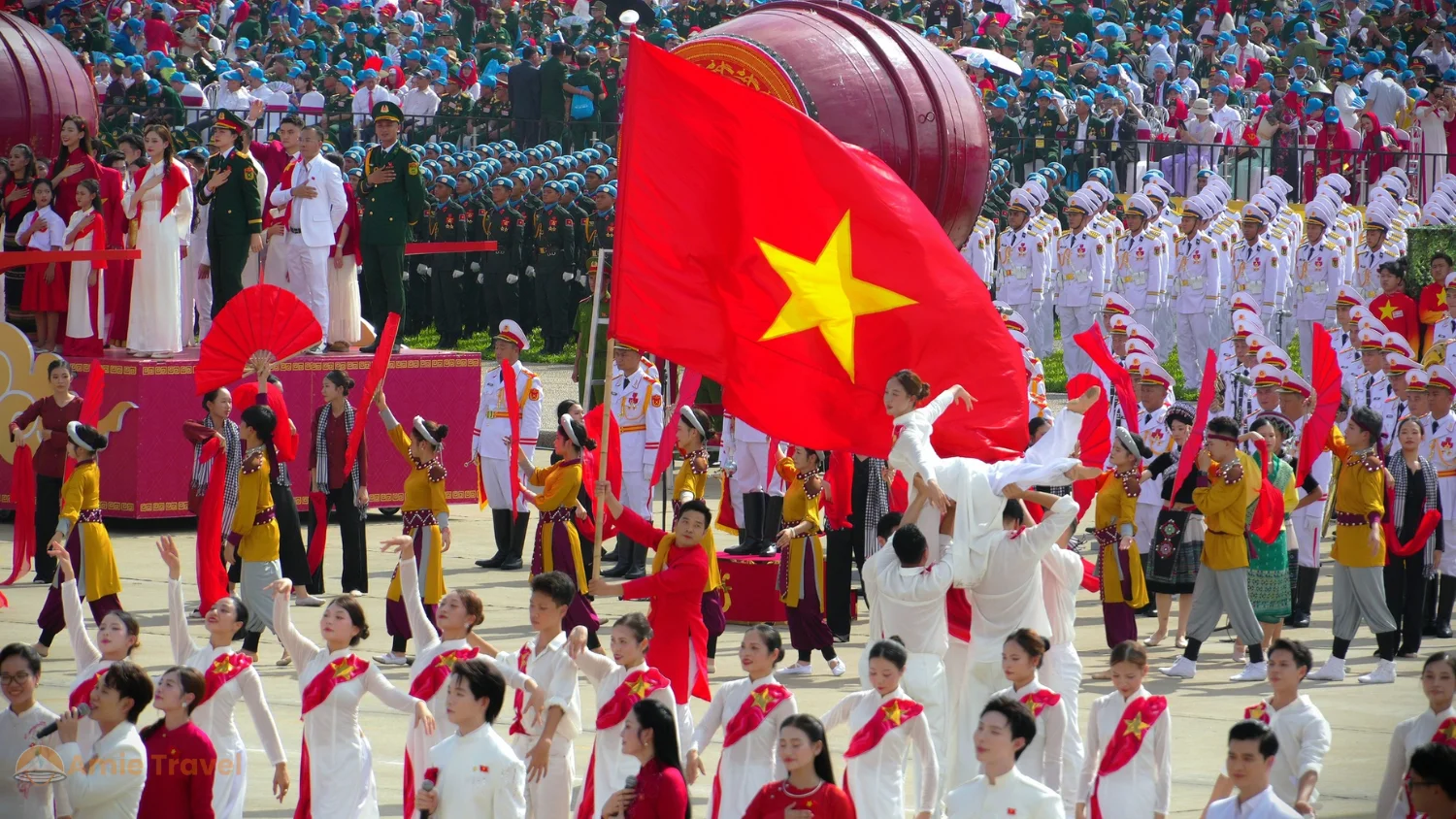
September 2 is one of the most important public holidays in Vietnam, marking the 1945 Declaration of Independence. In Hanoi there are ceremonies at Ba Dinh Square and the Ho Chi Minh Mausoleum. The honest planning note: many smaller local restaurants and businesses close for the holiday period, which runs for several days. If you are arriving around this date, do not assume a specific restaurant will be open or that a particular site will be running normal hours. Check ahead. The larger tourist-facing hotels and international restaurants are typically fine, but the smaller local places that make Hanoi worth eating in may be closed.
Mid-Autumn Festival: September 25, 2026 / September 15, 2027
In the weeks before the Mid-Autumn Festival, Hang Ma Street in the Old Quarter turns into one of the most photogenic streets in the city. Lanterns of every shape, mooncake boxes, paper toys, and decorations fill both sides of the street from end to end. On the festival evening itself, children carry lit paper lanterns through the Old Quarter lanes. It is not a tourist event. It is a specifically children’s celebration and the atmosphere on the evening of the full moon is specific to this night and worth being in the Old Quarter for.
Hanoi Ao Dai Festival: typically late October
Hanoi holds an annual traditional dress festival in late October along the Hoan Kiem pedestrian street area, featuring parades and cultural performances. The date varies annually. The 2023 edition ran October 27 to 29. Check the Hanoi Tourism official calendar closer to your travel dates for the 2026 confirmed schedule.
What to pack: Light clothes for 20 to 28 degree days. One thin layer for October and November evenings when temperatures drop to 18 to 20 degrees after dark. Sunscreen for the midday sun in September and early October. Good walking shoes for the cobblestones of the Old Quarter.
See our Vietnam Adventure Tours for northern Vietnam circuits built around the autumn window.
The summer window (May to August): The city at its most alive, and most demanding
Nobody is going to tell you that Hanoi in July is comfortable. It is not. The temperature on a July afternoon in the Old Quarter sits somewhere between 36 and 40 degrees at street level because the narrow lanes and the concrete buildings hold the heat in a way that the weather app does not fully capture. The forecast might say 34 degrees. Your body, at noon on Hang Bong Street with zero breeze, will tell you otherwise. Add humidity above 80 percent and you have the city at its most demanding.
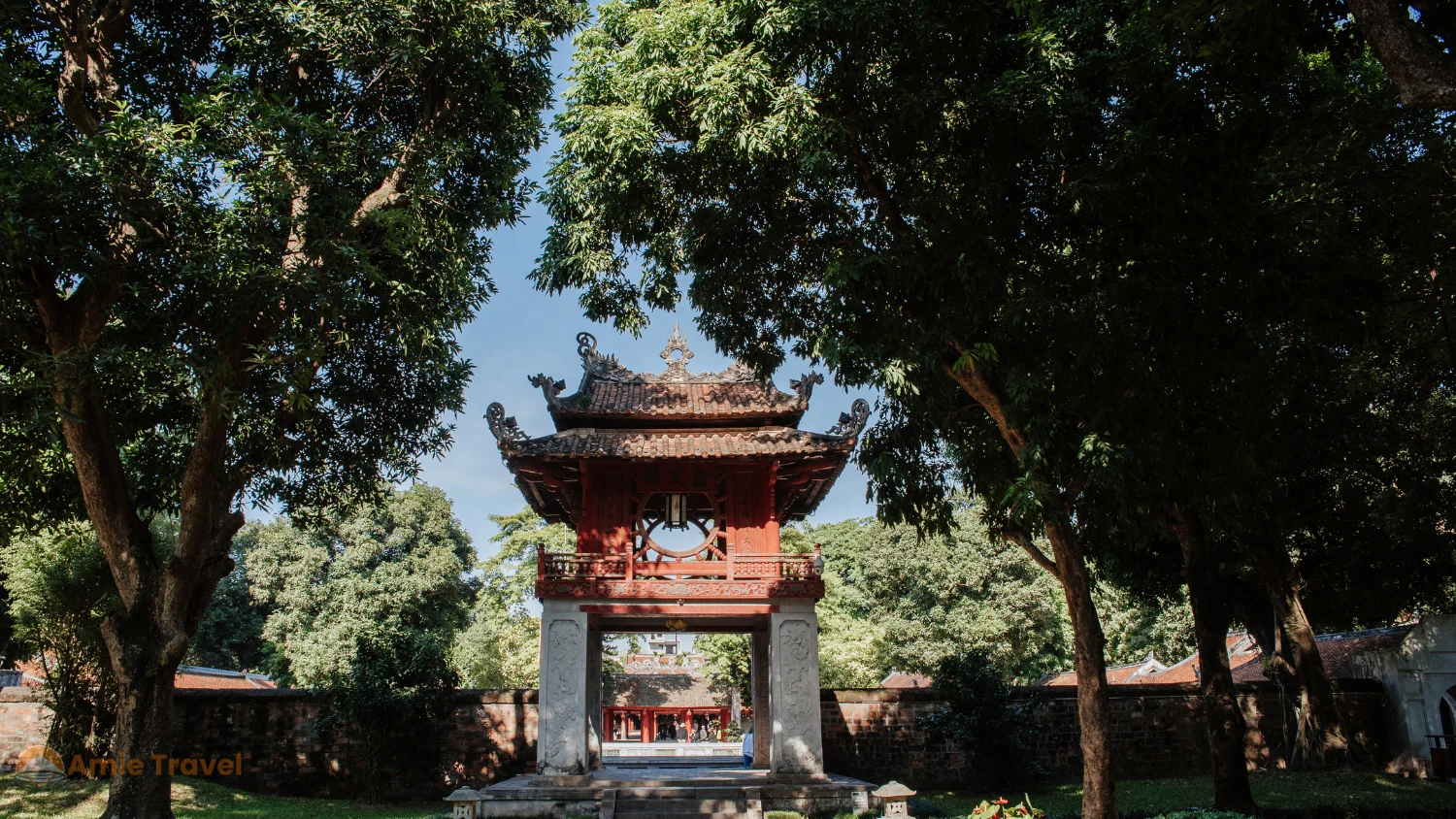
What most people do not know is that visiting Hanoi in summer with a bit of local knowledge is not just survivable, it can actually be the best time to see the heritage sites. International tourists stay away in July and August. The Temple of Literature at 7:30am on a Tuesday in July is virtually empty. You can take photographs of the courtyard with almost no one in the frame. The Ho Chi Minh Mausoleum complex on Ba Dinh Square before 9am has short queues. These same sites in October are busy.
The schedule that works
The key is to work the way Hanoians work in summer: early morning and evening, not midday. Start at 7am and you have three comfortable hours before the heat becomes difficult. The Old Quarter in the early morning is a different city from the same streets at noon: cooler, quieter, the vendors setting up, the smell of pho from the breakfast stalls. By 10 or 11am, move indoors.
The Vietnam Museum of Ethnology in Cau Giay District is worth a full morning or afternoon in any weather. It covers all 54 ethnic groups in Vietnam with well-done galleries and an outdoor traditional architecture section. It is properly air-conditioned. The Vietnam Fine Arts Museum on Nguyen Thai Hoc Street and the Hoa Lo Prison Museum near Hoan Kiem are both worth the time in the midday heat peak. Use a car or motorbike taxi between sites rather than walking.
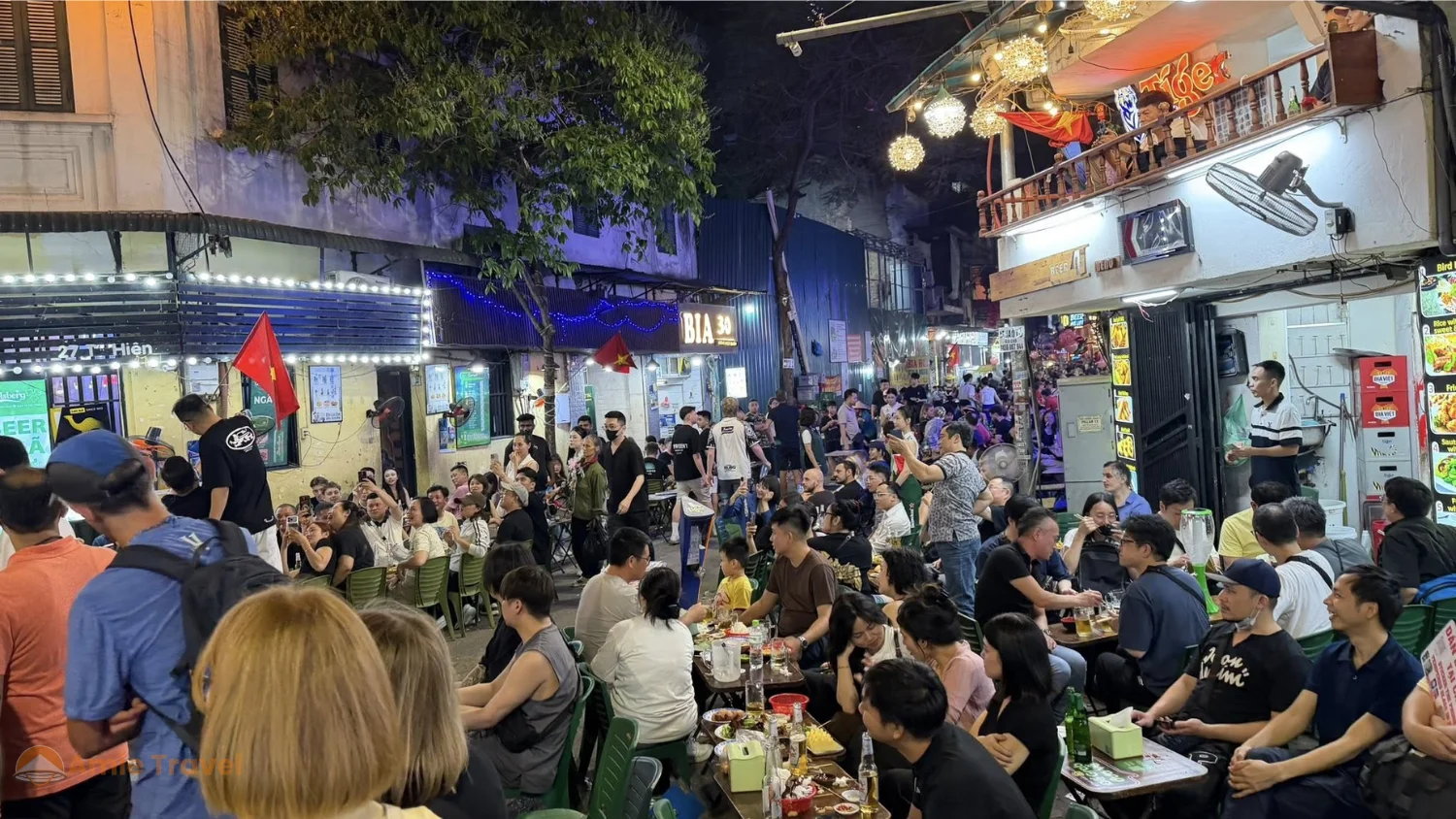
From 5pm onward the city relaxes. The afternoon rain, if it came, has usually passed by then and the evening air is noticeably cooler. The Old Quarter from 6pm is where Hanoi shows its best summer character: street food vendors fully set up, the fresh draft beer corner on Ta Hien Street with tables spilling onto the pavement, the night market on Hang Dao Street at weekends. Sweet dessert soup from the carts near Hoan Kiem and Trang Tien ice cream from the kiosk near the lake are the correct summer evening activities.
A specific flooding note
Hanoi gets heavy rain from July through August and some lanes in the Old Quarter have limited drainage. After a serious downpour, water can accumulate fast on certain streets and stay there for an hour or two. It is not dangerous but it is inconvenient if you are not prepared. Waterproof sandals or shoes that can handle wet ground are a sensible choice from July onward.
The Vu Lan Festival: August 27, 2026
Vu Lan is the Vietnamese Buddhist festival honoring the souls of the departed, observed on the 15th day of the 7th lunar month. It is not a tourist event. It is a deeply observed day across the city with offerings at pagodas and a tradition of vegetarian eating in Buddhist households and many restaurants. If you are in Hanoi in late August, visiting Quan Su Pagoda in the Old Quarter on Vu Lan evening and trying the seasonal vegetarian food at any local restaurant is a genuine cultural experience that most visitors to Hanoi never encounter.
What to pack: Lightweight moisture-wicking fabrics throughout. Nothing cotton at 38 degrees. A compact umbrella for July and August rain. SPF 50 and a wide-brim hat for morning walks. A reusable water bottle. Waterproof sandals from July.
See our Vietnam Family Tours for Hanoi circuits that work around the summer heat rhythm.
The Tet window (December to February): The city at its most Vietnamese
There is a version of Hanoi that most international visitors never see because it happens in the winter months when the temperature is cool, the sky is grey, and none of the standard travel advice points here. It is the version of the city that belongs to the people who live in it, not to the tourism industry that serves it.
December to February is when Hanoi conducts its most important cultural business of the year. The preparations for Tet, the Vietnamese Lunar New Year, begin weeks before the holiday and build into something you can feel in the streets as soon as you arrive. If you want to understand Hanoi as a living city rather than as a collection of heritage sites, this is the window.
December: quiet, cold, and worth it
December in Hanoi runs at 15 to 22 degrees with frequent overcast skies and occasional drizzle. It is cold by Vietnamese standards and locals layer up in a way that can look excessive to visitors from colder climates. The city is quiet after October’s tourist peak. Hotel prices have dropped. The Old Quarter has space to breathe.
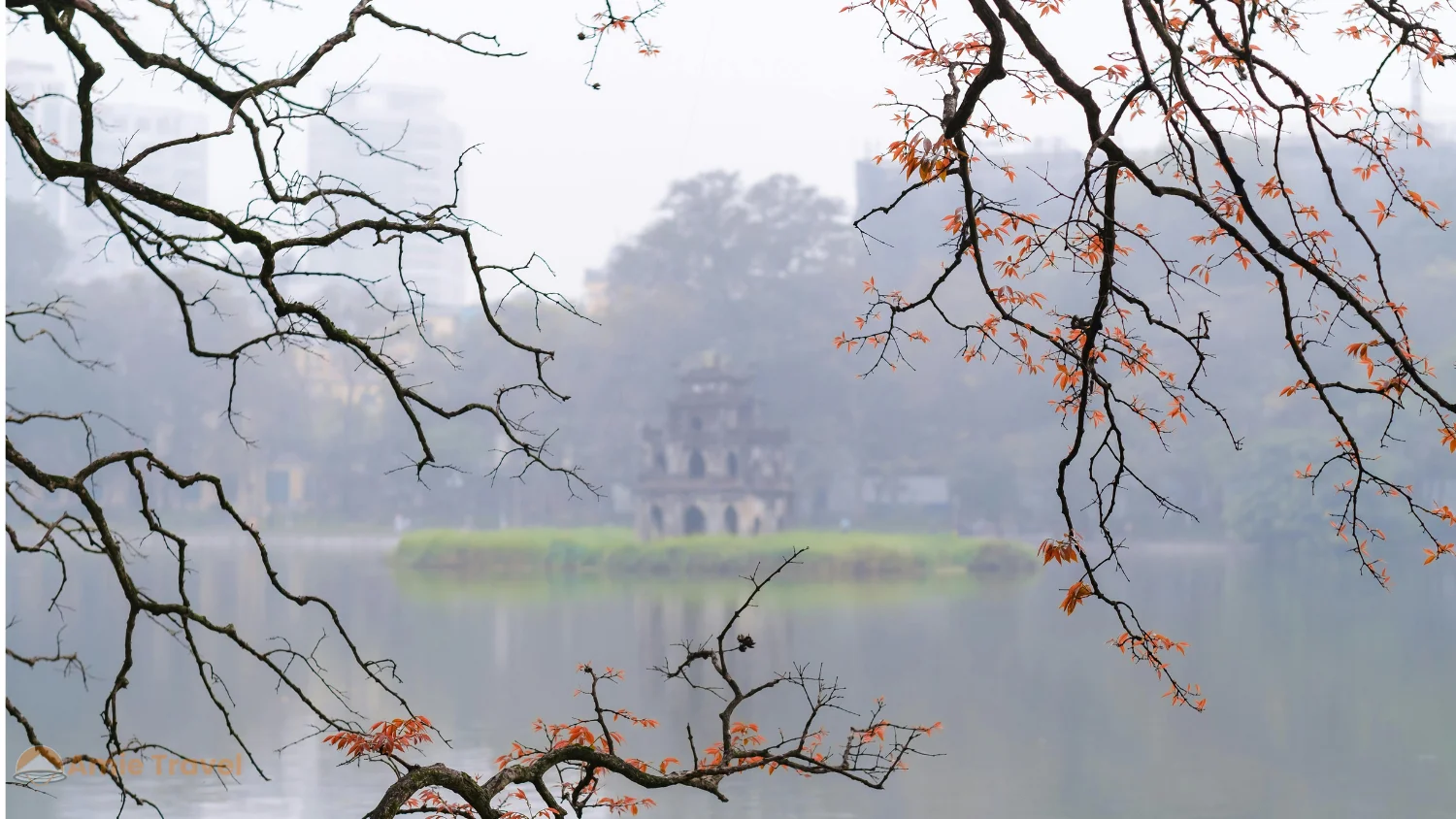
The Hoan Kiem lakeside at 7am in December with low mist sitting over the water and the Turtle Tower barely visible through the grey is one of those Hanoi experiences that photographs cannot fully capture. It is slow and atmospheric and specific to the cold months in a way that no other season replicates.
January: Tet preparation begins
January is the coolest month at around 14 to 20 degrees. The city starts preparing for Tet in earnest and this preparation is something worth watching as a visitor.
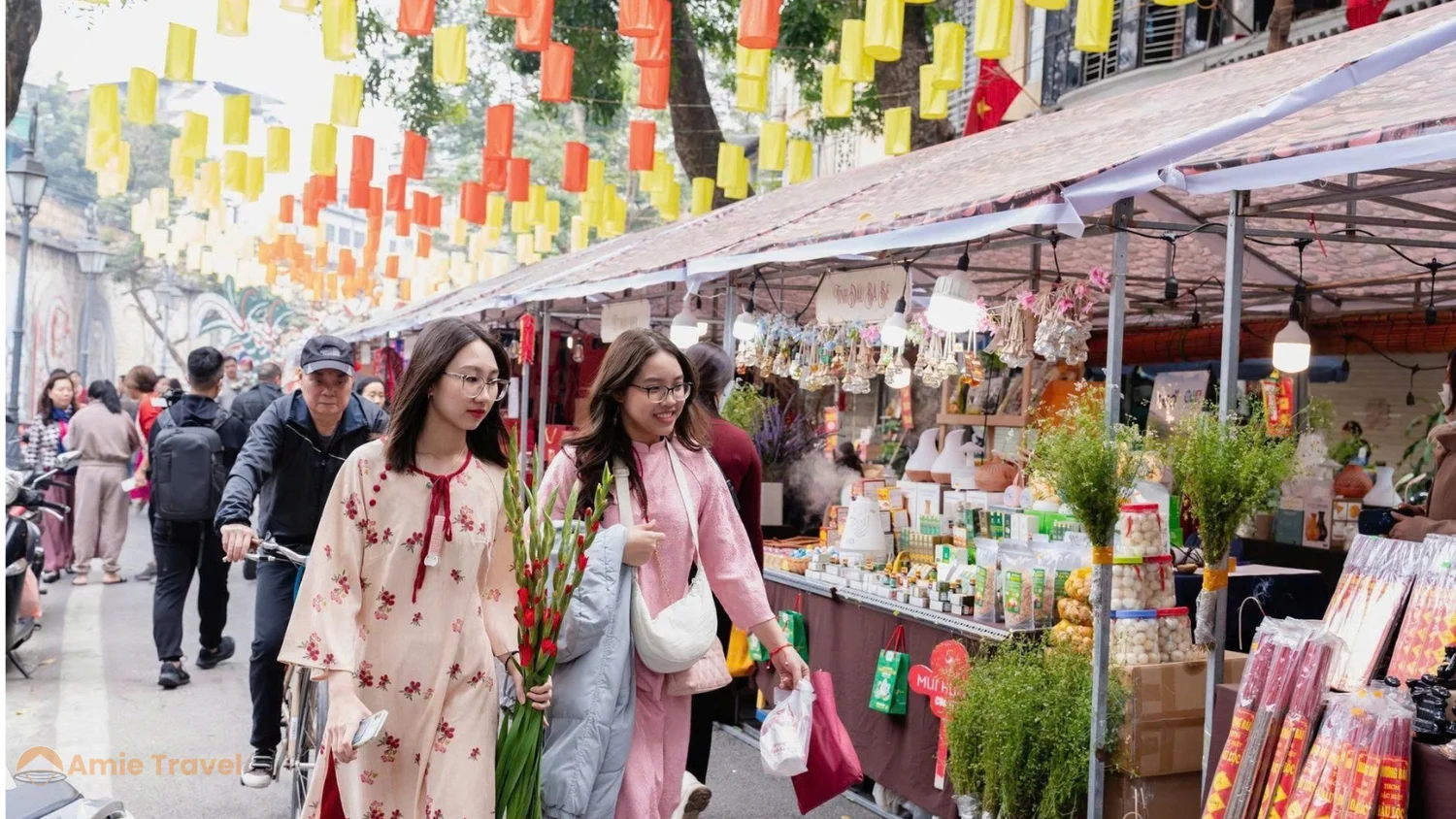
Hang Luoc Street in the Old Quarter becomes a peach blossom market in the second and third week of January. Vendors line both sides of the street with ornamental peach and kumquat trees in ceramic pots for Tet household decoration. The street fills with families choosing trees to bring home, farmers negotiating prices, and the specific energy of a city getting ready for its most important day. Walking Hang Luoc Street on a weekday morning in the third week of January is one of the most specific and least-touristed Hanoi experiences available.
The Temple of Literature hosts a calligraphy market in the weeks before Tet. Scholars in traditional dress sit at low tables and write lucky characters for the new year on red paper for those who want to hang them at home for good fortune. It is free to watch and the scene inside the second courtyard of the temple during this period is one of those things you cannot plan for but remember for a long time.
Tet 2026: February 17 / Tet 2027: February 6
Tet is the most important event in the Vietnamese calendar and the practical implications for international travelers visiting Hanoi around this date are significant enough to spell out clearly because most articles skip over them.
The two weeks before Tet are the best reason to visit Hanoi in February. The peach blossom markets are active. Square sticky rice cake vendors appear on Hang Be Street. The Quang Ba wholesale flower market in the early mornings has farmers bringing peach blossom trees directly from the growing areas north of the city. The atmosphere in the Old Quarter in this period is festive and specific to Hanoi in a way that no other time of year matches. If you are coming to experience Vietnamese New Year culture, arrive between February 5 and 14 in 2026 (or January 26 to February 4 in 2027).
Tet week itself is a different story. The city empties as local residents travel back to their home provinces. Some restaurants close for three to five days. Grab motorbike taxis are scarce on the holiday day itself and private car hire costs noticeably more. The Ho Chi Minh Mausoleum closes on Tet day. If you are in Hanoi during Tet week, book a hotel with in-house dining for the holiday evening and verify any specific restaurant plan before committing. Do not assume your favourite pho shop will be open on February 17.
The week after Tet, from around February 21 in 2026 and February 13 in 2027, is one of the most underrated windows in the Hanoi calendar. The spring weather is arriving, the Tet decorations are still on the buildings, the city is calm, and the tourist volumes are low. Hotels that were fully booked in October have rooms available at low prices. It is a good time to be in Hanoi if you can manage the dates.
What to pack: A proper warm jacket for January. Not a light fleece, an actual jacket you would wear in European autumn. A daily umbrella for December and January. Lighter spring clothes from mid-February onward.
The spring window (March to April): What most articles get wrong
Almost every guide to Hanoi describes March and April as a pleasant spring: warm, mild, comfortable for sightseeing. Some of that is true. The temperatures are reasonable, somewhere between 18 and 28 degrees. But the piece that is consistently left out is the humidity.
March and April are the most humid months of the year in Hanoi, running at 82 to 87 percent. This is not the comfortable dry spring that the temperature numbers suggest. The northeastern winter winds have faded but the summer monsoon has not yet arrived. In this gap, Hanoi sits in a state that locals describe as half-sun, half-drizzle: patches of warmth followed by grey overcast and light rain, cycling through the day without much pattern. Some days are fine. Many are grey and damp in a way that makes sustained outdoor walking less enjoyable than October.
This does not mean spring is bad. It means it is different from what most articles prepare you for, and the travelers who get the most from it are the ones who arrive with accurate expectations and plan accordingly.
Where spring works well: outside the city
Honestly, spring is the best time for day trips out of Hanoi rather than for intensive urban walking. The countryside around the city is vivid green from the early rains and the landscapes look completely different from the dry, dusty surroundings of March in a different year.
Mai Chau is 3.5 hours from Hanoi and is the only highland valley close enough for a genuine one-day circuit with an early departure. The White Thai rice fields in spring are at their freshest green and the village life is fully active. If you leave Hanoi before 7am you can have several hours in the valley before heading back in the afternoon.
Ba Vi National Park, about 60 kilometers west of Hanoi, is a much easier half-day or full-day option. The park sits significantly cooler than the city at any time of year and in spring the forested hills are green and pleasant for walking. There are French colonial ruins at the upper levels of the park, a dairy farm, and a mountain pagoda. The 1.5-hour drive from the Old Quarter is simple. It is a reliable option when the city feels grey and heavy.
One practical note about the Perfume Pagoda: it is a historically important temple complex about 60 kilometers southwest of Hanoi and spring is its festival season, running from late January through April. It is worth visiting. However, the organized tour market for the Perfume Pagoda has thinned out in recent years and fewer operators are running regular departures than before. If this is on your list, check with Amie Travel about current availability before building your itinerary around it.
Inside the city in spring
The museum circuit is the spring answer for Hanoi’s urban days. The Vietnam Museum of Ethnology in Cau Giay District is outstanding and warrants a full half-day. The Hoa Lo Prison Museum tells the history of Hanoi through the colonial and wartime periods and is one of the most thoughtfully presented museums in the city. The Vietnam Fine Arts Museum on Nguyen Thai Hoc Street is often overlooked by visitors and is particularly good on lacquerwork and contemporary Vietnamese art. These sites are all excellent on grey March mornings.
The Old Quarter on weekday mornings in March is uncrowded and has a calm that the summer and autumn months cannot match. Weekends from late March and through April see more domestic Vietnamese tourists and the feel changes.
What to pack: A waterproof jacket that you actually wear every day, not one you carry just in case. Quick-dry fabrics that handle humidity. A proper umbrella, not a compact fold-up that breaks in sideways drizzle.
Hanoi month by month: The quick reference
January: 14 to 20 degrees, grey and often misty. The peach blossom market on Hang Luoc Street opens in the second and third week. The calligraphy market at the Temple of Literature begins before Tet. Cold in the evenings and you will need a proper jacket. Tourism is low and the city is calm. Good for cultural immersion and budget travel. Verdict: quiet, cheap, culturally specific.
February: 15 to 22 degrees. Tet 2026 falls on February 17, Tet 2027 on February 6. The two weeks before Tet are among the most culturally alive the city gets: peach blossom markets, sticky rice cake vendors, the city preparing for the year’s biggest event. Tet week itself: some businesses close, transport is limited, check your specific plans ahead of time. Post-Tet from about February 21 (2026) or February 13 (2027): city calm, spring arriving, prices low. Verdict: the pre-Tet weeks are worth planning around.
March: 18 to 25 degrees but 82 to 85 percent humidity with grey drizzle on many days. Best used for the museum circuit and day trips to Ba Vi National Park or Mai Chau. The Old Quarter is uncrowded on weekday mornings. Set honest weather expectations. Verdict: plan for grey conditions and you will find the rewards.
April: 22 to 30 degrees, humidity continuing to peak, occasional bright days. Domestic tourism starts building on weekends from mid-April. Good for early morning heritage walks before the heat builds. Reunification Day on April 30 is a public holiday and a multi-day break for many locals, so verify hours for anything specific you are planning around this date. Verdict: transitional month, early mornings are the best of it.
May: 25 to 33 degrees with real-feel approaching 36 to 37 degrees in the Old Quarter at midday. Prices dropping from spring levels. Heritage sites accessible with early starts. The Old Quarter in the early morning is still pleasant at this hour. Verdict: good value, start early.
June: 27 to 36 degrees, real-feel above 40 degrees possible at midday in the Old Quarter. Summer is fully underway. Afternoon rain starting from late June. Evening culture comes alive from 6pm. Verdict: intense at midday, excellent in the early morning and evening.
July: 28 to 37 degrees, real-feel 39 to 41 degrees at street level due to the urban heat island. Afternoon monsoon rain daily from roughly 3 to 5pm. Old Quarter street flooding possible after heavy downpours. The heritage sites before 9am are as uncrowded as they ever get. Verdict: the most demanding month, but early mornings at the heritage sites are exceptional.
August: 27 to 36 degrees, monsoon continuing. Vu Lan Festival on August 27, 2026 and August 16, 2027. Vegetarian food everywhere in late August. Evening culture at Ta Hien Street and around the Old Quarter is at full summer energy. Verdict: Vu Lan is worth being in Hanoi for, the heat rhythm is the same as July.
September: 24 to 32 degrees with the heat beginning to ease from the second half of the month. National Day September 2: verify your specific plans for this holiday period as local businesses may close. Mid-Autumn Festival September 25 in 2026 and September 15 in 2027: Hang Ma Street lantern market in the weeks before, the children’s lantern evening on the festival night. Green rice vendors appearing on Hang Than Street from late August. Book October accommodation now. Verdict: the month of the turn, with specific evenings worth being in Hanoi for.
October: 22 to 28 degrees, low humidity, the best single month to visit Hanoi. Clear golden light. The milk flower trees at peak fragrance on evening walks along Phan Dinh Phung and the West Lake promenade. Green rice still available in early October. Ha Long Bay at its clearest for day trips. Hanoi Ao Dai Festival typically in late October at Hoan Kiem. Book accommodation at least 6 to 8 weeks ahead. Verdict: book this month.
November: 18 to 25 degrees, still largely clear, temperatures beginning to cool toward winter. Fewer international tourists than October, lower prices, and the same comfortable walking conditions. The last comfortable walking month before the grey of winter settles. Verdict: October with less competition for accommodation and lower prices.
December: 15 to 22 degrees, winter arriving, sky becoming grey and overcast. Prices near their annual low. The Hoan Kiem Lake morning mist is atmospheric in a way that October cannot offer. Christmas decorations around St Joseph’s Cathedral from early December. The Tet preparation cultural window beginning to build toward January. Verdict: off-season, cheap, atmospheric, and quieter than any other month.