February to April: Sweet spot when the imperial city is at its best
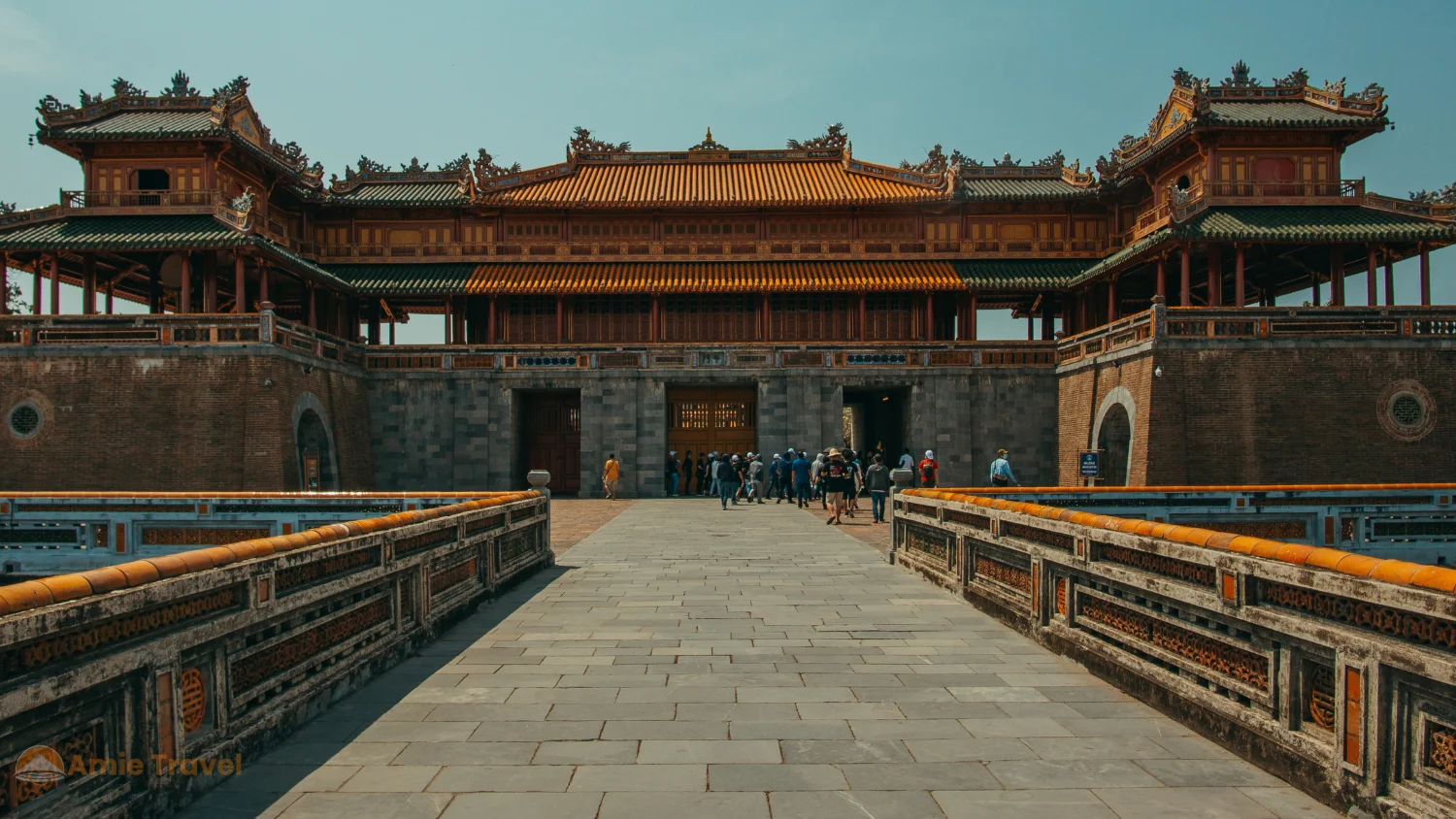
February, March, and April are when Hue delivers everything its reputation promises. Temperatures settle between 22 and 28 degrees during the day with cool evenings in February and early March. Rainfall is minimal. The skies are reliably clear from one end of the day to the other. The Imperial Citadel in this light, with the morning sun coming across the moat and the yellow-ochre walls reflecting on the still water before the tourists arrive, is the version of Hue that fills every travel photography portfolio of this city.
Why the outdoor circuit specifically needs this weather
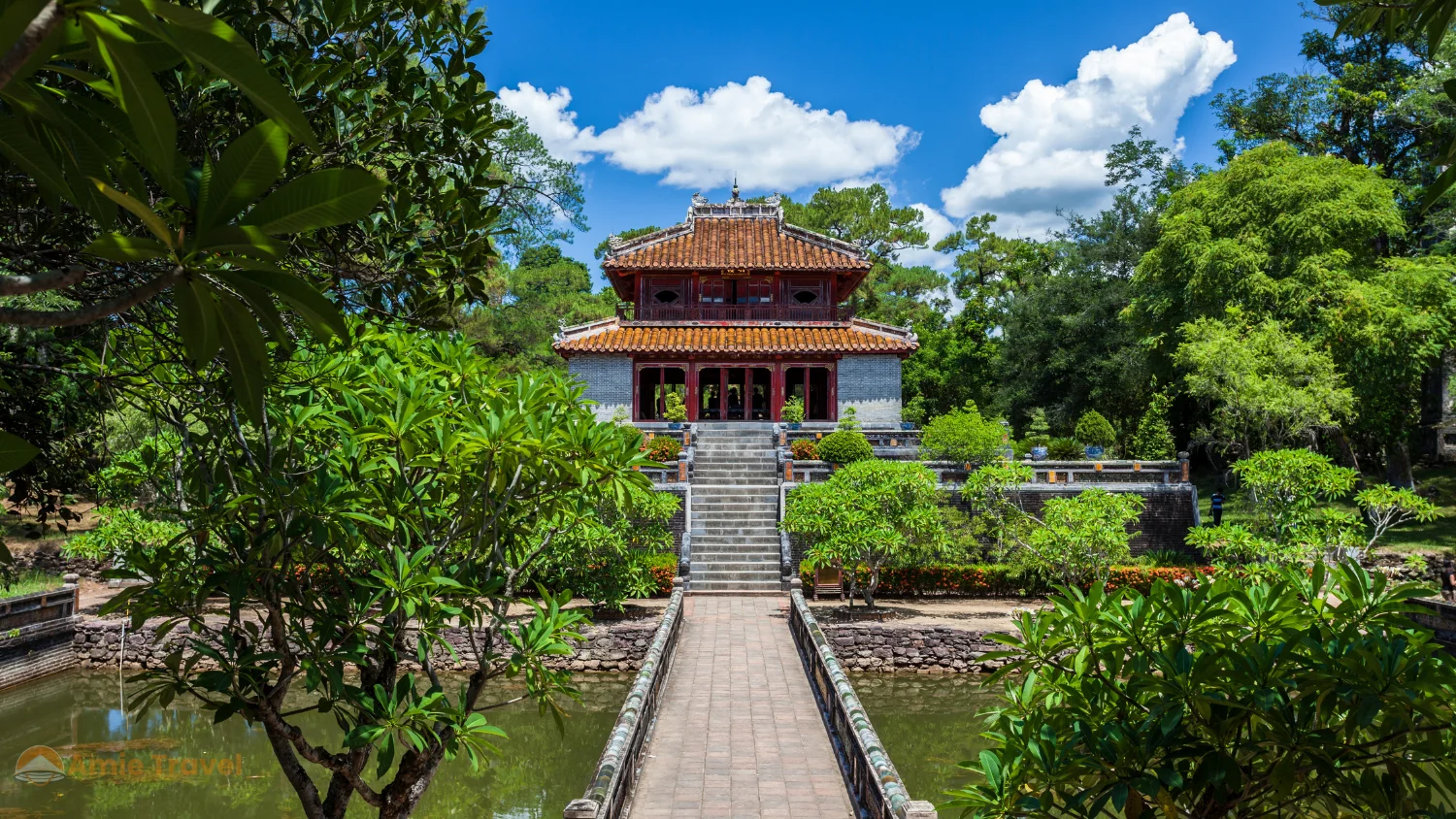
The seven Royal Tombs of the Nguyen emperors are spread across a 10-kilometer arc of forested hillsides south of the city center. Minh Mang, Tu Duc, Khai Dinh, Gia Long, Dong Khanh, Thieu Tri, and Duc Duc are all garden and forest complexes, reached by road and explored on foot through grounds that range from pine forest to lake-and-pavilion landscapes to mosaic-covered hillside terraces. In the February to April dry season, cycling between the tombs is one of the most rewarding half-day experiences in Central Vietnam. In heavy rain, the garden paths are waterlogged, the cycling route is impractical, and the experience of moving between outdoor sites becomes significantly more difficult.
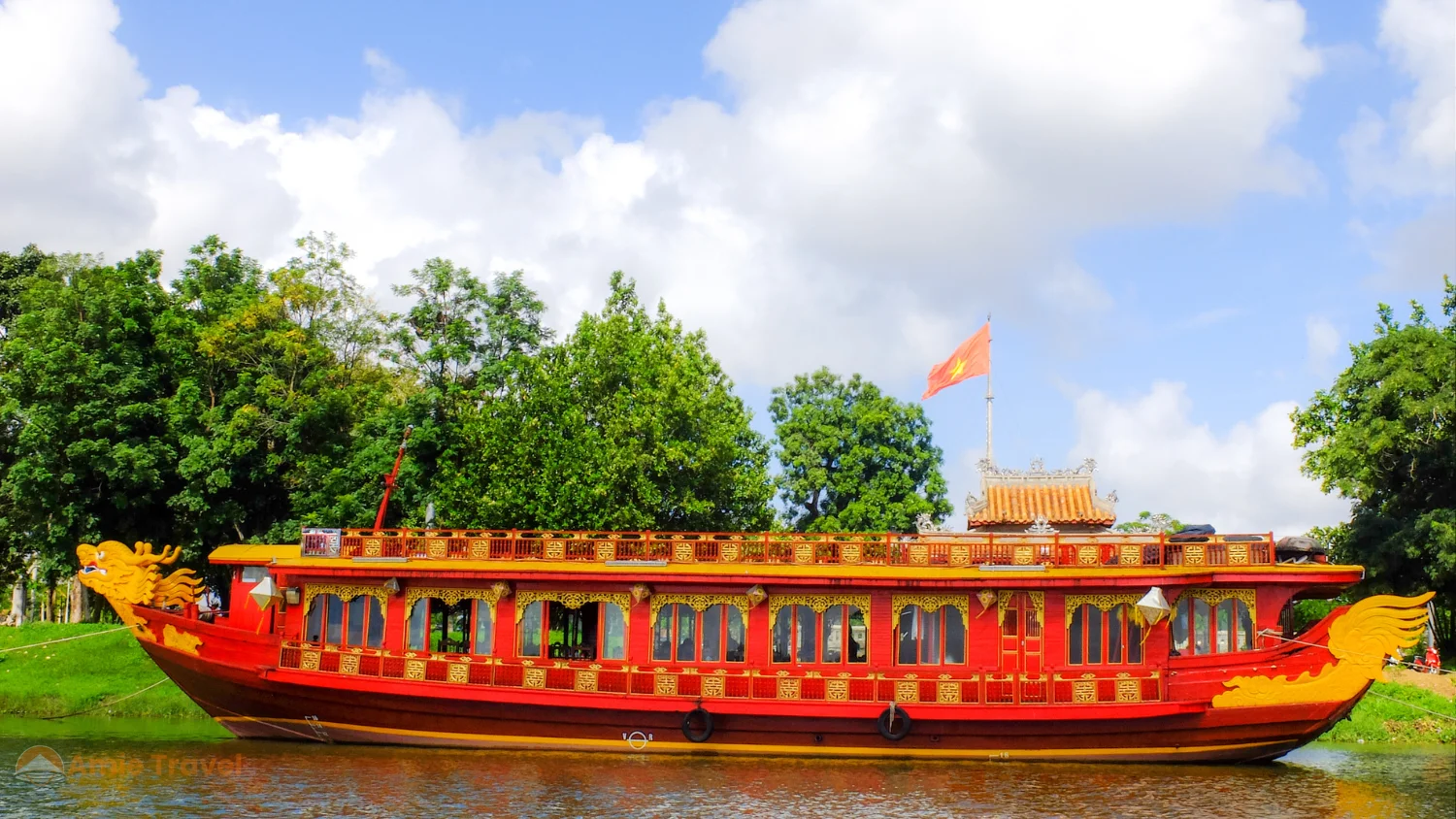
The Perfume River dragon boat cruise works best in this window too. The traditional wooden dragon boats that carry visitors up the Perfume River to Thien Mu Pagoda, and then continue by road to the Royal Tomb circuit, are best in the clear dry-season air when the river is calm, the bankside pagodas and willow trees are clearly visible, and the afternoon light on the water is warm and photographable.
The specific morning opportunity in January and February
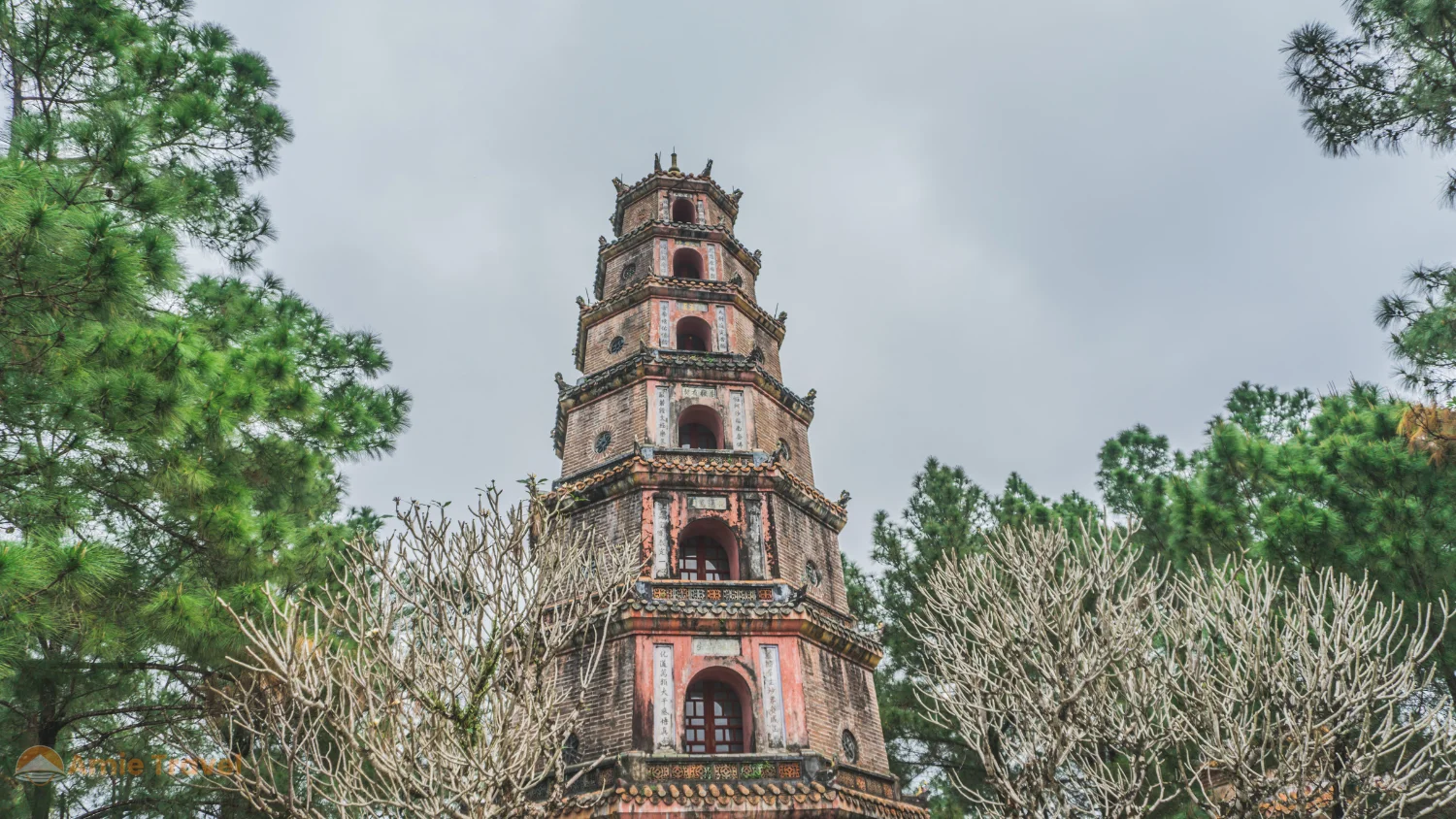
In the early months of the year, a specific morning mist settles over the Hue Imperial Citadel moat and over Thien Mu Pagoda on the Perfume River from roughly 6 to 8am before the sun burns it off. The citadel walls and the Phuoc Duyen Tower of Thien Mu Pagoda emerging from this low mist are among the most atmospheric and sought-after photography conditions in Central Vietnam. The window is brief. By 9am it is gone. For travelers in Hue in January, February, or early March, setting an early alarm and walking to the citadel moat or taking a boat to Thien Mu Pagoda before 7am is specifically worth the effort.
The Hue cuisine in the dry season
Hue cuisine is considered by many Vietnamese food writers to be the most refined regional cooking in the country, a product of the royal court tradition that concentrated the best ingredients and the most skilled cooks in one city for over a century. The full range of this cuisine is available year-round but the dry season restaurant experience in Hue has a specific outdoor dimension that the rainy season removes. Evening tables on the Nguyen Dinh Chieu walking street by the Perfume River, a bowl of bun bo Hue at a pavement stall in the morning cool, lunch at one of the small banh khoai specialist restaurants near Dong Ba Market before the midday heat peaks: these outdoor eating experiences belong to the dry season version of Hue.
What to pack: Light comfortable clothing for 22 to 28 degrees. A thin layer for January and February evenings. SPF 50 from March onward. Comfortable walking shoes for the heritage circuit.
See our 7-Day Central Vietnam Heritage Tour: Hue, DMZ and Paradise Cave for a circuit that covers the full Hue heritage experience in the right seasonal window.
Hue Festival: the biennial cultural event worth planning around
The Hue Festival (Festival Hue) is a biennial international cultural festival held in even-numbered years, typically running for approximately one week in late April to early May. It is the most concentrated and specifically Hue cultural experience the city produces in any given period.
Previous editions have brought together Vietnamese and international performing arts companies for events across the Imperial Citadel, the Perfume River, and public spaces throughout the city. The program has consistently included nha nhac, the Vietnamese royal court music tradition that holds UNESCO Intangible Cultural Heritage status and is specific to Hue in a way that no other city in Vietnam can claim. Dragon boat racing on the Perfume River, traditional royal ceremony reconstructions inside the Forbidden Purple City, evening performances at Dien Tho Palace inside the Imperial Citadel complex, and street performances across the city’s heritage zones are the typical program structure.
For travelers whose dates fall in late April or early May of an even-numbered year, checking the Festival Hue website for the confirmed schedule is worth doing before finalizing an itinerary. The combination of the best weather of the year (late April is still dry and warm, before the summer heat fully establishes) and the most concentrated cultural program produces the most complete version of Hue that it is possible to experience in a single trip.
The festival also has a practical accommodation implication: Hue fills up during the Festival week, particularly the options closest to the Imperial Citadel and the Perfume River. Book accommodation 2 to 3 months ahead if your dates overlap with the confirmed festival schedule.
May to August: hot but clear for the full heritage circuit
May to August in Hue is hot. There is no avoiding that. July and August regularly reach 33 to 36 degrees at midday and the outdoor heritage circuit in the middle of the day requires either a high heat tolerance or a sensible daily schedule. The skies during these months are reliably clear and blue, which is worth naming because it is the specific condition that makes the full outdoor Hue experience work: the Imperial Citadel walls against a clear sky, the Perfume River in summer light, the pine forest grounds of the royal tombs with the light filtering through the trees. All of this works in summer. It just requires adjusting when you go out.
The early morning rule
Start the outdoor heritage circuit before 9am. The Imperial Citadel at 7:30am in July has almost no visitors and the light on the Ngo Mon Gate and the moat is at its best of the day. The Royal Tombs at 8am, before the tour buses arrive from Da Nang and Hoi An, are quiet enough that the garden grounds at Minh Mang and the pine hillside at Khai Dinh feel like private visits. By 10am the sites are filling and the heat is building. By noon, if you are outside without shade, you are working harder than necessary.
From 11am to 3pm: use the Hue Museum of Royal Fine Arts on Le Trung Dinh Street, which is one of the most consistently underrated indoor cultural experiences in Vietnam and deserves a full morning or afternoon. Covered lunch at any of the restaurants near Dong Ba Market. A slow coffee at one of the riverside cafes on Le Loi Street watching the Perfume River in the midday heat.
From 4pm: the temperature drops toward the evening and the Perfume River walking street comes alive. The Dong Ba Market area from 5pm has the full evening street food energy that the midday heat suppressed.
The summer food dimension
Hue’s food culture is specifically appropriate to summer mornings. Bun bo Hue at 7am before the heritage circuit: spicy, rich, and gone before the heat makes you not want it. Banh beo (steamed rice cakes with shrimp and crispy pork fat) as a mid-morning snack at any of the small specialist restaurants near the citadel. Com hen (baby clam rice with 15 different condiments and a bowl of clam broth on the side) for a late lunch after the midday museum visit. These are not substitutes for the outdoor experience. They are the framework around which the outdoor experience is scheduled.
What to pack: The lightest fabrics you own. SPF 50 and a wide-brim hat for morning sessions. A reusable water bottle. Comfortable shoes for the heritage circuit walking. A compact umbrella for the occasional brief afternoon shower that becomes more possible from late May.
September to November: The honest picture and what still works
Most best-time articles about Hue either avoid this section entirely or give a single sentence of warning and move on. That does not serve travelers with fixed September, October, or November dates in Hue. Here is the specific picture.
September is the transition month. Early September is largely still dry season in character. From mid-September the rain begins building. By late September the pattern is establishing and the outdoor circuit needs afternoon flexibility.
October is Hue’s most difficult month and the honest picture is specific enough to warrant stating plainly: Hue receives approximately 750mm of rainfall in October alone. That is more rain in one month than Ho Chi Minh City receives in its entire rainy season. The rain in Hue is not the brief afternoon shower pattern of the south. It can be sustained and heavy for days at a time. The Royal Tomb gardens flood. The Perfume River boat cruise in heavy rain is cold and miserable. The cycling route between heritage sites becomes impractical.
This does not mean October in Hue is wasted. It means the itinerary needs to be built around what works rather than what is normally recommended.
What specifically works in October Hue
The Imperial Citadel. It is large enough that the covered walkways and corridors provide partial shelter between sections. The monumental gateways and the throne hall complex are accessible in rain and in the grey October light the yellow-ochre walls and red lacquer columns have a melancholy grandeur that the bright summer sunshine does not produce. The citadel in October is a different experience from the citadel in March and in some ways a more atmospheric one.
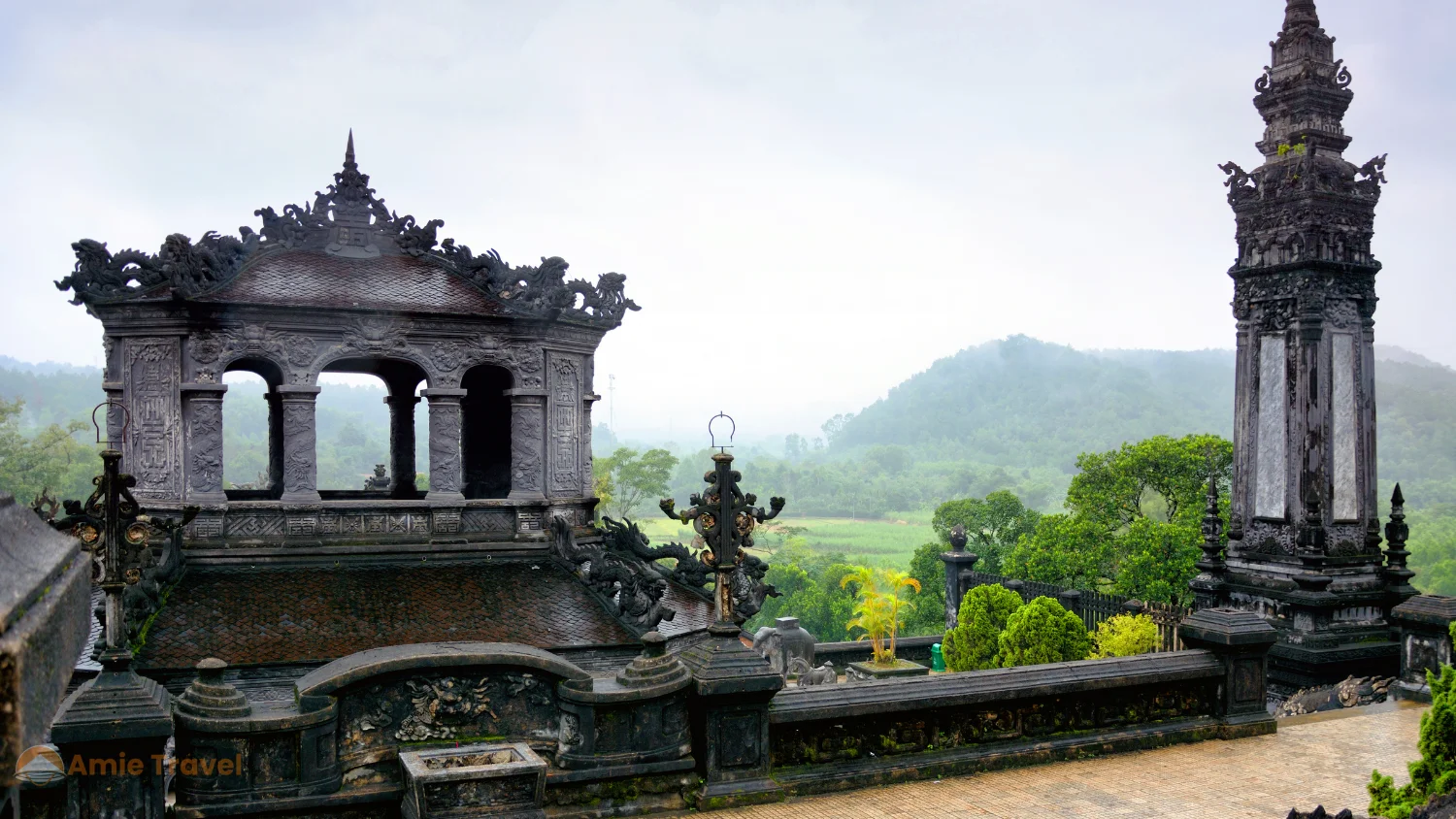
Khai Dinh Tomb. The most architecturally enclosed of the royal tombs, with a covered mosaic-encrusted interior and a hillside concrete structure that handles rain better than the open garden complexes of Minh Mang and Tu Duc. The pine trees on the approach hillside in mist and rain are atmospheric in a way that a clear July day cannot replicate. Khai Dinh in October is the single best rainy-season tomb visit in Hue.
The Hue Museum of Royal Fine Arts on Le Trung Dinh Street. One of the most underrated museums in Vietnam, covering Nguyen Dynasty imperial objects, lacquerwork, and royal artifacts in a well-curated indoor space. October is the correct month to spend two hours here.
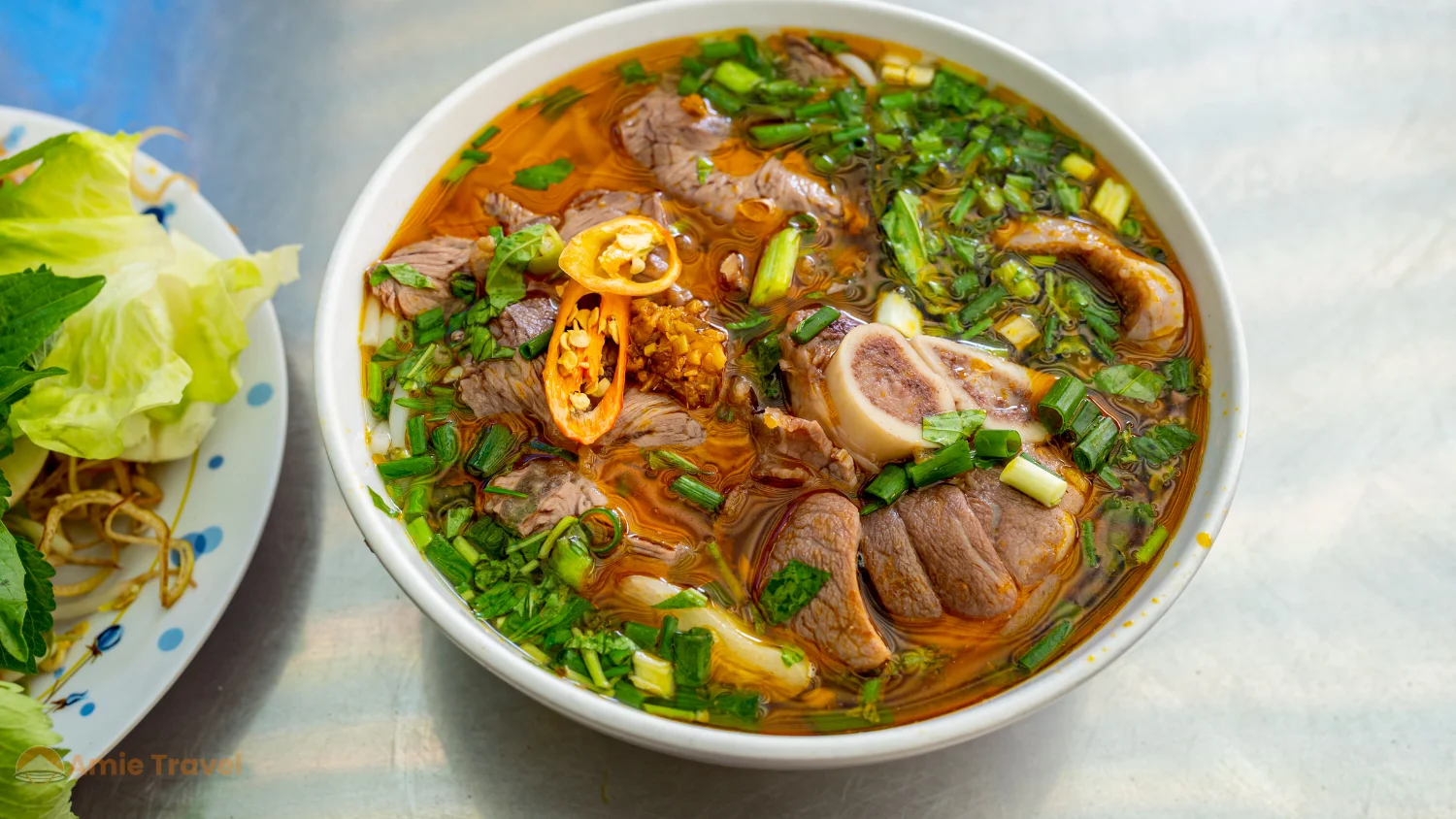
The food circuit. This is where October in Hue is specifically excellent. Bun bo Hue on a cold rainy morning is one of those perfect food-weather-place alignments that makes a memorable travel meal. Salt coffee (ca phe muoi, thick sweet coffee with a light salt foam) at any of the small cafes near the Imperial Citadel: hold the bowl with both hands, drink slowly with the rain on the awning outside. Banh khoai (the thick crispy Hue pancake) and com hen at the covered market stalls near Dong Ba Market. The covered restaurant culture of Hue in October is specifically worth experiencing for any traveler who comes for the food as much as the heritage.
November
Early November still carries meaningful rain risk. From mid-November conditions are improving visibly. Late November is specifically undervalued: near-October low prices with conditions moving rapidly toward dry season quality. Hue in late November, with the rain largely finished, the crowds low, and the prices still near their annual lows, is one of the most strategically underrated windows on the Central Coast calendar.
What to pack for the rainy months: A proper waterproof jacket, not a light rain layer. Waterproof shoes or sandals that handle wet heritage site paths. A dry bag for camera equipment. Travel insurance covering weather disruption specifically for October stays.
See our Central Vietnam in the Rainy Season guide for the full October and November picture across Da Nang, Hoi An, and Hue together.
January and December: The misty bookend months
January and December sit at the edges of the rainy season and have a specific character that neither the clear summer nor the wet autumn produces. They are not the obvious choice for Hue. They are the correct choice for a specific kind of traveler.
December is transitioning out of the rainy season. Rain is decreasing but not entirely gone. The city is grey and quiet. Hotel prices are near their annual low. The tourist crowds from the October to November shoulder period have departed. The morning fog over the Hue Citadel moat in December is the most consistent version of that atmospheric image.
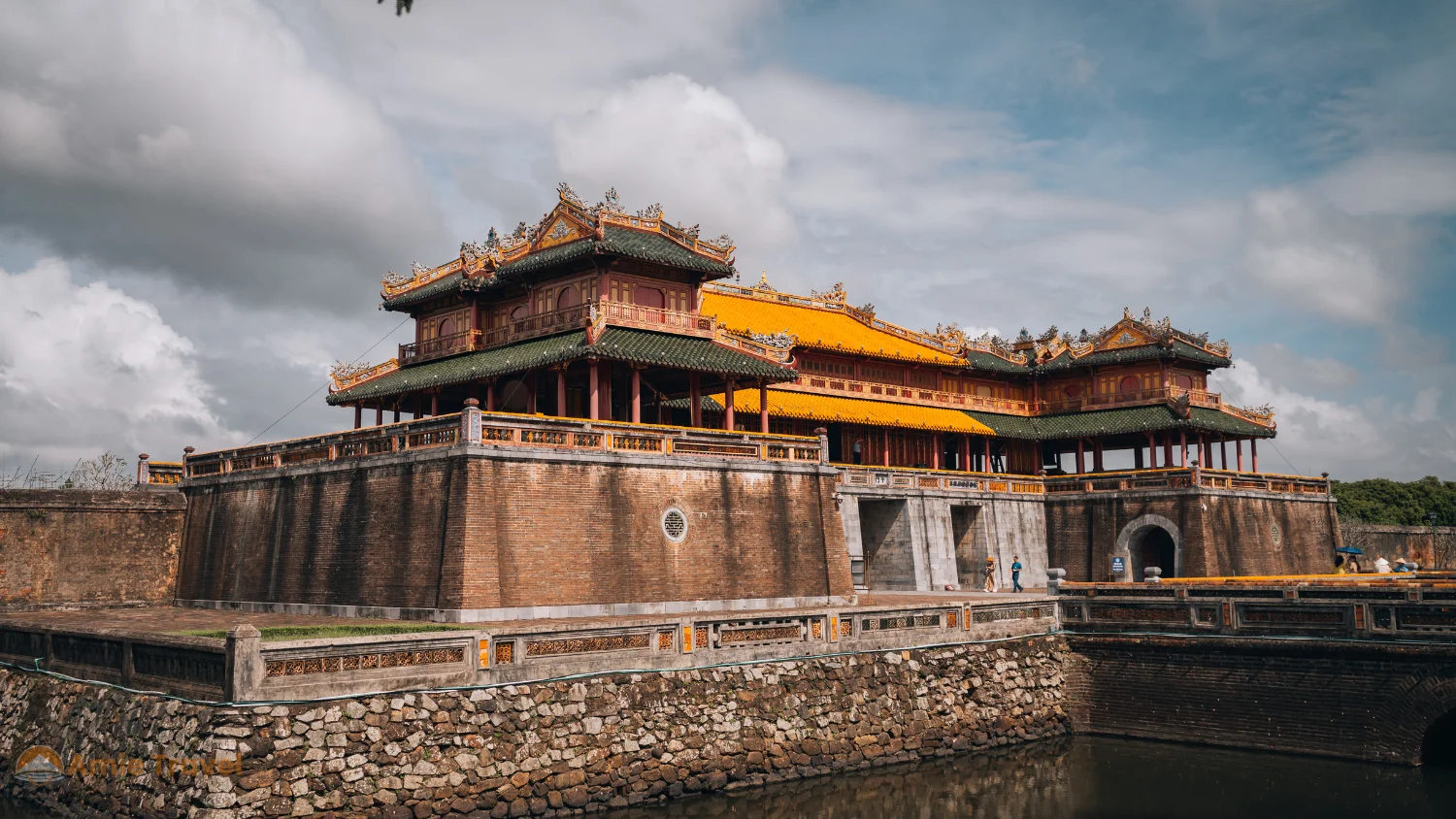
January is the coolest month at approximately 17 to 22 degrees with frequent overcast skies and occasional light drizzle. This is specifically cold by Vietnamese standards and a light jacket is not optional for evenings. The city in January is at its quietest and most locally Vietnamese. The heritage sites are uncrowded. The restaurants near Dong Ba Market operate without the tourist orientation of peak season.
The specific morning fog photography window: from 6 to 8am in January and February, a low mist settles over the Imperial Citadel moat and over the Perfume River at Thien Mu Pagoda. The Ngo Mon Gate emerging from morning mist reflected in the still moat water and the Phuoc Duyen Tower of Thien Mu Pagoda appearing above the river fog are two of the most photographed atmospheric images of Hue. This window is brief and specific to the cool months. By 9am it is gone. Setting an early alarm and walking to the citadel moat or taking a boat to Thien Mu before 7am is specifically worth the effort for any traveler in Hue in January or early February.
Tet 2027: February 6
The two weeks before Tet in late January 2027 are the most festive and most distinctly Vietnamese period in the Hue calendar. Flower markets appear near the Dong Ba Market area. Traditional food vendors selling banh chung (square sticky rice cake) and Tet sweets line the covered market streets. The Dragon Bridge area and the Nguyen Dinh Chieu walking street in the days approaching Tet have a festive energy specific to this window. For international travelers who want to understand what Hue is to the Vietnamese people who live here, the pre-Tet weeks in late January are the most honest answer.
During Tet week itself: some smaller local restaurants close. The city empties as residents return to family. Book accommodation with in-house dining for the Tet evening and verify any specific restaurant plan ahead of time.
Hue heritage circuit by season: Which site for which weather
This is the section no competitor best-time article for Hue provides. Every major Hue heritage site has a different relationship with the weather and knowing which site works best in which condition changes how you plan a day when the weather does not cooperate.
Imperial Citadel Best in February to April for the full outdoor experience: the moat, the Ngo Mon Gate, the Forbidden Purple City, the Thai Hoa Palace, the entire complex at its most walkable and most photogenic. Accessible year-round. In October and the rainy months, the covered walkways between sections and the roofed halls provide partial shelter. In January and February, the early morning fog photography window from 6 to 8am is specific to this season. Worth visiting in any month.
Minh Mang Tomb The most garden-focused of the three main royal tombs, with extensive forested grounds, a lake circuit, and pine forest paths. Best in the dry season when the garden paths are fully walkable and the lake reflection of the surrounding structures is clear. The forested setting and the pavilion-over-water composition require good weather to fully appreciate. The single most weather-dependent of the main royal tombs. In heavy rain, the garden paths are muddy and the experience is significantly reduced.
Tu Duc Tomb The largest and most architecturally varied royal tomb, with covered pavilions built over a lotus lake where the emperor used to fish and write poetry, forested grounds, and a separate section housing the emperor’s concubines. The pavilions over the lake provide shelter from rain. One of the more accessible wet-weather tomb options because the covered structures allow meaningful visits even when it is raining outside. Works in both dry and wet season.
Khai Dinh Tomb The most architecturally enclosed and dramatic of the main tombs. Built in a fusion of Vietnamese and European styles with a concrete hillside structure covered entirely in mosaic made from broken glass and ceramics. The covered interior with its elaborate throne chamber and mosaic walls is accessible and impressive in any weather. The hillside pine trees on the approach in mist and overcast conditions produce a specific atmospheric quality. The single best rainy-season heritage site in Hue. Worth visiting in October specifically because the mist on the hillside approach is part of the experience.
Thien Mu Pagoda The seven-storey Phuoc Duyen Tower on the Perfume River is the most recognized landmark of Hue. Best accessed by dragon boat from the city in the dry season when the river cruise is comfortable and the bankside scenery is clear. The morning fog photography opportunity from the river before 8am in January and February is specific to this season and worth the early departure. In heavy rain the river cruise is cold and the approach by boat is uncomfortable. In the rainy months, visiting by road and Grab taxi is the practical alternative.
Perfume River dragon boat cruise Best in February to August when the river is calm, the sky is clear, and the afternoon light on the water is warm and photographable. The full river experience, starting from the city and traveling upstream past willow trees and riverside pagodas to Thien Mu, is a dry season experience. In October and November the river is grey, the current is stronger after heavy rain, and the cruise is a wet and cold experience rather than a serene one.
An Bang Cemetery An unusual and photogenic site approximately one hour from the city: Vietnam’s most elaborate cemetery with towering multi-story family tombs covered in gold carvings and colored ceramics. Accessible year-round by road. Works in any weather because the interest is architectural rather than garden-based. A good October or November option for travelers who want an unusual and memorable Hue experience that is not on the standard heritage circuit.
Hue month by month
January: 17 to 22 degrees, cool and often misty, occasional light drizzle. Morning fog over the citadel moat and Thien Mu Pagoda before 8am is the specific photography opportunity. Heritage sites uncrowded. Restaurants operating without the tourist orientation of peak season. Pre-Tet preparation building from mid-January. Verdict: atmospheric, quiet, and underrated for the morning fog window.
February: 18 to 24 degrees, dry season establishing, Tet 2027 falls on February 6. Morning fog still present early in the month before burning off by mid-February. The full outdoor heritage circuit becoming comfortable. Pre-Tet flower markets and festive energy if your dates fall in late January and early February. Verdict: the transition from atmospheric misty January to the beginning of the sweet spot. One of the best months for both photography and heritage circuit walking.
March: 20 to 26 degrees, the best single month to visit Hue. Clear skies, comfortable temperatures, minimal rainfall, the outdoor heritage circuit at its most accessible and most photogenic. The Imperial Citadel and the Royal Tomb circuit at their best. Perfume River dragon boat cruise excellent. Book accommodation 6 to 8 weeks ahead. Verdict: book this month.
April: 23 to 30 degrees, still dry and clear, temperatures beginning to rise toward summer. The Hue Festival runs in late April in even-numbered years. The outdoor circuit still excellent with early morning starts before the heat peaks. Good for the full royal tomb circuit and the river cruise. Verdict: excellent, check the Hue Festival schedule for even-numbered years.
May: 26 to 33 degrees, hot and clear, the summer heat establishing. The outdoor heritage circuit requires the early morning strategy: before 9am and after 4pm. Museum of Royal Fine Arts for midday. Still excellent weather for the full site circuit with the right schedule. Verdict: good with early starts.
June: 28 to 35 degrees, hot and reliably clear. The hottest period approaching. Same early morning strategy as May. The Perfume River in the late afternoon light is specifically good in summer. The evening food culture on the walking street is excellent. Verdict: hot but fully functional with the right daily rhythm.
July: 29 to 36 degrees, hottest month, reliably clear skies. The summer heat at its peak means the early morning start is not optional but essential. The heritage sites before 9am are rewarding. After 9am move indoors. From 4pm the city comes alive again. Verdict: the most demanding month but the skies are fully clear and the heritage circuit works.
August: 28 to 35 degrees, still hot and clear, beginning to transition toward September from the last week of the month. The full outdoor circuit works with the early morning strategy. Sea-facing areas are not relevant in Hue but the Perfume River in August is warm and pleasant in the evening. Verdict: same as July, the clear sky window is still open.
September: 25 to 32 degrees, rain building from mid-month. Early September is still largely dry season in character. From September 15 the autumn rain pattern is establishing. The outdoor heritage circuit is manageable with umbrella and flexible afternoons in early September. From late September plan for the rainy season strategy. Verdict: early September fine, late September requires the indoor circuit approach.
October: 22 to 28 degrees, the most difficult month. Around 750mm of average rainfall. Some years sustained and continuous, some years in heavy bursts. Khai Dinh Tomb, the Museum of Royal Fine Arts, and the food circuit are the correct plan. Travel insurance covering weather disruption essential. Refundable accommodation bookings only. Verdict: requires specific preparation and the right expectations. The food and Khai Dinh experience are worth having in this weather.
November: 20 to 26 degrees, rain easing from mid-month. Early November still wet and carries meaningful risk. From mid-November conditions are improving rapidly. Late November specifically: near-October low prices with conditions moving toward dry season quality. One of the most strategically undervalued windows in Hue. Verdict: avoid early November without buffer days, target late November for value.
December: 18 to 24 degrees, transitioning from rainy season to dry. Rain decreasing but occasional. The morning citadel fog photography window beginning to appear. Prices near annual low. Heritage sites quiet. Verdict: the cool atmospheric start of the transition. Good for photographers and budget travelers who want the city without the crowds.