October and November: Golden harvest and why November is the smarter pick
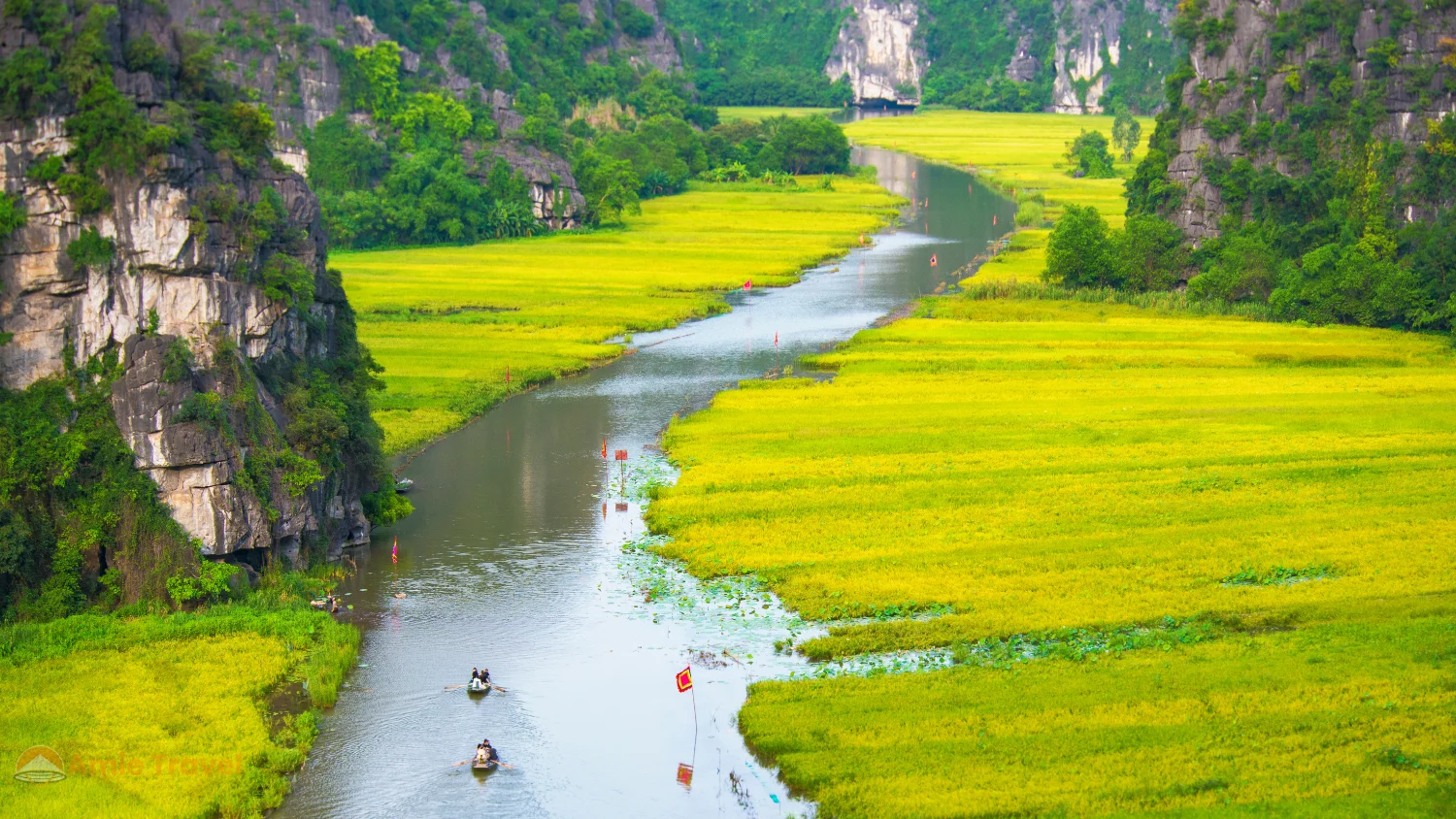
October is the month that made Ninh Binh famous internationally and for good reason. The rice fields along the Ngo Dong River in Tam Coc turn gold from late September and the harvest peaks across the first two weeks of October. From the boat, the valley walls on both sides are covered in warm amber rice with the limestone karsts rising behind them. From the top of Mua Cave at dawn, the whole harvest basin spreads out below you in the early light. The Trang An boat route in October runs through cave passages with golden fields visible at both entrances, the karst walls reflected in the calm low-humidity October water. This is specifically one of the most beautiful landscapes that northern Vietnam produces and it earns every photograph that has ever been taken of it.
The practical challenge is that everyone knows this. October is the busiest month in Ninh Binh. On a Saturday morning in peak October, the Tam Coc boat departure area has dozens of boats setting out simultaneously. The Mua Cave summit path before sunrise has a queue for the best viewpoint position. Accommodation prices are at their October peak and properties in the best locations book out weeks ahead.
Why November is the smarter pick
November in Ninh Binh has nearly identical weather to October at conditions that are very good: temperatures 18 to 24 degrees, clear skies, low humidity, comfortable all-day outdoor walking. The harvest is finishing in early November but the post-harvest landscape is still beautiful: the limestone karsts reflected in the clear low-water channels of the Ngo Dong River, the valley floor returning to the green of the new planting cycle, the morning mist on the karst peaks in the cooler November air. Prices drop 15 to 25 percent from October levels. The Tam Coc boat departure has a fraction of the October queues. The Mua Cave summit path on a Tuesday morning in November is one of the most uncrowded versions of the most famous viewpoint in Ninh Binh.
If your dates have any flexibility between October and November, November is the specific recommendation. You lose a few weeks of peak harvest gold and gain significantly better value and a more comfortable experience at every major site.
The weekday rule
Ninh Binh is two hours from Hanoi by road and fills with domestic day-trippers from the capital on Saturday and Sunday throughout the year, not only in October. The Tam Coc boat route on a Saturday morning carries local family tour groups, school groups, and weekend visitors from Hanoi alongside international tourists. The same route on a Wednesday morning is a completely different experience. If your itinerary has any flexibility, arrive on Sunday evening when the weekend crowd is leaving and begin the main boat tours and Mua Cave on Monday morning. Tuesday, Wednesday, and Thursday give you the quietest version of every major site in any season.
Thung Ui: the uncrowded afternoon of peak season
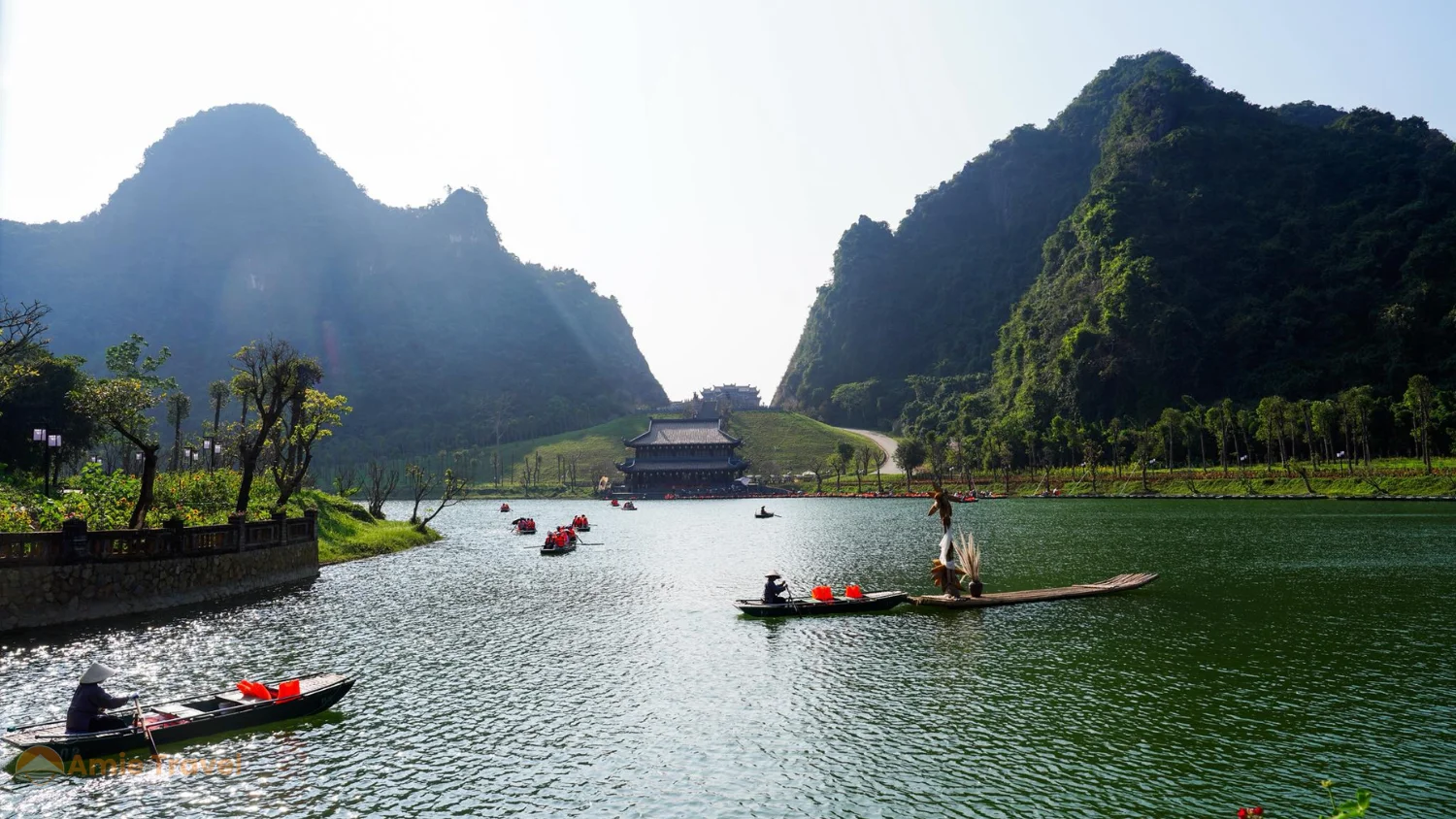
When Tam Coc and Trang An are at their busiest in October, Thung Ui is the specific answer for travelers who want the Ninh Binh karst landscape without the queues. Thung Ui is a newly opened valley attraction inside the core zone of the Trang An World Heritage Complex, about 3 kilometers from Bai Dinh Pagoda and 20 to 30 minutes from Ninh Binh town center. The valley holds a large still lake completely surrounded by limestone karst mountains with walking paths through open meadows and the Kinh Thien Altar, a sacred site where Hoa Lu dynasty kings performed royal ceremonies to honor heaven and earth over 1,000 years ago.
In the October afternoon light from around 2pm onward, the still water reflects the karst walls in colors that are specific to this hour and this season. There are no crowds here even during October peak season. Tickets are approximately 200,000 to 300,000 VND, typically combined with the Bai Dinh-Trang An circuit. Open 7am to 5pm daily. The correct timing: do the main Tam Coc or Trang An boat tour in the early morning, eat lunch, then spend the afternoon at Thung Ui before returning to accommodation for the evening. This combination uses the morning for the famous experiences at the right time of day and the afternoon for the experience that is specifically worth adding.
The October northern circuit
Ninh Binh in October pairs naturally with Hanoi and Ha Long Bay as a northern Vietnam circuit where all three destinations are simultaneously at their annual best. A direct tourist bus now connects Ninh Binh with Bai Chay Port in Ha Long Bay, launched in late 2024: the 4-hour journey at 280 kilometers costs 350,000 VND and runs twice daily at 8am and 2pm.
See our Best Time to Visit Hanoi guide and Best Time to Visit Ha Long Bay guide for the full October picture across the northern circuit.
March and April: Spring clarity and festival window
March and April are the spring clarity window for Ninh Binh: temperatures 20 to 28 degrees, minimal rainfall, clear skies, and a specific visual character that October cannot produce. The rice fields are vivid green from the winter planting cycle. White rapeseed flowers bloom across the Tam Coc valley in February and March in a seasonal display that disappears by April. The Trang An boat route in March, with the limestone walls covered in fresh green vegetation and the river at its clear spring level, is the most verdant version of that route available in any season.
The nom honest note
From late February to early April, northern Vietnam including Ninh Binh experiences what Vietnamese people call nom: a specific grey damp humidity where moisture loads the air, floors and walls become damp, and the sky is frequently overcast with light drizzle rather than the clear blue that the temperature range of 20 to 26 degrees might suggest. This is not a reason to avoid March. It is a reason to have accurate expectations. Some March days are clear and beautiful. Some are grey and drizzly. Check the NCHMF forecast before planning outdoor boat tours for any specific March day, and keep one indoor option available as a backup.
The Hoa Lu Ancient Capital Festival
The Hoa Lu Ancient Capital Festival falls on April 9 and 10 annually, honoring the Dinh and Le dynasty kings who ruled from Hoa Lu in the 10th and 11th centuries. Traditional processions, folk games, and cultural performances fill the ancient capital complex. This is the most culturally concentrated event in the Ninh Binh calendar. The Hoa Lu site is always worth visiting but on April 9 and 10 the living cultural dimension adds something that the site on an ordinary day cannot provide. Book accommodation in Ninh Binh 6 to 8 weeks ahead for this date as the area fills with Vietnamese pilgrims and cultural visitors.
The Kinh Thien Altar Festival at Thung Ui

On the 10th day of the 3rd lunar month annually, Thung Ui holds the Kinh Thien Altar Festival honoring King Dinh Tien Hoang, who united Vietnam after defeating the Twelve Warlords and founded the Dai Co Viet State. Traditional rituals and offerings take place at the Kinh Thien Altar inside the valley. This festival is currently known almost entirely to Vietnamese visitors and is one of the most specifically specific and uncrowded cultural events in the Ninh Binh calendar. For travelers in the area in late April in any year, checking the lunar calendar for the 10th day of the 3rd month and visiting Thung Ui on that day adds a layer that no other Ninh Binh site offers.
The crowd advantage
March and April carry noticeably fewer international tourists than October and November. The Tam Coc and Trang An boat routes run without October-level queues. The Mua Cave summit path before 7am in April is accessible without competition for the best viewpoint position.
June to early July: Lotus season and the deepest green of the year
This is the most underwritten window in all Ninh Binh best-time content. Most guides describe June as hot and dismiss it. The honest picture is considerably more interesting.
The lotus season
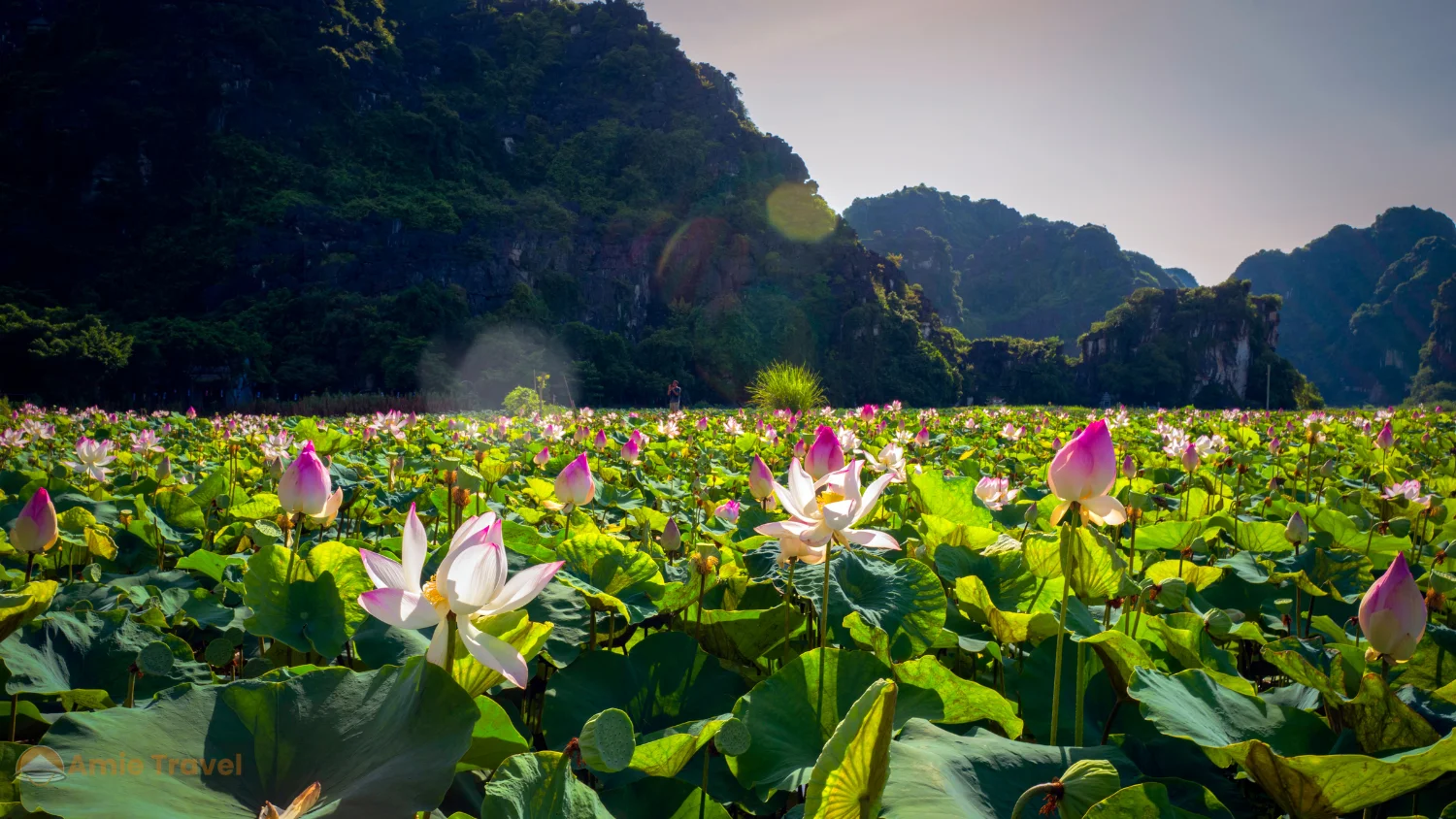
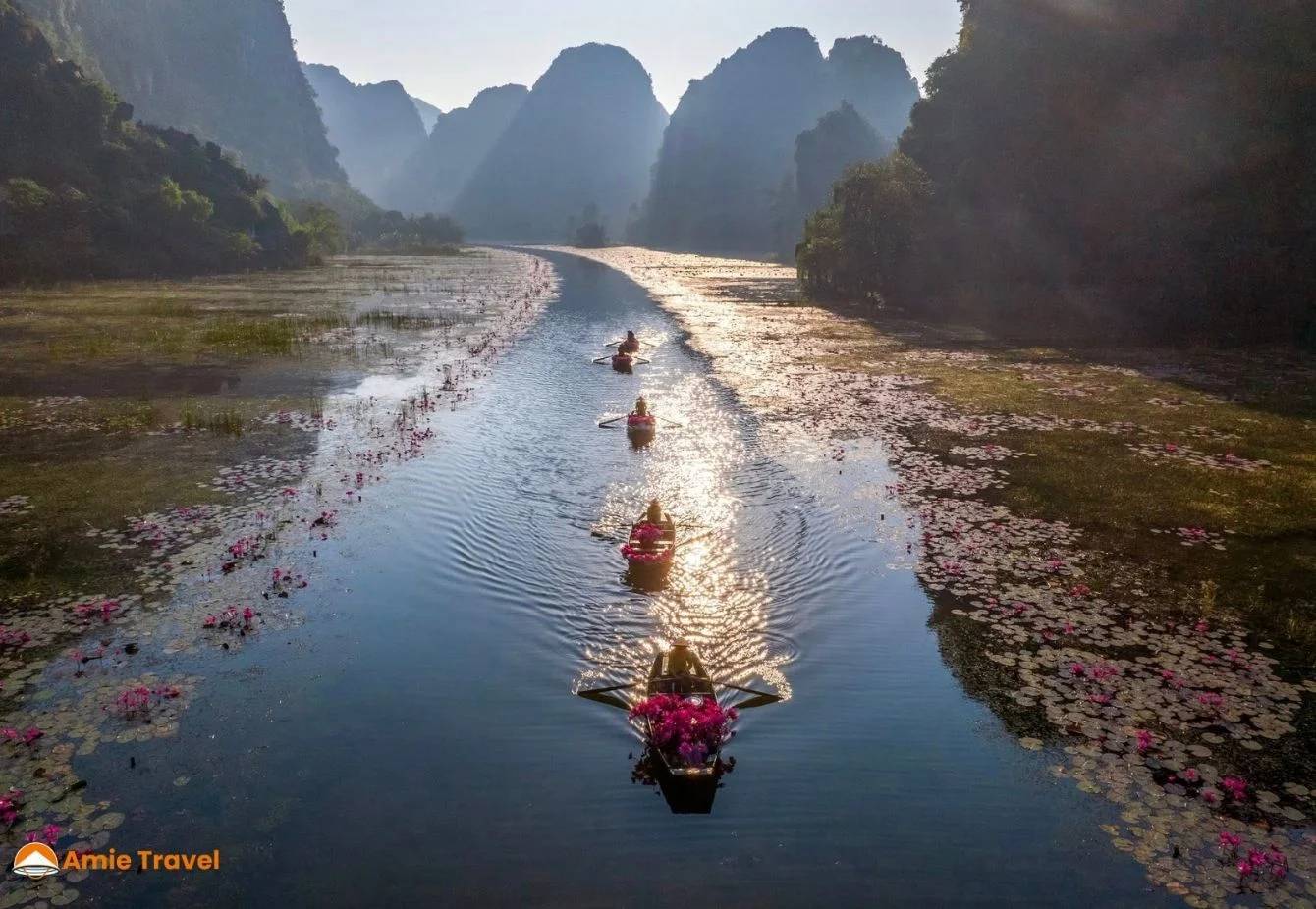
The lotus ponds around Thung Nham Bird Garden, Van Long Nature Reserve, and the Bich Dong Pagoda area are in full bloom from June through early July. Pink and white lotus flowers on still water with limestone karsts reflected behind them, specifically in the still wetland areas of Thung Nham where the lotus grows against the base of the karst cliffs. The lotus bloom lasts approximately six weeks before fading by mid-July. The best locations in Ninh Binh for the lotus visual: the wooden walkway at the entrance of Mua Cave and the bird valley section at Thung Nham Bird Garden. Both are accessible with an early morning start before the heat builds.
The rice at its deepest green
June is when the rice growing in the Ngo Dong River fields reaches its most vivid and saturated green. The Tam Coc boat route in June, with the fields on both sides an intense electric green and the limestone walls above them, is a completely different visual from the October gold. Neither is objectively better. They are specifically different landscapes produced by the same valley at different points in the agricultural calendar. Travelers who specifically want the green version of Ninh Binh rather than the gold have one reliable window: June.
Thung Ui in summer green
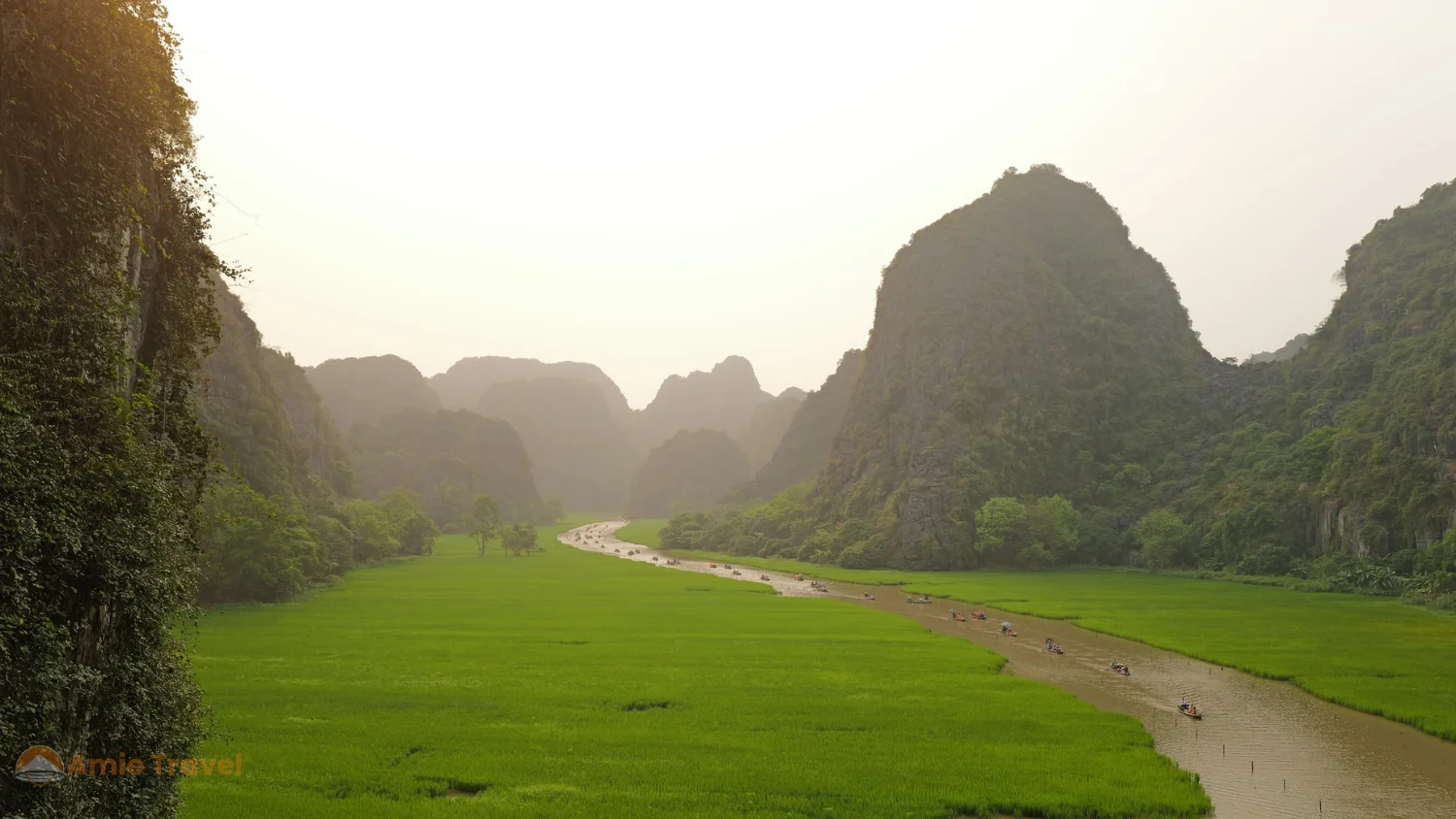
The still lake at Thung Ui in June and July, surrounded by the karst walls at their most lush with summer vegetation, has a specific deep-green-and-grey palette that the October gold and the winter grey cannot produce. The afternoon light on the limestone surfaces in the summer heat creates a warm quality against the surrounding green. Completely uncrowded in any summer month. The same 2pm to 5pm afternoon timing applies year-round.
The practical summer approach
Hot at 30 to 35 degrees. Boat tours before 9am, Mua Cave summit before 8am. Prices 15 to 30 percent below October levels. The early morning Tam Coc river in June, with the fields vivid green and the first light coming across the karsts, is a specifically beautiful and specifically uncrowded experience. From 11am to 3pm: rest, a long lunch, or visit the Ninh Binh Museum which was renovated in 2024 to 2025 with interactive galleries covering 10,000 years of provincial history. From 4pm: Thung Nham Bird Garden for the bird return between 4:30 and 6pm, which is one of the most spectacular wildlife moments in northern Vietnam regardless of season.
August and September: High water season that nobody describes honestly
August and September are the months most Ninh Binh guides dismiss as rainy season and move past quickly. The honest picture is more specific and for a particular kind of traveler considerably more interesting.
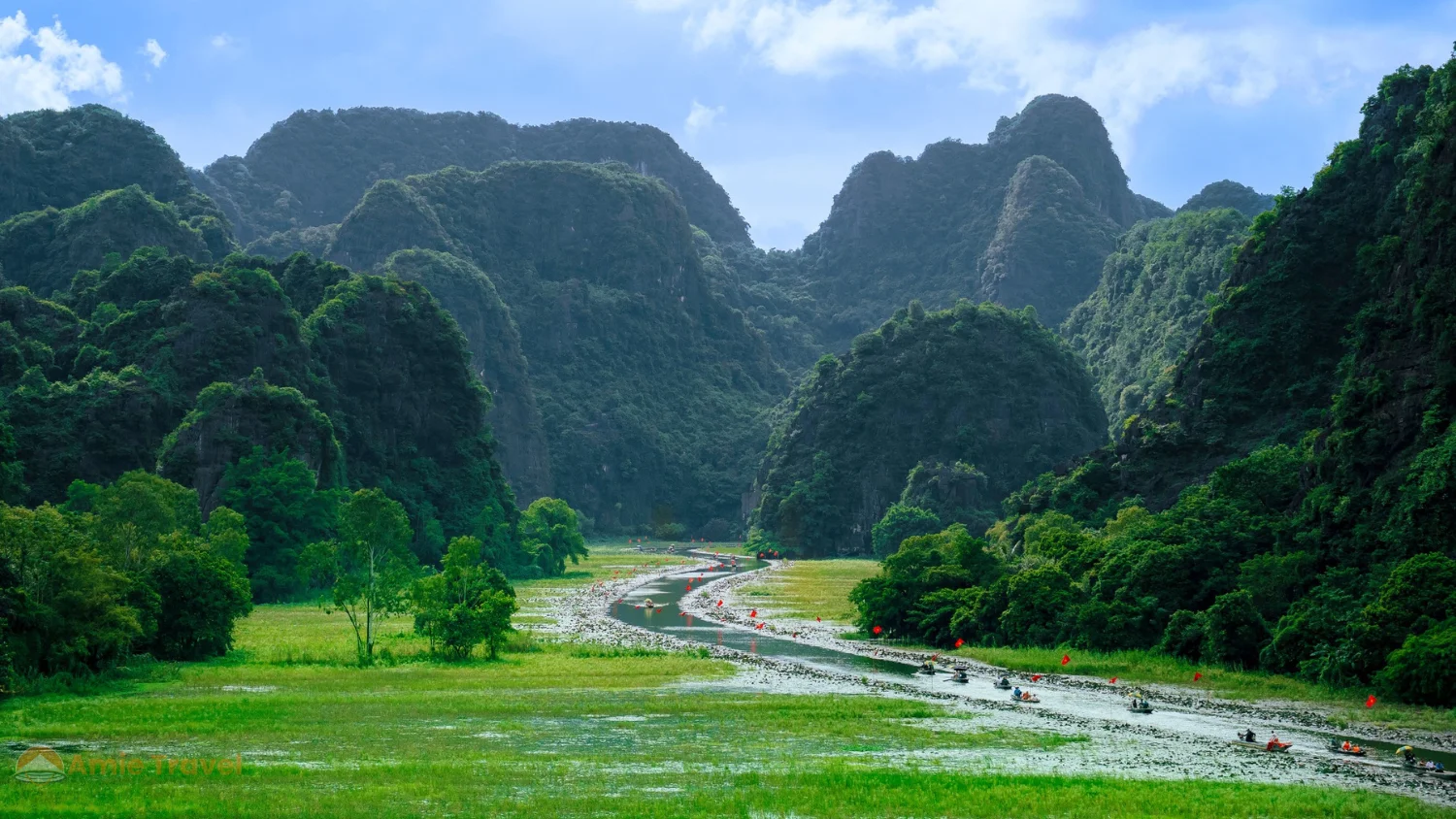
The Ngo Dong River in Tam Coc and the Sao Khe River in Trang An rise significantly during the summer rains. The boat tours at high water have a completely different character from the dry season low-water experience and no competitor best-time article for Ninh Binh currently describes this.
What the boat tours look like at high water
In the Tam Coc caves at high water the cave ceilings are closer to the water surface. The boat passes through the three limestone cave passages with less clearance above, creating a darker and more enclosed atmosphere than the dry season version. The rice fields on both sides of the river channel are flooded to a deeper level than in October, creating a water surface that reflects the karst cliffs with a mirror quality that the lower dry-season level cannot produce. The flooded agricultural landscape of the Ninh Binh valley in August, with rice plants growing out of standing water and the limestone mountains rising above the reflection, is a visual that does not exist at any other time of year and looks like nowhere else in northern Vietnam.

The Trang An cave circuit at high water has flooded approach sections where the cave entrances sit lower relative to the water surface and the boat enters them at a different angle. The longer cave passages at Trang An, with ceiling heights reaching 30 meters, are at their most dramatic when the water is high and the reflected cave ceiling creates a doubled visual inside the karst chambers.
Thung Ui at high water
The still lake in the Thung Ui valley rises with the summer rains. The higher water level creates a more dramatic reflection of the surrounding karst walls than the dry season version of the lake. The landscape in the valley in August, with the karst walls reaching down into the high still water and the green summer vegetation on the rock faces, is as specific and beautiful as the October version in a completely different way. Still no crowds. Still peaceful. A specifically undiscovered seasonal experience even among Vietnamese travelers.
September specific note
Northern Vietnam’s typhoon season means heavy rain risk in September. Ninh Binh sits inland and is less affected than the coast, but heavy rain associated with typhoon systems moving across the north can cause rapid river level rises and temporary suspension of boat tours. Check the NCHMF website before planning any boat tour in September and keep a flexible plan for the day if conditions change.
The practical advantage
August and September are the quietest and cheapest months in the Ninh Binh calendar. Approximately 40 percent fewer visitors at major attractions compared to October. Lowest accommodation prices of the year. The high-water boat experience is available to travelers who know what to look for and approach the wet season as a feature rather than a drawback.
What to pack: A compact umbrella from August. Quick-dry fabrics. Waterproof sandals for the boat boarding areas when the river paths are wet. Sunscreen still necessary on clear mornings.
December to February: Winter quiet and Eco-tourism season
December to February in Ninh Binh is the version of the province that belongs to eco-travelers, wildlife watchers, and anyone who specifically wants the landscape without competition from other visitors. The rice fields are bare after the October harvest. The valley has a specific grey quiet. The temperatures at 15 to 20 degrees in January are the coldest Ninh Binh gets and specifically cold for a Vietnamese landscape more often associated with heat.
This is specifically the best window for two of the expanded Ninh Binh attractions that most itineraries still skip.
Thung Nham Bird Garden
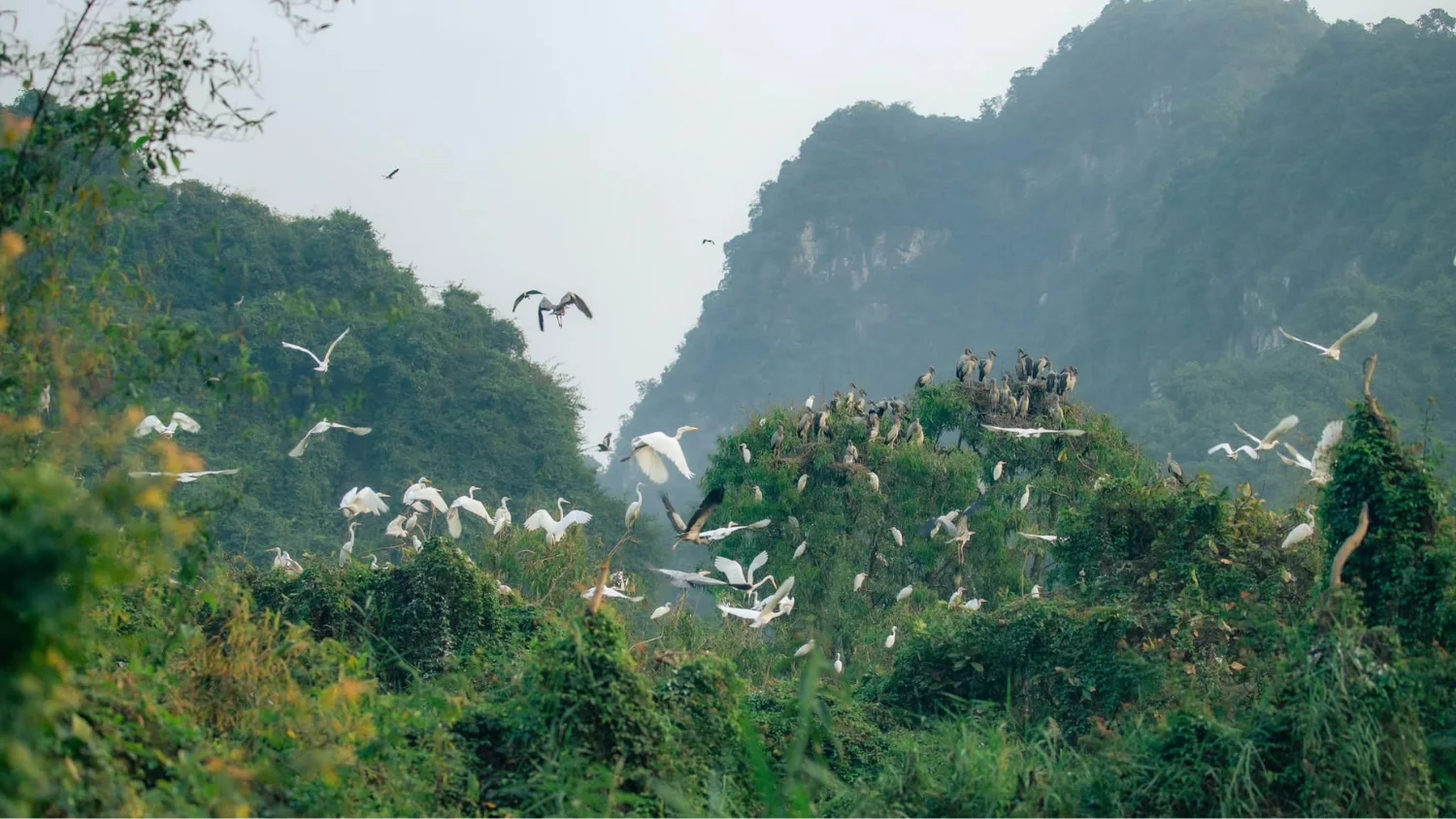
The bird nesting season at Thung Nham runs from autumn through spring, making November to March the peak period for the bird-watching experience. The park is home to over 50,000 birds across 40 plus species including Asian openbill storks, egrets, herons, and kingfishers. The absolute best time of day in any season is 4:30 to 6:00pm when the birds return from foraging in enormous flocks to their nesting trees. Thousands of white cranes against the evening sky with the limestone karst walls behind them is a scene specific to this place and specific to this hour. The 2025 park upgrade added elevated observation platforms with professional spotting scopes available for rent at 50,000 VND. Entrance ticket is 150,000 VND including the main boat rides. Located 5 to 10 kilometers from Tam Coc.
The lotus blooms at the Thung Nham entrance are worth noting for the winter calendar: the lotus has finished by August but the water lily ponds along the approach paths are productive for photography in any dry season month with clear light.
Van Long Nature Reserve
Van Long is the most productive Delacour’s langur spotting location in Vietnam. These white-headed black langur monkeys are critically endangered with a global population of under 250 individuals. Van Long is one of their last refuges. The wetland at Van Long drops to its lowest water level in the dry winter months, concentrating wildlife on the remaining water surfaces and making bird sightings more reliable. Egrets, herons, cormorants, and kingfishers are visible from the rowing boat in significant numbers from November through March. Entrance 100,000 VND. Located approximately 30 minutes from Tam Coc.
Cuc Phuong National Park
Vietnam’s oldest national park at 40 kilometers from Ninh Binh center is best visited in the dry winter and spring season when the forest trails are fully accessible and not muddied by summer rains. The Endangered Primate Rescue Center inside the park houses langurs, gibbons, and other primates and is open year-round. The primary forest walking routes are most rewarding in December to March when the deciduous sections of the forest are partially bare, making wildlife observation easier through the canopy. Avoid July and August when trail sections are muddy and leeches are active after heavy rain.
Tet 2027: February 6
Bai Dinh Pagoda, described as the largest Buddhist complex in Southeast Asia at 700 hectares, receives the highest visitor numbers of the year in the weeks before and after Tet. The pilgrimage energy in late January 2027 at Bai Dinh is unlike any other period in the Ninh Binh calendar: incense smoke over the entire complex, families in traditional dress, the Bai Dinh bell tower visible from the valley below. Book accommodation well ahead for any late January or early February dates. The Hoa Lu Ancient Capital area in the pre-Tet weeks has a festive energy that adds a cultural dimension to what is otherwise a quiet season.
What to pack: A proper warm jacket for January evenings at 13 to 16 degrees. A light waterproof layer for the occasional December and January drizzle. Comfortable walking shoes for the Cuc Phuong trails.
Ninh Binh attractions by season: which site for which month
This section does not exist in any other best-time article for Ninh Binh. Every major site has a different seasonal character and knowing which one to prioritize in which conditions changes how you plan a day.
Tam Coc boat tour
Golden harvest peak: late September to late October, with the valley at its most photographically compelling. High water dramatic: August and September, when the river is higher, the cave passages are more enclosed, and the flooded rice fields create the mirror landscape. Clearest water and best reflection: November to March in the dry season. The lotus visual at the entrance area: June to early July. Avoid the Saturday and Sunday morning departure times in October: Tuesday to Thursday mornings are the consistent weekday recommendation.
Trang An boat tour
All-season UNESCO site and the most structurally robust boat tour in Ninh Binh. Most dramatic cave experience at high water: August and September when the river level raises the boat closer to the cave ceilings. Best weather for the full 3-hour route: October to April. Route 1 is the recommended starting point for first-time visitors year-round. The King Kong filming location is on Route 2 for travelers interested in that connection.
Thung Ui valley
Year-round, with specifically different characters by season. October to November: golden afternoon light on the karst walls, the most dramatic dry-season version of the still lake reflection. June to July: lush green karst walls reflected in the summer lake, lotus blooms possible at the valley edges. August to September: higher water level creates the most dramatic karst reflection of any season. Best visited in the afternoon from 2pm to 5pm for the light in any season. No significant crowds in any month. The Kinh Thien Altar Festival: 10th day of the 3rd lunar month annually.
Mua Cave viewpoint
Best for the harvest panorama: October, specifically the dawn climb before 6am when the golden valley is in its best light. Best for the atmospheric fog photography: January and February early morning when the valley mist sits below the summit. Open from 5am for sunrise. Avoid weekend mornings in October when the summit path has a queue. Entrance 150,000 VND (from 1/4/2026).
Thung Nham Bird Garden
Best time of day in any season: 4:30 to 6:00pm for the bird return. Best season for nesting activity: November to March. Lotus at the entrance walkway: June to early July. Open 7am to 6pm summer, 7:30am to 5:30pm winter. 150,000 VND entrance including boat rides. Elevated observation platforms added in 2025 with spotting scopes for rent.
Van Long Nature Reserve
Best for Delacour’s langur spotting: early morning any season, specifically before 8am when the langurs are most active on the cliff faces. Best for birdwatching: November to March in the dry season. Best for the high-water wetland visual: June to September when the water level is highest. Consistently quieter than Tam Coc and Trang An in any month.
Cuc Phuong National Park
Best for forest hiking and trail access: November to April in the dry season. The Endangered Primate Rescue Center: year-round. Best for birdwatching: December to March. Avoid: July and August when trail sections are muddy and leeches are active in the primary forest after rain.
Bai Dinh Pagoda
All-season spiritual site and one of the most impressive Buddhist complexes in Southeast Asia. Peak pilgrimage energy: late January and early February in the Tet season. Busiest months: February, March, and October holiday weekends. Quietest: June to August when domestic pilgrimage activity is lower. All-season accessible and worth visiting regardless of when you arrive.
Hoa Lu Ancient Capital
Best in dry season for the outdoor exploration of the 10th-century capital ruins, the Dinh and Le dynasty temple complexes, and the surrounding countryside. Hoa Lu Ancient Capital Festival: April 9 to 10 annually. The site in the early morning before tour groups arrive from Hanoi is the consistently recommended timing.
The 7km cycling path connecting Tam Coc to Trang An
Best: October to April on dry paths with scenic viewpoints along the route. Avoid July and August when heavy rain makes sections slippery. Rental at most Tam Coc area accommodation for 120,000 to 180,000 VND per day.
Ninh Binh month by month
January: 15 to 20 degrees, cool and misty, Thung Nham Bird Garden at its best for nesting season and bird volumes, Bai Dinh Pagoda pre-Tet pilgrimage beginning to build from mid-month, Van Long dry-season wildlife concentration excellent for langur and bird spotting. Rice fields bare after the October harvest. Verdict: eco-tourism, winter quiet, and the bird garden at its most spectacular.
February: 16 to 22 degrees, Tet 2027 falls on February 6. Bai Dinh Pagoda pilgrimage at peak volume in late January and early February. Hoa Lu Ancient Capital festive energy. Bird nesting season continuing at Thung Nham. Rapeseed flowers beginning to appear in the Tam Coc valley area from mid-February. Verdict: Tet pilgrimage energy and the first signs of spring arriving. Book 3 to 4 months ahead for Tet window dates.
March: 18 to 25 degrees, white rapeseed flowers blooming across the Tam Coc valley, spring green rice growing in the fields, Hoa Lu Festival approaching on April 9 to 10, nom humidity possible from late February to early April. Check the forecast before planning outdoor boat tours on any specific day. Fewer international tourists than October. Verdict: spring clarity with honest grey-day expectations.
April: 22 to 30 degrees, clear and warm, Hoa Lu Ancient Capital Festival April 9 to 10, Kinh Thien Altar Festival at Thung Ui on the 10th day of the 3rd lunar month. The most culturally concentrated month in the Ninh Binh calendar. Book accommodation 6 to 8 weeks ahead for the festival dates. Verdict: the festival window. Good weather, specific cultural events, worth planning around.
May: 25 to 33 degrees, transition toward summer, rice fields intensely vivid green, lotus beginning to appear at Thung Nham and Bich Dong by late May. Prices dropping from spring levels. Early morning boat tours still comfortable before the heat peaks. Verdict: value window with the lotus season opening in late month.
June: 28 to 35 degrees, lotus at peak bloom at Thung Nham, Van Long, and Bich Dong, rice at its deepest green of the year, Tam Coc river scenery at its most lush, afternoon heat requiring early morning strategy. Prices 15 to 30 percent below October. Verdict: the lotus and green season, specifically worth targeting for photographers who want something other than the harvest.
July: 29 to 37 degrees, hottest month, afternoon rain increasingly consistent, river levels beginning to rise toward high water, lotus fading from mid-month but still visible in early July. The early morning boat before 8am is specifically rewarding for the green landscape and the low visitor numbers. Verdict: challenging heat but excellent early morning light and very low crowds.
August: 28 to 36 degrees, high water season fully established, Tam Coc and Trang An at their most dramatically different from the dry season version, 40 percent fewer visitors than October, lowest prices of the year. The flooded rice field landscape alongside the karst cliffs is the specific reason to be here. Verdict: the undiscovered version of Ninh Binh. Worth considering for the right traveler.
September: 26 to 32 degrees, rain easing from mid-month, river still high, harvest beginning to approach in the lower elevation fields by late September. Typhoon season note: check NCHMF before planning boat tours on any September day as heavy rain systems can cause rapid river changes. Late September: the first gold appearing in the Tam Coc fields. Verdict: transition month with the harvest beginning. Late September is when the golden season opens.
October: 22 to 26 degrees, golden harvest peak across the first two weeks, the most famous Ninh Binh photograph available every morning of the month, busiest month of the year. Book accommodation 6 to 8 weeks ahead. Arrive weekdays only. Thung Ui in the afternoon for the uncrowded karst reflection. The northern circuit with Hanoi and Ha Long Bay is simultaneously excellent. Verdict: the most famous month. Earn it by booking ahead and arriving on weekdays.
November: 18 to 24 degrees, October conditions at significantly lower prices and with fewer boats on the river, post-harvest landscape still beautiful, Thung Nham bird nesting season beginning to build, Cuc Phuong and Van Long returning to their best dry-season access. Verdict: the smartest pick in the Ninh Binh calendar for flexible travelers. All the quality of October at a fraction of the competition.
December: 16 to 22 degrees, winter establishing, Cuc Phuong National Park forest trails fully accessible, Van Long excellent for dry-season birdwatching, Bai Dinh Pagoda preparing for the Tet pilgrimage season building through January. Misty mornings over the valley. Verdict: eco-tourism and winter quiet. The reward for traveling in the shoulder of the shoulder season.