Ho Chi Minh City 2026 at a glance
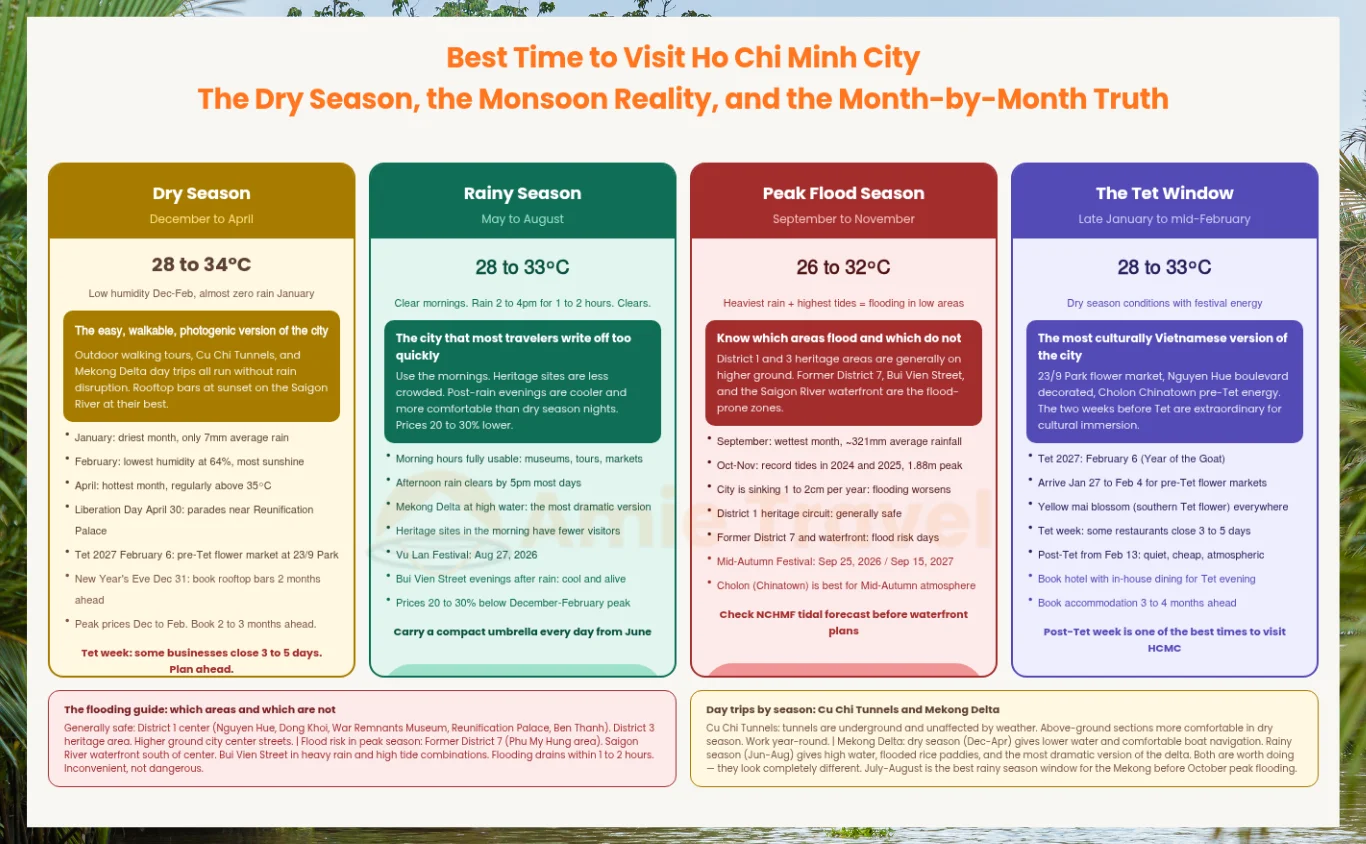
- Dry season (December to April): The most comfortable version of the city. Temperatures around 28 to 34 degrees, low humidity December to February, almost no rain in January. Best for outdoor walking tours, Cu Chi Tunnels, Mekong Delta day trips, and rooftop bars at sunset. Peak season pricing from December to February. Book 2 to 3 months ahead.
- Rainy season (May to November): Hot and humid with afternoon storms arriving daily from around 2 to 4pm from June onward. The rain lasts one to two hours and then stops. Prices 20 to 30 percent below peak. The city is fully operational. September and October bring the heaviest rain and the highest flood risk in low-lying areas.
- April: Hottest month of the year, regularly above 35 degrees. Liberation Day April 30 brings parades near the Reunification Palace. Some businesses close around the holiday.
- Tet 2027: February 6. Two weeks before Tet is the most culturally rich window. Tet week itself: some businesses close for three to five days. Plan specific restaurant and site visits ahead.
- Mid-autumn festival: September 25, 2026 and September 15, 2027. Cholon (Chinatown) is the most atmospheric place in the city for this festival.
- New Year’s Eve December 31, 2026: Book rooftop bar tables at least two months ahead. Top venues sell out completely for the countdown.
Dry season (December to April): When Saigon is at its most comfortable
December to April is when most international visitors come to Ho Chi Minh City, and for good reasons. The humidity drops. The sky is reliably blue. You can walk from the Reunification Palace to the War Remnants Museum to Notre Dame Cathedral to Ben Thanh Market in a single morning without needing to retreat indoors. The outdoor rooftop bars along the Saigon River have their best light at sunset. The Cu Chi Tunnels day trip is dry and comfortable instead of muddy and steaming.
December to February: the sweet spot
These three months are the closest Ho Chi Minh City gets to truly comfortable weather by any standard. January is the driest month of the year with an average of only around 6mm of rainfall for the entire month and more than 280 hours of sunshine. Temperatures sit between 28 and 32 degrees during the day with slightly cooler evenings around 23 degrees. The humidity is at its annual low in February at around 64 percent, which sounds high but feels noticeably lighter than the 85 percent of October.
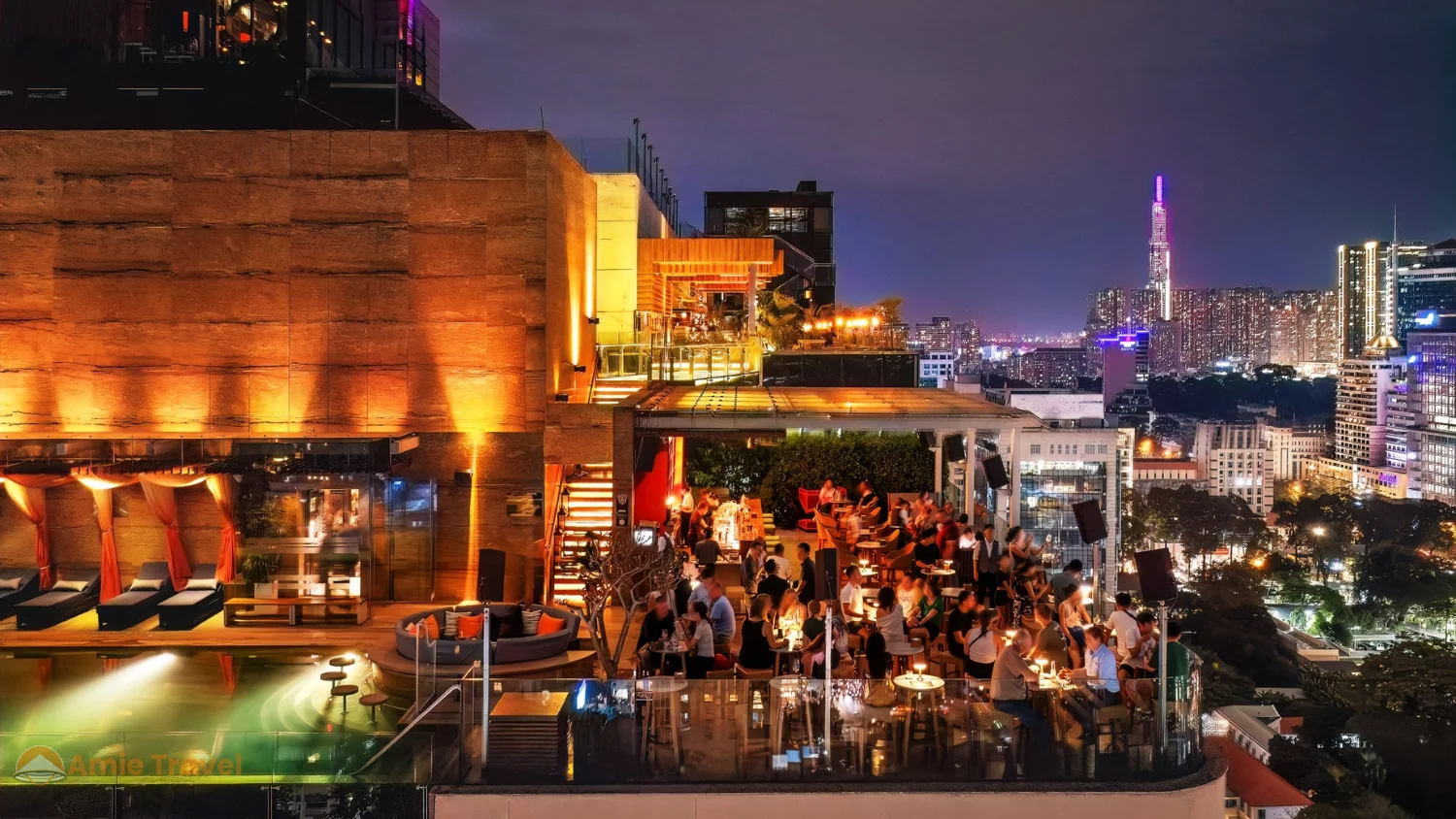
This is also the most expensive period, with hotel prices peaking in December through February and dropping off from March. If December and January are your dates, book accommodation 2 to 3 months ahead. The best mid-range properties in District 1 fill up quickly for this window.
One specific December note: New Year’s Eve on December 31, 2026 is worth planning around specifically. The rooftop bars on the upper floors of the Bitexco Financial Tower, the Park Hyatt, and the rooftops along the Nguyen Hue pedestrian street area fill up completely for the countdown. Book your table at least two months ahead if New Year’s Eve is part of your trip.
Tet 2027: February 6
Tet falls on February 6, 2027 (Year of the Goat). For travelers in Ho Chi Minh City in late January and early February, the pre-Tet period is one of the most specifically interesting times to be in the city. The 23/9 Park near Ben Thanh Market becomes a large flower market, with yellow mai blossom (the southern Tet flower) and ornamental plants being traded by farmers. The Nguyen Hue pedestrian boulevard transforms with Tet floral arrangements and decorations that attract enormous crowds. Cholon (Chinatown) in District 5 has a specific energy during the pre-Tet weeks that is unlike any other time of year.

During Tet week itself (approximately February 3 to 10, 2027), the practical picture is different. Many smaller local restaurants and businesses close for three to five days. The streets in the first day or two of Tet are quieter than at any other point in the year as local residents return home or stay indoors with family. Some of the city’s best-known local eating spots close entirely. Book a hotel with in-house dining for the Tet evening itself and confirm any specific restaurant or attraction plan before assuming it will be operating.
The week after Tet from around February 13 is the underrated window. The spring weather is fresh, the Tet decorations are still on the buildings, the city is calm, and tourist volumes are low. Hotels that were fully booked in December are available. It is a good time to be in the city.
March and April: dry but heating up
March is still comfortable at 30 to 33 degrees with low rainfall. April is a different story. April is statistically the hottest month in Ho Chi Minh City, regularly hitting 35 degrees and capable of exceeding that on the hottest days. The humidity begins rising as the rainy season approaches. The advice that applies to Hanoi in summer applies here in April: start outdoor visits before 9am, take a break from 11am to 3pm, and use the evenings.
Liberation Day falls on April 30 every year, marking the end of the Vietnam War in 1975. In Ho Chi Minh City, the holiday involves parades near the Reunification Palace, a significant public atmosphere around the city center, and a Ho Chi Minh City Food Festival that typically runs in late April. Some smaller local businesses close around the holiday period. This is a meaningful historical date for the Vietnamese people and visiting the Reunification Palace on or around April 30 adds a specific historical dimension.
What to pack for dry season: Light breathable fabrics throughout. Sunscreen SPF 50 is non-negotiable from December through April as the UV index is high year-round in the south. A very light layer for December and January evenings which can feel cooler after a day at 30 degrees. Comfortable walking shoes for the District 1 pavements.
Who the dry season is for: First-time visitors who want the complete outdoor experience of the city. Travelers doing the Cu Chi Tunnels and Mekong Delta day trips. Anyone who specifically wants rooftop bar sunsets on the Saigon River. Couples on honeymoon circuits ending their Vietnam trip at the beach or in the south.
See our 12-Day Vietnam Honeymoon Tour for a southern circuit timed around the dry season window.
Rainy season (May to November): The city that most travelers write off too quickly
The most common misunderstanding about Ho Chi Minh City in the rainy season is that it rains all day. It does not. From May onward, and especially from June through October, the rain arrives in the afternoon. It falls hard for one to two hours, clears, and then the city carries on. The evening after a monsoon shower in July is often the most comfortable Ho Chi Minh City evening of the year: the heat has broken, the air is fresh, and the streets are alive with people who were waiting for exactly this.
The morning in rainy season is almost always clear. A visitor in June who starts their day at 8am has three or four hours of dry, hot but usable morning before the afternoon pattern kicks in. The War Remnants Museum, the Reunification Palace, the Notre Dame Cathedral, the Ben Thanh Market area, a river cruise in the morning: all of these work perfectly well in the rainy season if you use the morning hours.
What the rainy season specifically offers
Hotel prices drop 20 to 30 percent from the December-February peak. In June, July, and August, some of the best mid-range hotels in District 1 that charge 80 to 100 USD per night in January are available for 55 to 70 USD. The heritage sites in the early mornings carry fewer international tourists. Bui Vien Street on a rainy season evening after the afternoon storm has passed is some of the most energetic street food and nightlife the city produces, cooler and more comfortable than a humid December night.
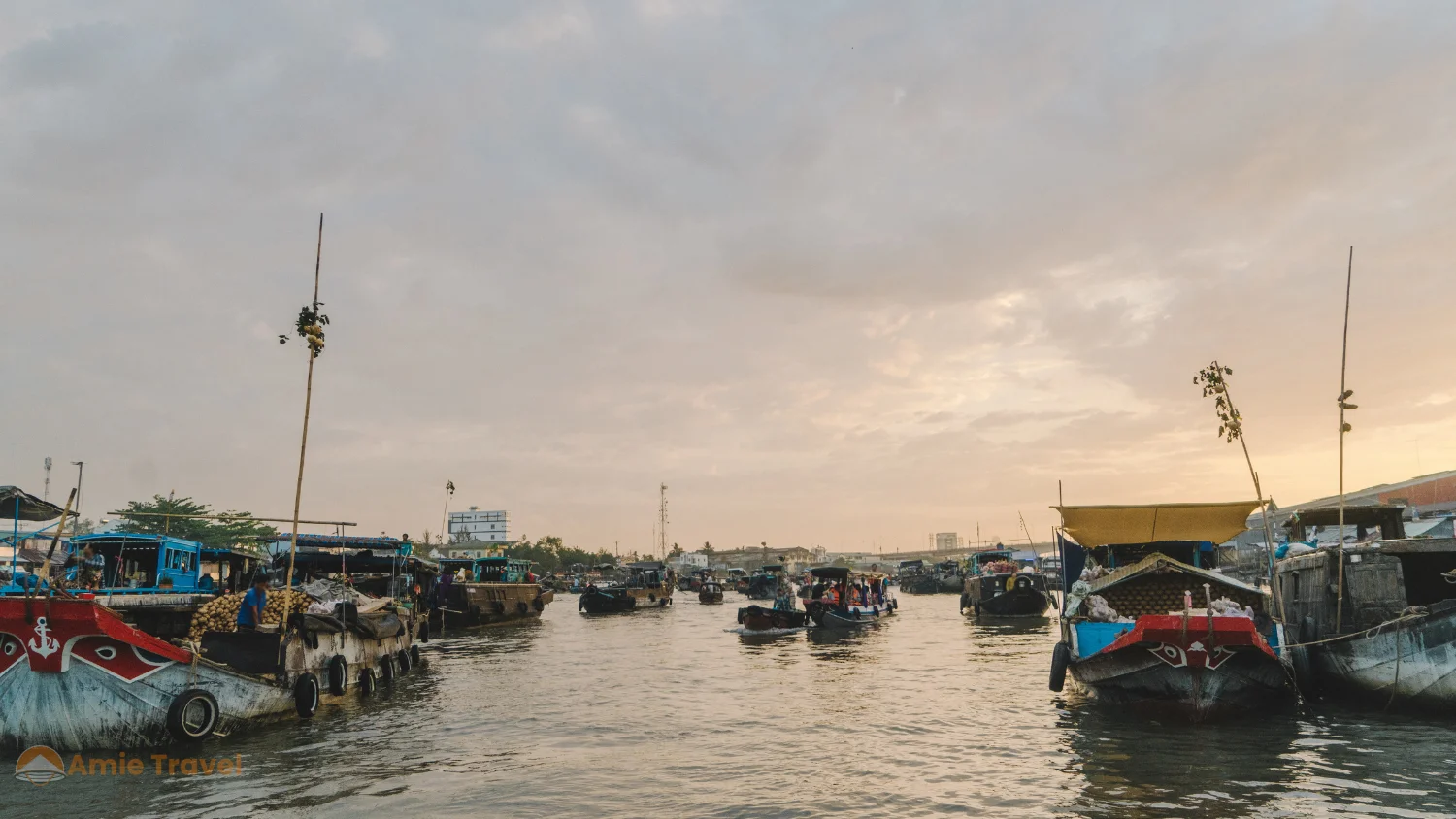
The Mekong Delta in the rainy season looks completely different from the dry season version, and for some travelers it is the more interesting version. The water levels are high, the rice paddies flood, the floating market boats are loaded with seasonal produce, and the landscape from the boat has a specific quality that the dry season low-water delta cannot produce. The detail about the rainy season Mekong is covered in the day trips section below.
September and October: the heaviest rain and the honest flooding picture
September is the wettest month in Ho Chi Minh City with average rainfall of around 321mm. October sees rainfall slightly easing but the combination of the late rainy season and the highest tidal surge months creates the most significant flooding risk of the year in the low-lying parts of the city.
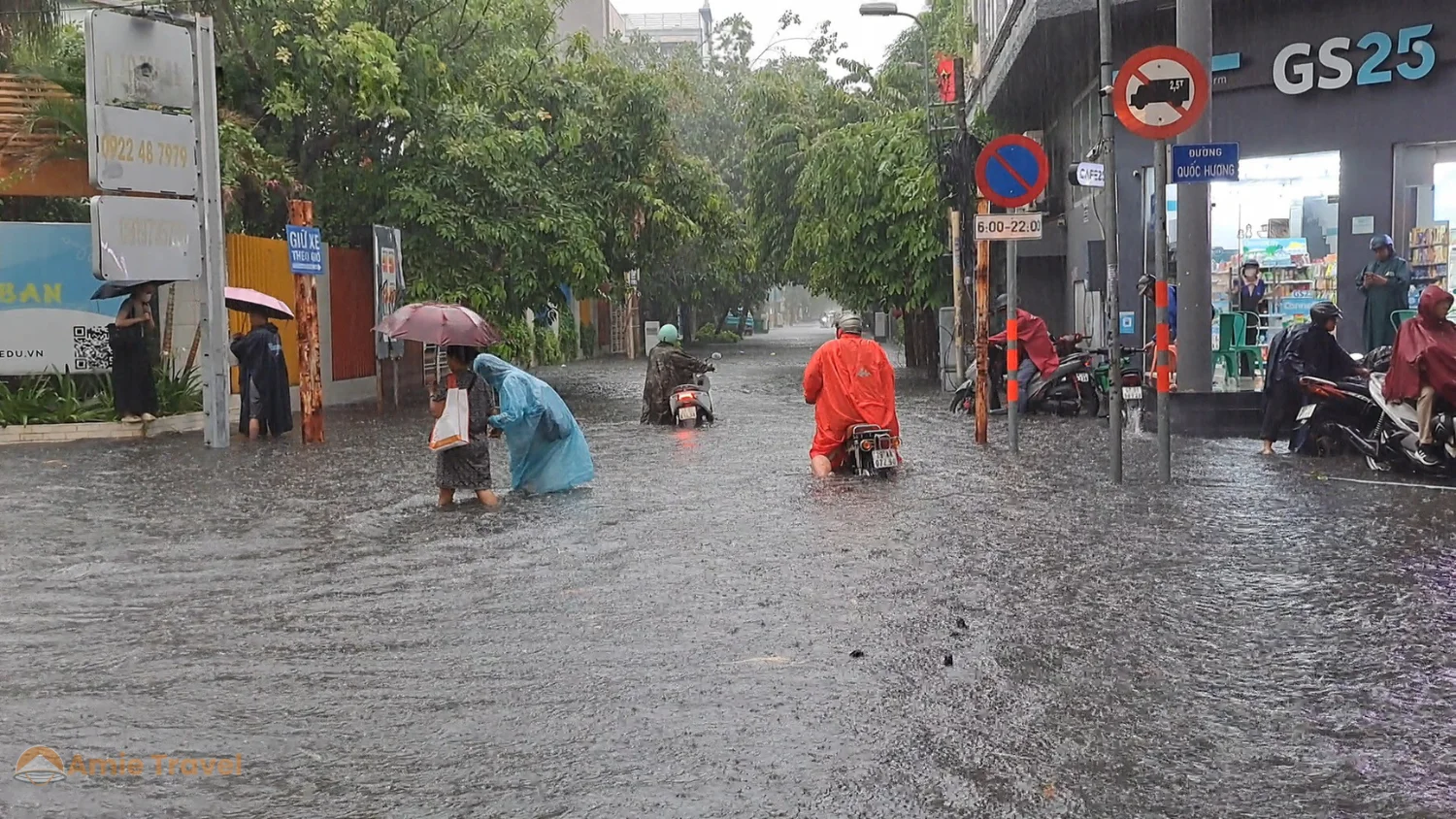
In 2024 and 2025, Ho Chi Minh City recorded its highest tide levels in history. In October 2025 the tide reached 1.88 meters, a new record. Major streets in the former District 7 area and the waterfront zones south of the city center were flooded during peak high-tide and heavy rain combinations. Bui Vien Street in District 1 had 10 to 20 centimeters of standing water on several evenings in October and November 2025.
This is not a reason to avoid the city. It is specific information about which parts of the city are affected and which are not. The District 1 and District 3 heritage areas where most international visitors spend their time sit on higher ground and are generally not affected by the tidal flooding that hits the lower-lying districts. The War Remnants Museum, the Reunification Palace, Notre Dame Cathedral, and Ben Thanh Market are not flooded when the waterfront streets are under water. Knowing this distinction makes the difference between an inconvenient evening and a ruined day.
What to pack for rainy season: A compact umbrella that you carry every day from June onward, not just when it looks like rain. Quick-dry fabrics throughout. Waterproof sandals or shoes that can handle wet streets from July. A dry bag for camera equipment and electronics. Sunscreen still essential: the UV index is high on clear mornings year-round in the south.
Who the rainy season is for: Budget-focused travelers who want the maximum value. Travelers whose Vietnam circuit ends in the south and whose dates fall outside the dry season window. Anyone interested in the Mekong Delta at high water. Travelers who want the local, non-tourist version of the city.
Who should be cautious about October and November: First-time visitors with fixed plans that depend on specific outdoor locations in low-lying areas. Anyone with accommodation booked near the Saigon River waterfront in the former District 7 who has not checked the flooding geography.
The flooding guide: Which areas are affected and which are not
This section does not appear in any other best-time article for Ho Chi Minh City. It exists because the flooding in the city has become significantly worse in recent years and the standard advice of “October is wet” no longer captures what visitors with October or November dates need to know.
Why the flooding is getting worse
Ho Chi Minh City is built on soft riverine sediments and is sinking at an average rate of 1 to 2 centimeters per year. Some areas near the Saigon River and in the southern districts are sinking at up to 4 to 5 centimeters annually. The city now ranks among the ten fastest-sinking cities in the world. The drainage systems were built for a higher ground level and are increasingly inadequate as the land drops. This means that the flooding risk in October and November is growing independently of rainfall, not because it is raining more but because the city is lower than it was.
The practical implication for a traveler in 2026 or 2027: October in Ho Chi Minh City carries a meaningfully higher flooding risk than October did five years ago. That risk is concentrated in specific areas, not the whole city.
Areas that flood during peak rain and high tides:
The former District 7 streets, particularly around the Phu My Hung residential and commercial area, and the roads along the Saigon River south of the city center including Tran Xuan Soan, Huynh Tan Phat, and Le Van Luong. These are residential and commercial areas that most international tourists do not visit but some stay in.
The waterfront area immediately along the Saigon River in the city center, particularly during the highest tidal surges in October and November when the combination of peak rain and maximum tides creates the most significant flood conditions.
Bui Vien Street in District 1, the backpacker nightlife street, floods during heavy rain and high tide combinations. In October and November 2025 it had standing water of 10 to 20 centimeters on multiple occasions. It drains within one to two hours after the rain and tide ease.
Areas that are generally not affected:
The central District 1 heritage circuit including Nguyen Hue boulevard, Dong Khoi Street, the Reunification Palace, the War Remnants Museum, Notre Dame Cathedral, the Central Post Office, and Ben Thanh Market. These areas sit on higher ground within the city center.
District 3, including the Pink Church (Tan Dinh Church area is District 3), the War Remnants Museum area, and the coffee street along Tran Quy Cap.
Practical advice for October and November visitors:
Check the NCHMF website for both the rainfall forecast and the tidal forecast for Ho Chi Minh City before planning a day in the waterfront areas. When both heavy rain and high tides are forecast on the same day, avoid the Saigon River waterfront south of the center and any street in the former District 7 area. The flooding is rarely dangerous for a healthy adult. It is ankle to knee deep, lasts one to two hours, and drains. It is inconvenient and can ruin footwear and electronics if you are not prepared.
If your accommodation is in the District 1 center area around Nguyen Hue, Dong Khoi, or Ben Thanh, you are generally on higher ground. If your hotel is near the Saigon River waterfront south of the center or in Phu My Hung, check the specific flood history of your street before booking.
Day trips from Ho Chi Minh city: Cu Chi tunnels and Mekong Delta by season
Both of the major day trips from Ho Chi Minh City work in any season, but they work differently depending on when you go.
Cu Chi Tunnels (70km northwest of the city)
The tunnels themselves are underground. They do not care what the weather is doing. The underground experience, the narrow crawl sections, the historical exhibits, and the replica kitchens and hospitals are the same in July as they are in January.
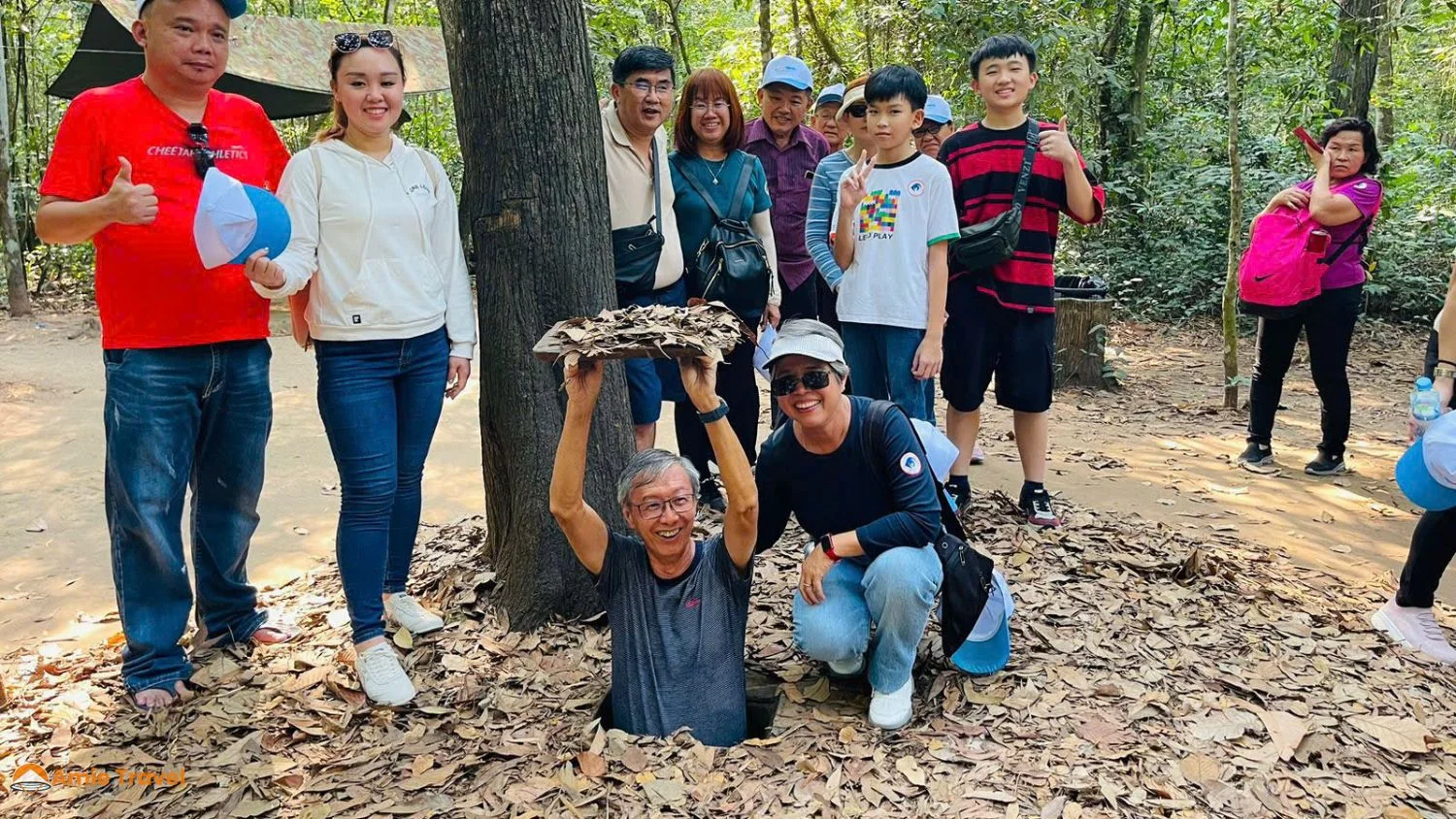
What changes with the season is the above-ground component. The jungle approach paths, the outdoor exhibits, and the shooting range sections are in the open. In heavy rain during July and August, these paths can be muddy and slippery. The experience is more physically comfortable and the above-ground sections are more enjoyable in the dry season. In the rainy season, go earlier in the morning and expect the outdoor sections to be wet if it rained the previous day.
The tunnels in December and January, the coolest months, are still hot underground. They run around 28 to 30 degrees below ground regardless of the outside temperature. Bring water and do not be surprised that the tunnels are warm even when January outside is pleasant.
Mekong Delta: the seasonal difference that no competitor article explains
Every guide to Ho Chi Minh City says the Mekong Delta is best in the dry season. This is partially true and significantly incomplete.
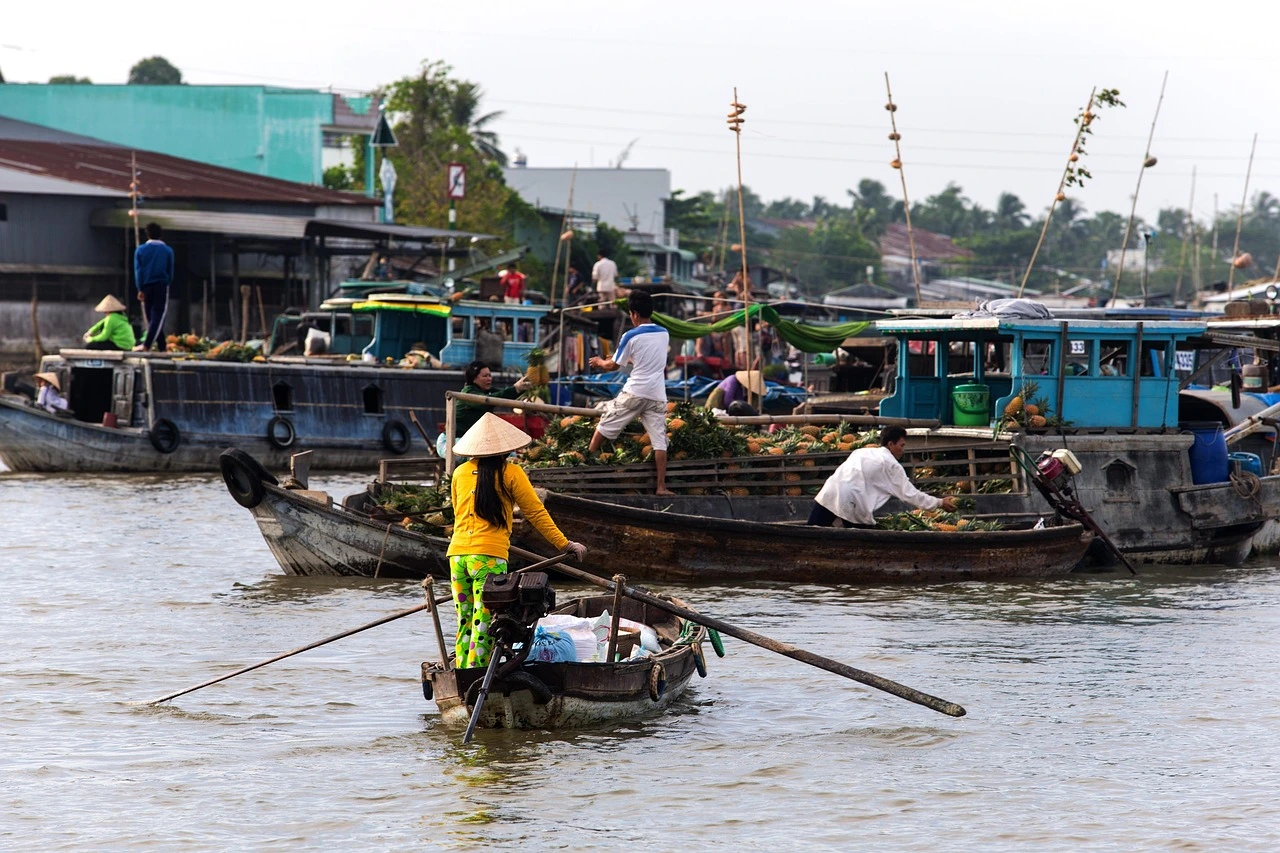
The dry season Mekong Delta (December to April) gives you lower water levels, easier boat navigation on the smaller canals, and clear skies that make the photography comfortable and predictable. The floating markets have produce to sell but the overall water level is calmer.
The rainy season Mekong Delta (May to November) looks like a different destination. The water level is high. The rice paddies flood to create a landscape that does not exist in the dry season: water as far as you can see, with the villages and trees rising out of it. The floating markets in the rainy season have boats riding higher in the water and more produce available from the seasonal harvest. The river channels that are narrow in the dry season become wide and navigable. The water is alive in a way the low-season version is not. For travelers specifically interested in the Mekong as a working agricultural and river system rather than as a pleasant boat ride, the rainy season version is the more interesting one.
The practical caveat for rainy season Mekong tours: September and October at peak flood season mean that some boat routes are affected by very high water and some sections of the delta are inaccessible. July and August are generally the best rainy season months for the Mekong: the water is high and the landscape is at its most dramatic but the flooding is not yet at the October peak levels. Confirm with your tour operator closer to your departure date.
See our Vietnam Family Tours for southern Vietnam circuits that include the Mekong Delta.
Ho Chi Minh City month by month
January: 28 to 32 degrees, almost no rain, February lowest humidity of the year approaching, the driest month in Ho Chi Minh City with only about 7mm of average rainfall. Pre-Tet preparation building from mid-January if Tet falls in February. The city at its most comfortable for outdoor walking. Cu Chi Tunnels and Mekong Delta day trips at their most pleasant. Verdict: the best single month for weather comfort.
February: 29 to 34 degrees, still dry, Tet 2027 falls on February 6. The two weeks before Tet are culturally extraordinary: flower market at 23/9 Park, Nguyen Hue boulevard decorated, Cholon Chinatown preparation energy. Tet week: some businesses close, plan ahead. Post-Tet: fresh and calm. Verdict: go pre-Tet for the cultural spectacle, post-Tet for the quiet reset.
March: 30 to 35 degrees, dry season tail end, minimal rain, temperatures rising toward April peak. Still excellent for all outdoor activities. Ao Dai Festival typically in March with parades in District 1. Good crowds balance: not as packed as December-January. Verdict: strong month, slightly cheaper than peak, temperatures manageable with early starts.
April: 32 to 38 degrees, hottest month of the year. Humidity rising toward rainy season. Still dry but demanding midday heat requires the early start and indoor midday strategy. Liberation Day April 30: parades near Reunification Palace, Food Festival in the city. Verdict: go early in the morning, take midday indoors, evenings excellent.
May: 30 to 35 degrees, rainy season beginning. Early May is often still largely clear in the mornings. By late May afternoon showers are arriving. The rainy season in 2025 started 10 days earlier than usual, so expect May to behave more like early rainy season than shoulder season. Prices dropping from peak. Verdict: transition month, good value, set expectations for afternoon rain from mid-month.
June: 28 to 33 degrees, rainy season properly arrived, afternoon rain daily from around 2 to 4pm. Morning clear and fully usable. Mekong Delta rising toward high water. Prices 20 to 25 percent below peak. The post-rain evenings are some of the best street food weather the city produces. Verdict: good value, productive mornings, excellent evenings.
July: 27 to 32 degrees, consistent afternoon rain, high humidity. The Mekong Delta at impressive high water levels for day trips. City fully operational. International tourist numbers at their lowest of the year. Heritage sites in the early mornings have very few visitors. Verdict: cheapest comfortable window, best for budget travelers and early-rising heritage visitors.
August: 27 to 32 degrees, heavy rain continues, high humidity, Mekong Delta still at high water. The city at its most local and least tourist-facing. Good for travelers who want the street food culture and the museums without international tourist crowds. Verdict: budget maximum, the city belongs to locals and those who know how to use it.
September: 26 to 32 degrees, wettest month with around 321mm average rainfall, flooding risk building. Morning hours still usable. Mid-Autumn Festival on September 25, 2026 and September 15, 2027: Cholon Chinatown is the most atmospheric place in the city for the festival, with lion dances, lanterns, and specific celebration energy. Verdict: September 25 is a worth being in the city for. Plan around the rain for the rest of the month.
October: 27 to 31 degrees, heavy rain continuing, highest tidal flooding risk of the year. The former District 7, Bui Vien Street, and Saigon River waterfront areas affected by tidal flooding on peak days. District 1 and 3 heritage areas generally safe. Lowest prices of the year alongside September. For the specific flooding geography, see the flooding section above. Verdict: manageable if you know the geography, avoid the low-lying waterfront areas on high-tide heavy-rain days.
November: 28 to 32 degrees, rain decreasing through the month, flooding risk easing from mid-November. Prices still at near-low levels while conditions are improving toward the dry season. By late November the sky is clearing and the city is transitioning back toward its December character. Verdict: the best budget window as the city improves, late November is specifically good value.
December: 27 to 32 degrees, dry season properly established, humidity dropping, the city at its most comfortable and most expensive simultaneously. Christmas decorations around Notre Dame Cathedral from early December. New Year’s Eve December 31: book rooftop bars two months ahead for the countdown. Verdict: peak season returning, book ahead, the city at its most photogenic and most crowded.