The Quick Answer
September is the peak harvest month for the northern mountains. Mu Cang Chai and Sapa turn gold. The Central Coast is entering its risky window but early September is still manageable. The South is still in wet season.
October is the North at its annual best: Hanoi enters its most beautiful season, Ha Giang gets both harvest gold and buckwheat flowers simultaneously, and Ha Long Bay hits one of its two clearest windows. The Central Coast faces its highest flood risk of the year in early October. The South is crossing into dry season from mid-month.
The bottom line: October is the better month overall for the North and South. September is the better month for Mu Cang Chai specifically. Neither month is suitable for the Central Coast without honest routing and planning.
September vs October: The Autumn Shift
September is the harvest month. The northern highlands are transitioning from green to gold. Mu Cang Chai, Sapa, Hoang Su Phi, and Ha Giang are all entering or at the peak of their golden season. The Central Coast is beginning its most unpredictable weather window. The South is still dealing with the heaviest rainfall of the year.
October is the transition month. The North moves from harvest to autumn: Hanoi gets crisp blue-sky days, Ha Long Bay enters one of its clearest windows, and Ha Giang adds buckwheat flowers to the remaining harvest gold. The Central Coast faces its highest statistical flood risk in the first two weeks. The South begins crossing into dry season from mid-month.
The travelers who have the best experience in this window are those who build their itinerary around the North or the South and treat the Central Coast as something to route around rather than the default starting point of a north-to-south journey.
The Golden Harvest: Why the North in September and October Is Like No Other Time of Year
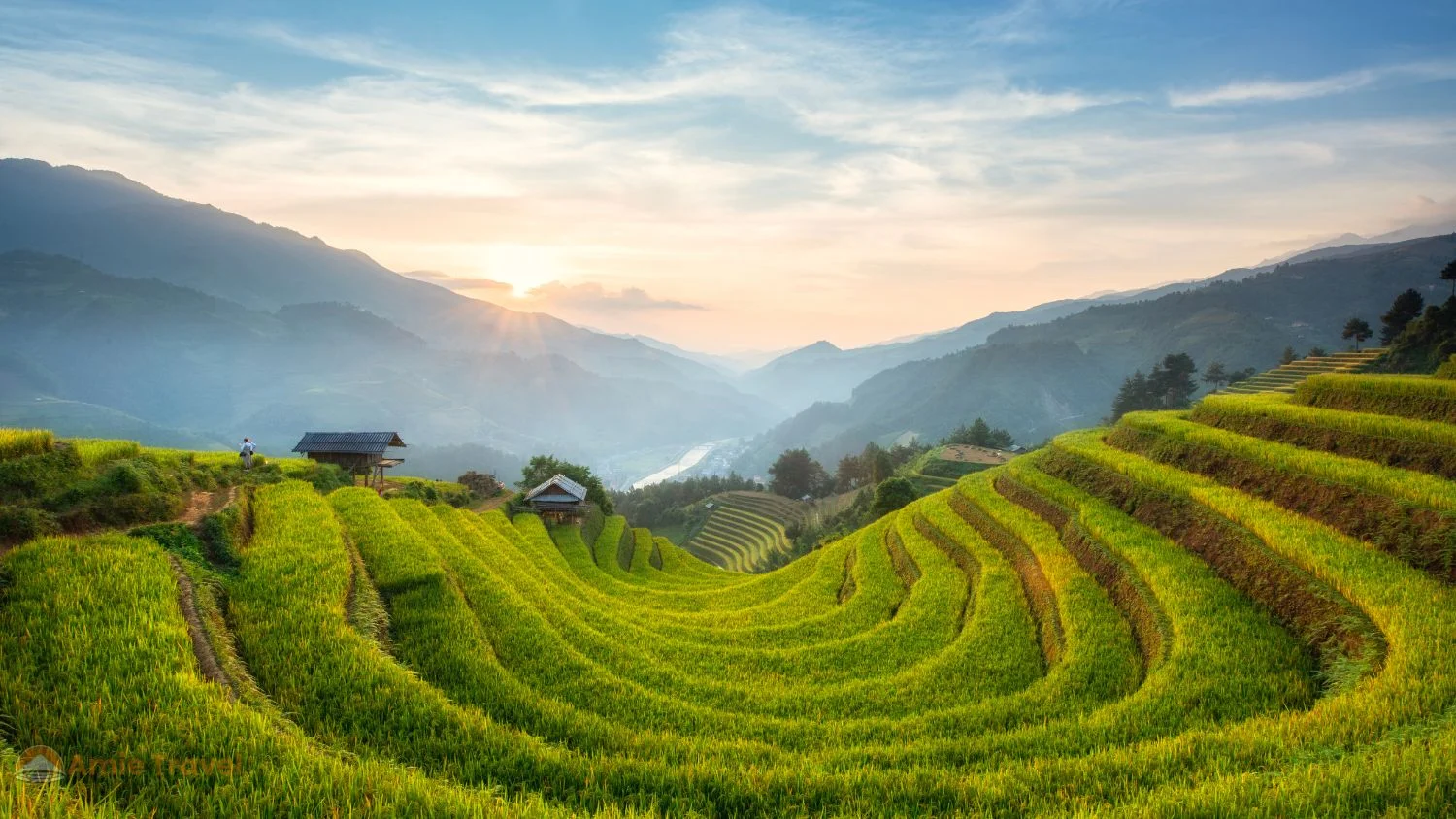
The golden rice terrace harvest is the most visually distinctive seasonal event in Vietnam. It happens once a year. It lasts two to four weeks depending on elevation and location. And it is consistently underbooked by international first-timers who are told to come in November or December when the harvest is long finished.
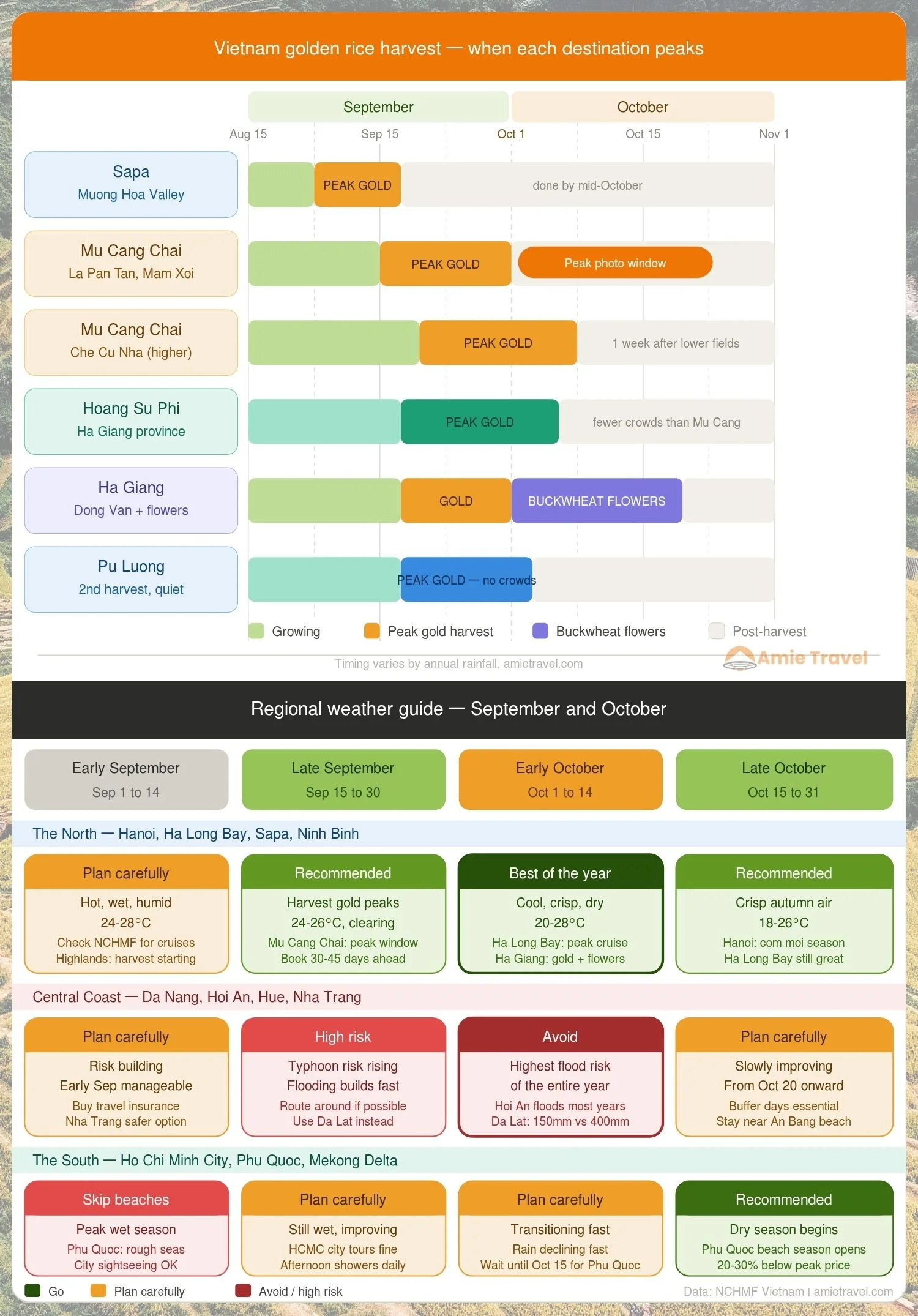
The timing breakdown by destination:
Sapa: mid-August to late September. Lower terraces in the Muong Hoa Valley turn gold first, higher terraces at Y Ty and the upper villages follow. By mid-October, Sapa’s harvest is over and the fields are stubble.
Mu Cang Chai: late September to mid-October. This is the peak photography destination for the harvest and the timing is specific. La Pan Tan village and Mam Xoi (Raspberry Hill) peak in the last week of September. Che Cu Nha and De Xu Phinh, sitting at higher elevation, peak approximately one week later. There is one rice crop per year here. Miss the window and you wait twelve months.
Hoang Su Phi (Ha Giang province): late September to early October. Vertically dramatic terraces farmed by the La Chi and Dao ethnic communities. Significantly fewer international visitors than Mu Cang Chai and genuinely harder to photograph because the scale is so extreme.
Ha Giang Dong Van plateau: late September to mid-October. October adds a second visual layer: the buckwheat flowers (Hoa Tam Giac Mach) begin blooming across the rocky plateau turning the landscape pink-purple simultaneously with the remaining harvest gold. This combination exists nowhere else in Vietnam.
Pu Luong: late September to early October. Pu Luong has two rice crops per year, making its second harvest window the quietest major terrace destination of this season. No booking surge, no price inflation, four hours from Hanoi.
The booking reality for Mu Cang Chai: Homestay accommodation at La Pan Tan, Che Cu Nha, and De Xu Phinh fills 30 to 45 days in advance during the peak window. Prices rise 30 to 50 percent compared to the rest of the year. If golden terraces are the main reason you are coming to Vietnam in September or October, this is not a destination you book two weeks out.
Regional Weather Breakdown: September and October
The North: Hanoi, Ha Long Bay, Sapa, Ninh Binh

September in the North is the transition out of summer. Hanoi averages 24 to 28 degrees, with rainfall still around 250mm across the month but concentrated heavily in the first half. By late September, blue skies increase noticeably and the city begins to take on the cool, clear quality that defines its autumn character.
Ha Long Bay in September still carries typhoon risk from storm tracks moving along the northern coast. Always check the National Centre for Hydro-Meteorological Forecasting 48 hours before any Ha Long Bay cruise departure in September. Most cruises operate with weather-contingent cancellation policies this month for good reason.
The northern highlands in September are at peak harvest energy. Mu Cang Chai and Sapa terraces are gold or turning gold. Trekking trails are firm after the summer rains. The air at 1,500 meters is noticeably cooler than Hanoi and comfortable for long days on foot.
October in the North is what long-term residents call the best month of the year. Hanoi averages 20 to 28 degrees with rainfall dropping to just 3 to 5 days across the month. The air is dry, clear, and cool. Walking the Old Quarter, cycling around West Lake, or eating pho at a street stall in October feels completely different from the humid exertion of the summer months.
Ha Long Bay in October is one of its two best windows of the year alongside November. Zero typhoon risk, calm water, clear skies, and morning mist on the limestone karsts. A two-night cruise in October delivers exactly what most people picture when they imagine Ha Long Bay.
Mu Cang Chai in the first two weeks of October is at peak gold for the higher-elevation villages. Ha Giang in October adds buckwheat flowers to the landscape, creating a visual combination that is completely unique to this month.
The Central Coast: Da Nang, Hoi An, Hue, Nha Trang
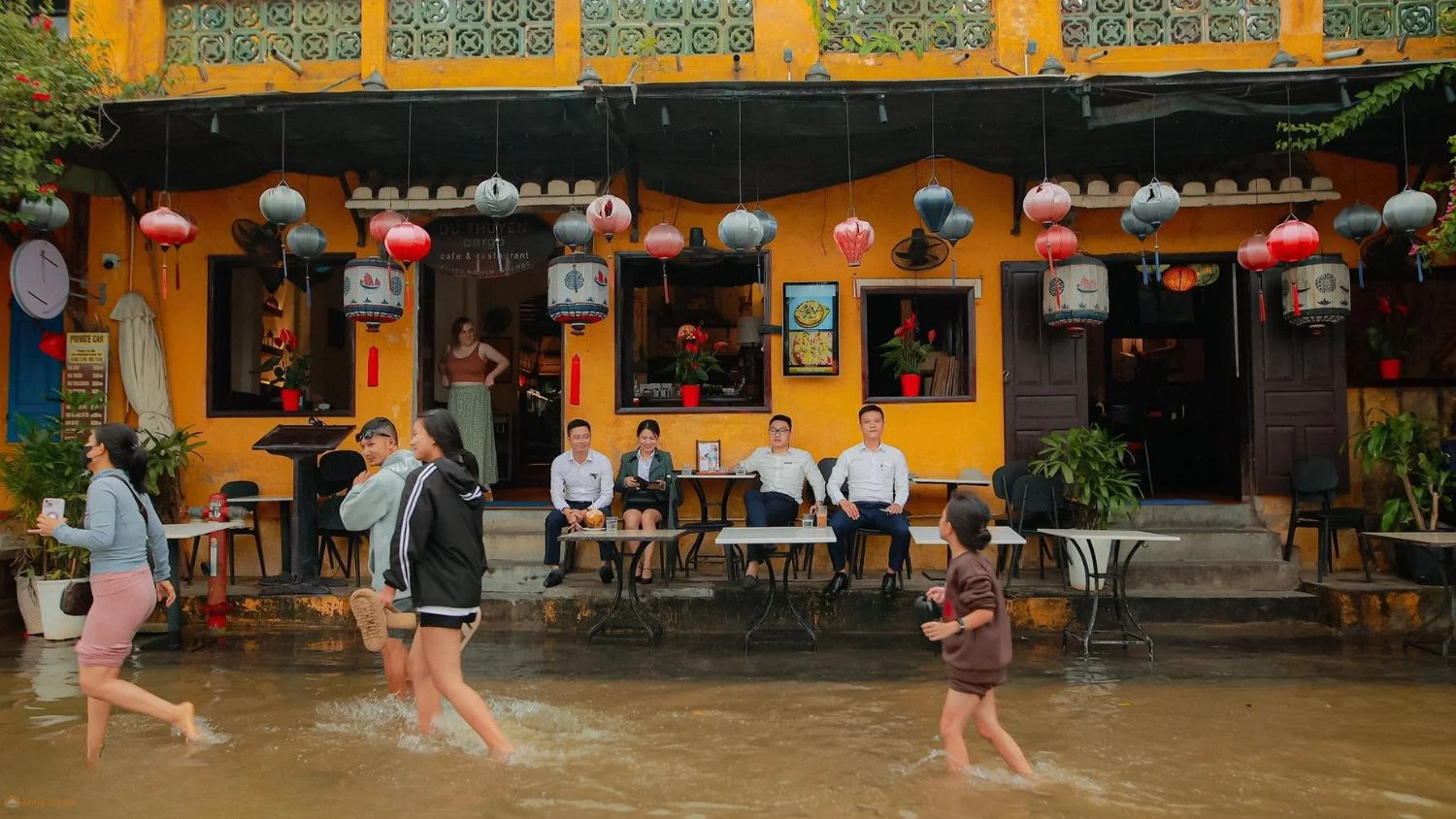
October is consistently the wettest month of the year on the Central Coast. Da Nang averages 300 to 400mm of rainfall across October with more than 20 rainy days. Hue receives similar volumes. Hoi An’s Ancient Town sits on the Thu Bon River floodplain and floods to some degree in most years during this window — sometimes just centimeters across the lowest streets, sometimes significantly more depending on how the season plays out. The scale varies year to year. The fact of autumn flooding in Hoi An does not.
The reason is geography. The Truong Son mountain range runs parallel to the Central Coast and blocks the southwest monsoon in summer, giving Da Nang and Hoi An their long dry season. In autumn the wind reverses. The northeast monsoon pushes warm, moisture-heavy air directly into the exposed coast and the mountains trap it, concentrating intense rainfall on the strip from Da Nang south through Hue and into the foothills.
September on the Central Coast is manageable in the first half of the month. Da Nang and Hoi An are largely functional in early September with the flood risk building from mid-month onward. Nha Trang, sitting further south, sees its peak risk arrive later in October and is a more reliable Central Coast option in September.
October on the Central Coast requires honest planning. The first two weeks carry the highest average flood risk of the year. By late October (roughly from the 20th), conditions begin improving as the northeast monsoon eases. Late October Hoi An and Da Nang are not peak weather, but the worst of the flooding window is passing.
The South: Ho Chi Minh City, Mekong Delta, Phu Quoc
September in the South is peak wet season. Ho Chi Minh City sees heavy afternoon downpours, typically lasting one to three hours then clearing. The city is fully operational but outdoor sightseeing is best planned for mornings. The Mekong Delta in September has maximum water in its canals, making boat trips and floating markets extraordinarily vivid. Phu Quoc in September has rough seas and disrupted ferry services. It is not a beach destination this month.
October in the South is a week-by-week improvement. Rainfall decreases noticeably from the start of the month. By mid-October, Ho Chi Minh City is genuinely comfortable with fewer rain days and lower humidity. Phu Quoc from mid-October has improving water clarity, reliable ferry services, and a beach season beginning to open. Prices across the South in October are below the December to January peak, making this a genuine value window for travelers willing to accept the occasional afternoon shower in the first half of the month.
The Central Coast Reality: What to Do About Hoi An Flooding
If your dates fall in September or October and Hoi An is on your itinerary, you have three honest options.
Option 1: Skip the Central Coast entirely and reroute.
The North and South are both excellent in this window. A Hanoi to Ha Long Bay to Ho Chi Minh City to Phu Quoc route skips the Central Coast completely, captures the North at its most beautiful, and arrives in the South just as its dry season begins. This is the cleanest routing decision and the one that carries zero weather risk.
Option 2: Use Da Lat as your Central base instead.
Da Lat sits in the Central Highlands at 1,500 meters elevation. In October, Da Lat receives approximately 150mm of rainfall compared to 300 to 400mm on the coast. The city has French colonial architecture, a distinct coffee culture, strawberry and flower farms, and a cool climate that is completely different from the coast. Mimosa flowers bloom from October. Connect to Da Nang or Hoi An from the 20th of October onward when coastal conditions begin to ease, and you get both the highlands and the coast without the worst of the flooding window.
Option 3: Go to Hoi An but plan honestly.
Many travelers visit Hoi An in October and have a genuinely good time. The ancient town has a specific atmosphere in this season: quieter than peak, lantern-lit, and with a local pace that the summer crowds completely erase. The key is planning for the reality rather than against it.
Stay near An Bang Beach or Cam Thanh rather than inside the Ancient Town center. These areas sit at slightly higher elevation and are less immediately affected when the Thu Bon River rises.
Build two buffer days into your Hoi An schedule. Do not plan transport out of Hoi An on a day you cannot afford to miss.
Book indoor contingencies: a lantern-making workshop, a Vietnamese cooking class, a tailor appointment, or a full afternoon at one of the town’s spa resorts. Hoi An’s tailors work through any weather and the cooking schools are among the best in Vietnam.
Purchase travel insurance that explicitly covers weather disruption and flooding before you arrive. Read the policy before you buy it.
Avoid ground-floor accommodation anywhere near the Thu Bon River.
For travelers with November or December dates instead, see our Vietnam in November and December guide for when the Central Coast finally dries out and becomes reliable again.
Top 5 Places to Visit in September and October
1. Mu Cang Chai: Best for Golden Rice Terraces
Mu Cang Chai is the destination that September and October exist for. The 2,000 hectares of terraced rice fields across La Pan Tan, Mam Xoi Hill, Che Cu Nha, and De Xu Phinh turn gold in a sequence running from the last week of September through mid-October depending on elevation. Mam Xoi Hill at dawn, with mist rising from the valley floor and golden terraces catching the first light, is the image that defines northern Vietnam’s harvest season.
The practical reality: book accommodation 30 to 45 days in advance for the peak window. Arriving without a booking in the last week of September does not work.
Explore our Vietnam Adventure Tours for guided itineraries that include Mu Cang Chai during the harvest window with logistics managed in advance.
2. Hanoi: Best for Autumn Culture and Food
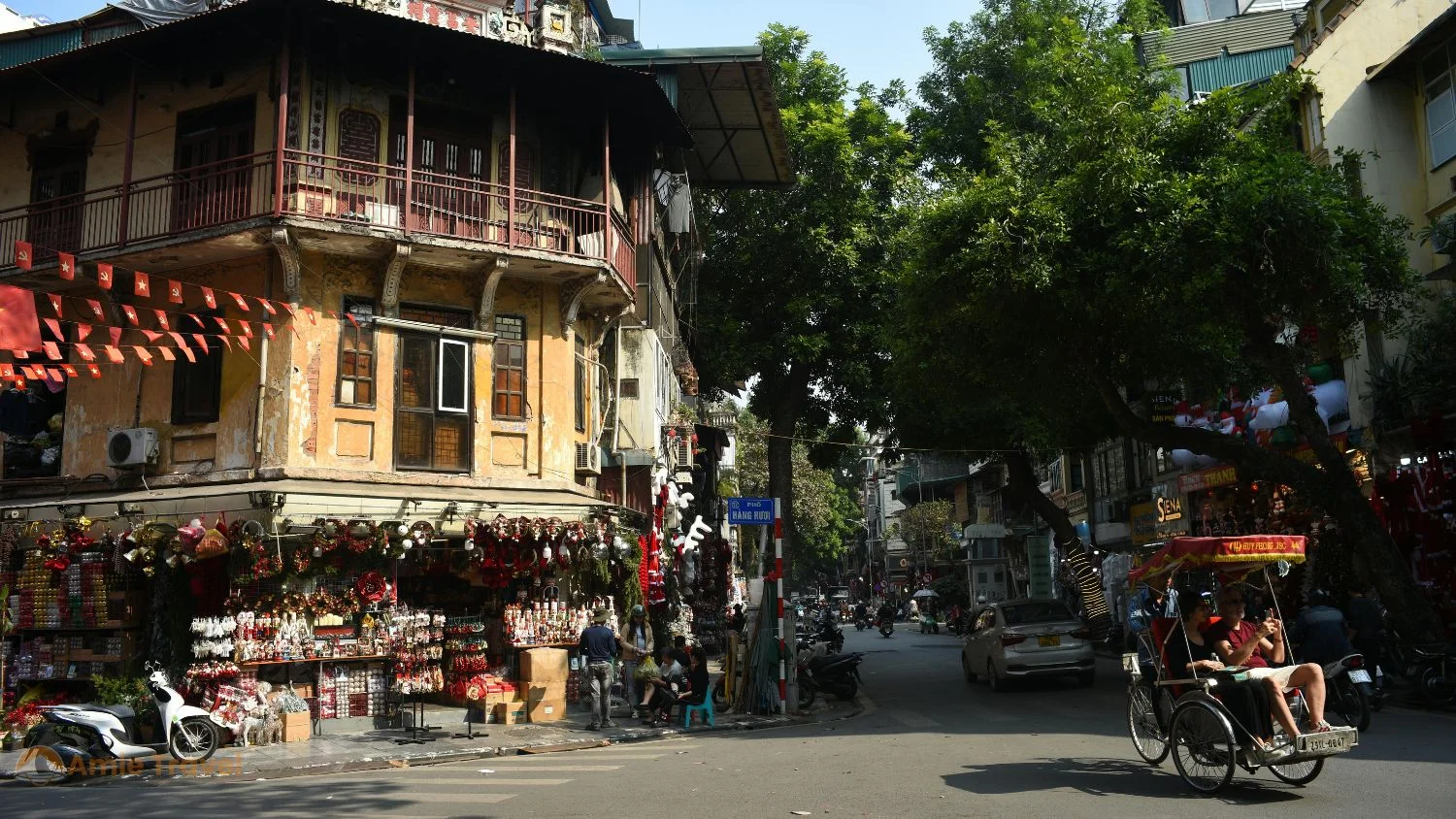
October Hanoi is the version of the city that residents love and international visitors rarely plan for. The summer heat has lifted. Humidity has dropped. The Old Quarter is walkable all day. Hoan Kiem Lake at dusk in October, with clear skies and cool air, is one of the genuinely great urban experiences in Southeast Asia.
October also brings com moi (young green sticky rice wrapped in lotus or dong leaves) to Old Quarter stalls and street markets, available only in October and November when Red River Delta paddies are harvested at precisely the right moment of maturity. It is one of the most genuinely seasonal foods in Vietnamese cuisine and something most international visitors never discover.
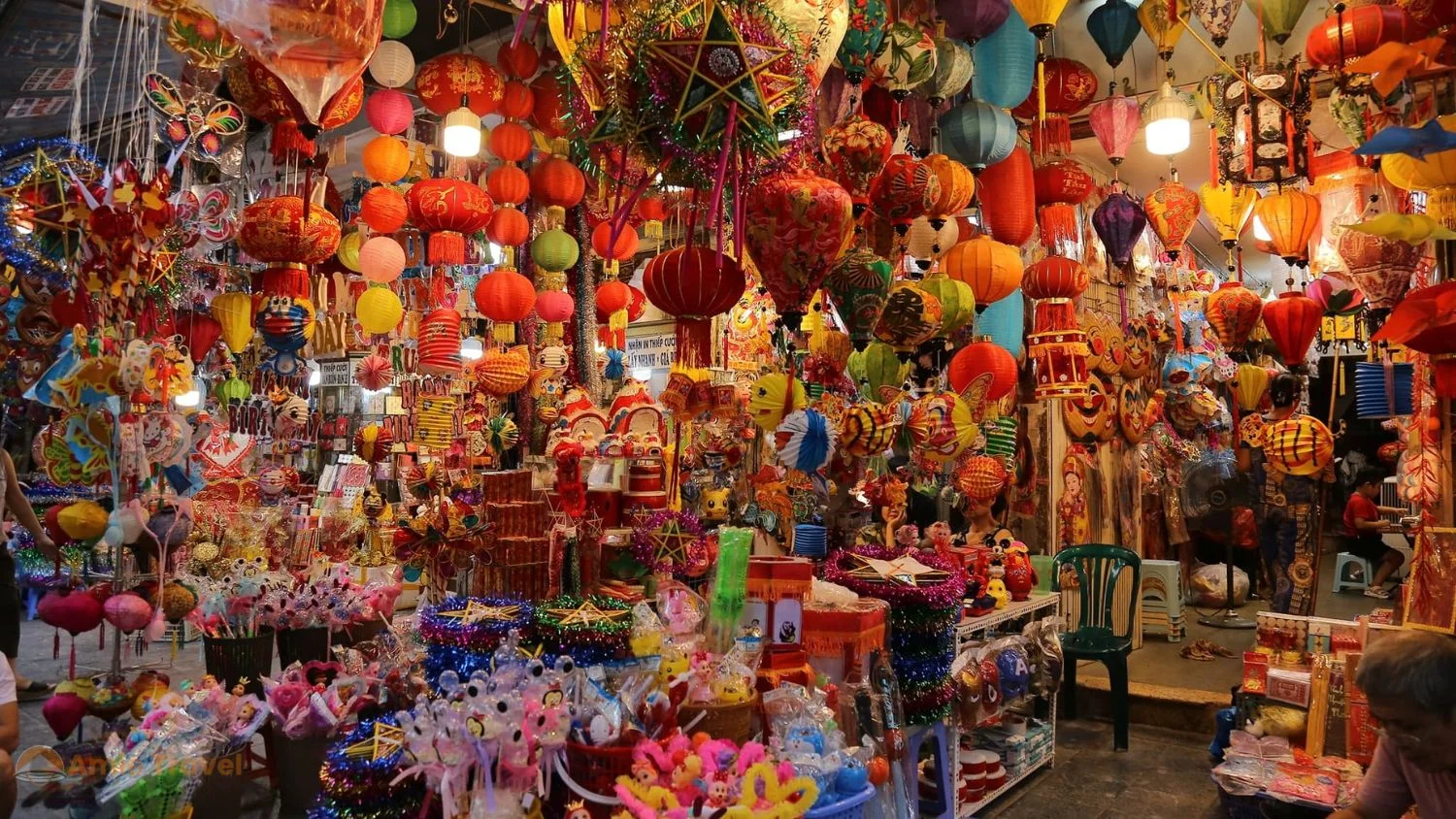
The Mid-Autumn Festival (Tet Trung Thu) 2026 falls on Friday, September 25. Hanoi on this night is remarkable: Hang Ma Street in the Old Quarter fills with moon cake vendors, hand-made lanterns, and lion dance troupes. It is a one-night event that costs nothing to witness and requires only being in the right city on the right night.
See our 7-Day North Vietnam Tour: Hanoi, Ha Long Bay, Sapa and Fansipan for an itinerary built around the northern autumn window.
3. Pu Luong: Best for a Quiet Harvest
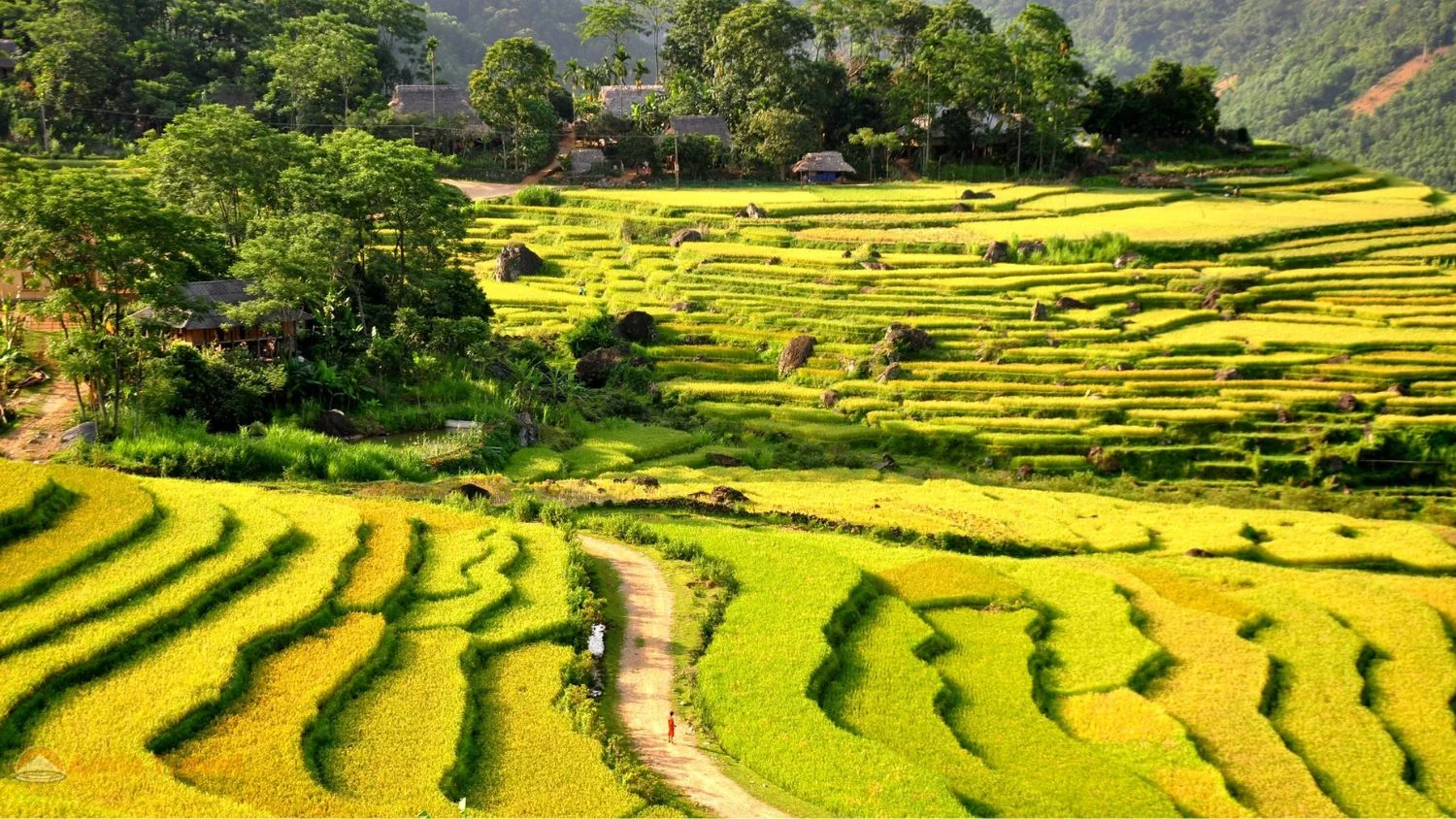
Pu Luong is where travelers who have already done Sapa go for the harvest season. Four hours southwest of Hanoi in Thanh Hoa province, Pu Luong grows two rice crops per year. The second harvest falls in late September to early October, which means the golden terrace window aligns with Mu Cang Chai’s peak but with none of the booking pressure, none of the price surge, and none of the overnight bus convoys from Hanoi.
Three nights in Pu Luong during this window is the right duration: two mornings positioned above the Ban Don or Kho Muong village viewpoints, trekking between stilt house villages of the White Thai communities, and evenings at a homestay that serves food sourced from the same fields you have been walking through all day. Book ahead but three weeks is sufficient.
See our complete Pu Luong Tours and Travel Guide for specific homestay recommendations and the best viewpoint locations for the harvest window.
4. Ha Giang: Best for October Adventure
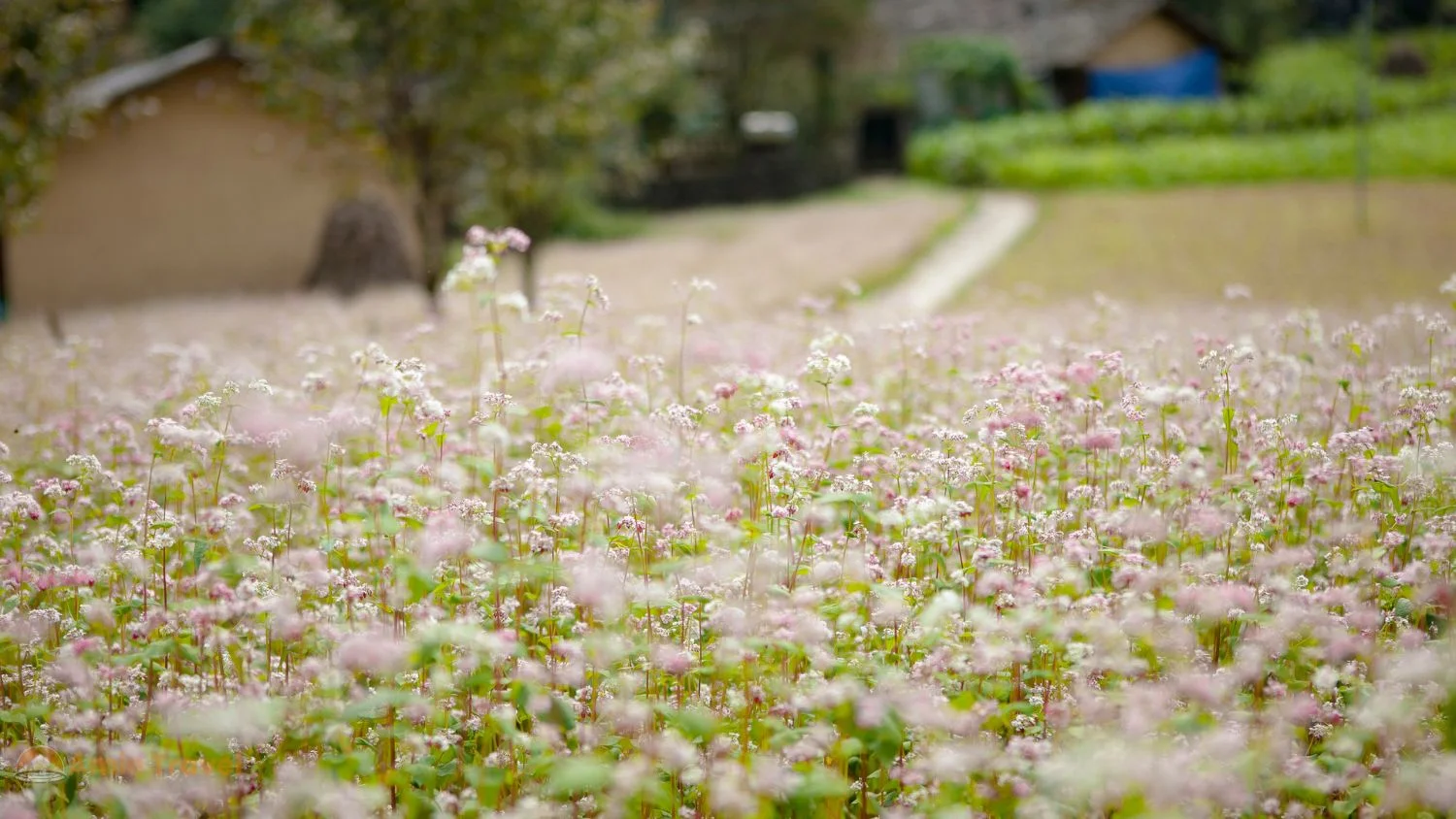
Ha Giang in October produces a visual combination that exists nowhere else in Vietnam and in no other month. The rice harvest gold is still visible across the lower terraced valleys. Simultaneously, the buckwheat flowers (Hoa Tam Giac Mach) begin blooming across the rocky Dong Van Karst Plateau, turning the limestone landscape pink-purple against the harvest backdrop. The Ha Giang provincial tourism portal publishes annual bloom timing updates worth checking if you are timing a trip specifically for the flower and harvest combination.
The Ha Giang Loop by motorbike or private car through Dong Van, Meo Vac, and the Ma Pi Leng Pass is at its most dramatic in October: clear mountain air after the summer rains, Hmong ethnic minority market days in Dong Van Old Town, and viewpoints that make every other mountain road in Vietnam feel flat by comparison.
Explore our Vietnam Adventure Tours for Ha Giang Loop itineraries that work in the October harvest and flower window.
5. Phu Quoc: Best for Late October Beaches
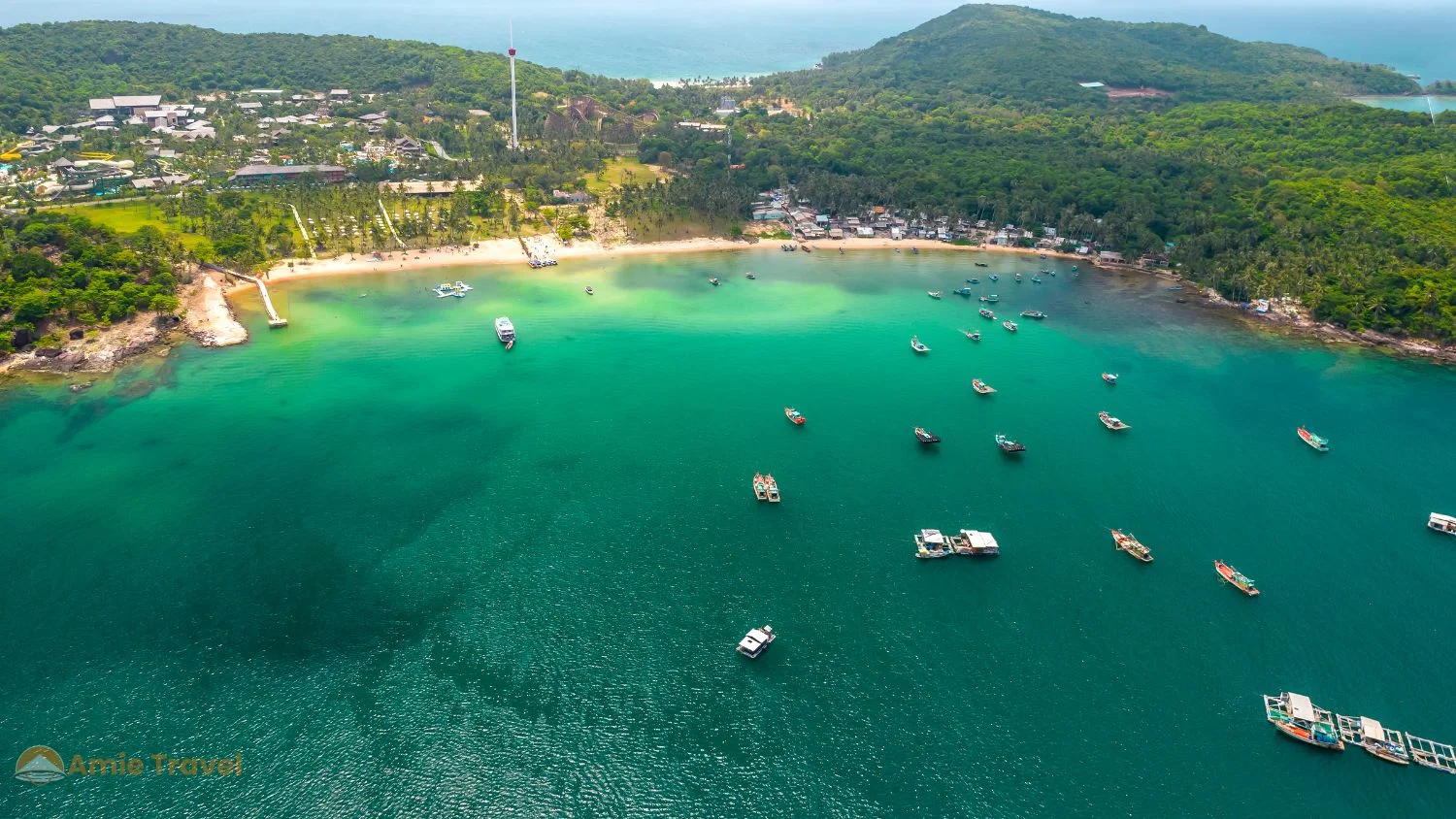
The instruction for Phu Quoc in October is simple: wait for mid-month. September Phu Quoc has rough seas, disrupted ferries, and poor water visibility. From mid-October, water clarity begins improving, ferry services run reliably, beach conditions return, and the Phu Quoc National Park is at its most lush and green after the rains. Late October Phu Quoc offers the start of the island’s best season at prices 20 to 30 percent below the December to January peak.
Explore our Vietnam Honeymoon Tour: Nha Trang Beach and Ha Long Bay for a southern and coastal circuit that works from mid-October onward.
What to Pack for September and October in Vietnam
For the northern highlands (Sapa, Mu Cang Chai, Ha Giang): Layered clothing is essential. Mornings at 1,500 meters in late October are genuinely cold. A packable down jacket or thick fleece, waterproof hiking boots with ankle support for terrace paths, and a rain poncho rather than an umbrella — umbrellas are useless on mountain trails in wind.
For Hanoi in October: Light breathable clothes for daytime at 20 to 25 degrees. A light layer for evenings as temperatures cool toward 18 to 20 degrees by month’s end. Comfortable walking shoes for the Old Quarter’s uneven streets.
For the Central Coast (if visiting): A proper waterproof jacket. Waterproof sandals or shoes that handle wet streets without complaint. Dry bags for electronics, passport, and cash.
For the South (September to early October): Light breathable clothing. A compact umbrella or rain jacket for predictable afternoon downpours, which typically last one to two hours and clear completely. Morning activities are almost always dry.
Year-round essentials: Modest clothing for temple visits. Slip-on shoes for religious sites. The Grab app downloaded before arrival. Insect repellent for highland areas in September.
Recommended Itineraries for September and October
The Golden Harvest Trek
Best for: Photography, adventure travelers, nature lovers with September or first-week-of-October dates.
Hanoi (2 nights) / Pu Luong (3 nights, second harvest late September to early October, White Thai stilt-house homestay, no booking surge) / Mai Chau (1 night, valley cycling and White Thai villages) / Ninh Binh (2 nights, Trang An boat routes, Tam Coc rice paddies also turning gold) / return Hanoi
This route stays entirely in the North, loops southwest from Hanoi, and hits three completely different landscapes in eight nights. Pu Luong is the starting point for this loop. If your dates or interests lean toward Sapa instead, the northwest route works separately: Hanoi / Sapa (3 nights) / Ha Giang Loop (3 nights) / return Hanoi. Do not combine Pu Luong and Sapa in the same trip.
Our 11-Day Vietnam Active Adventure: Hike, Bike and Kayak covers active north-to-south Vietnam with flexibility built in for weather routing.
The Late Autumn Southern Escape
Best for: Travelers with mid-to-late October dates who want to avoid typhoon risk entirely while capturing both the North and South at their best.
Hanoi (3 nights, autumn culture, com moi, Hoan Kiem Lake at dusk, Mid-Autumn Festival on September 25 if dates align) / Ha Long Bay cruise (2 nights) / fly directly to Ho Chi Minh City (skip the Central Coast entirely) / Mekong Delta day trip / Phu Quoc (4 nights, from mid-October for best conditions)
This route never touches the Central Coast. It captures Hanoi at its most beautiful season, Ha Long Bay at one of its two clearest windows of the year, and Phu Quoc at the start of its best season at prices still below the December to January peak.
Browse our Vietnam Family Tours for a family-friendly version of this north-to-south circuit that works from mid-October.